Good Question: Why IgG4-related disease? (IgG4-RD)
Good Question:
Why do we call this condition IgG4-related disease (IgG4-RD)?
Answer:
This is not only a good question, it is a great one. The answer offers insights into how we believe the disease works and how we monitor patients, to determine if they need to be re-treated.
The Short Answer:
Most people with IgG4-RD have elevated levels of an antibody called IgG4 in their blood.
Biopsies of organs affected by IgG4-RD have increased numbers of cells that are producing IgG4.
IgG4 levels in the blood and tissue generally decline following the application of an effective treatment.
Let’s Approach the Longer Answer with a Series of Shorter Ones:
First, What is IgG4?
IgG4 is the abbreviation for “immunoglobulin G4.” An immunoglobulin is the term that scientists and doctors use for “antibody,” which are proteins in the immune system that help ward off infections.
All humans have four classes of IgG: IgG1, IgG2, IgG3, and IgG4. The concentration of IgG4 in the blood is normally the lowest of all the immunoglobulin subclasses. In IgG4-RD, the blood levels of IgG4 often become elevated well out of proportion to the levels of the other subclasses.
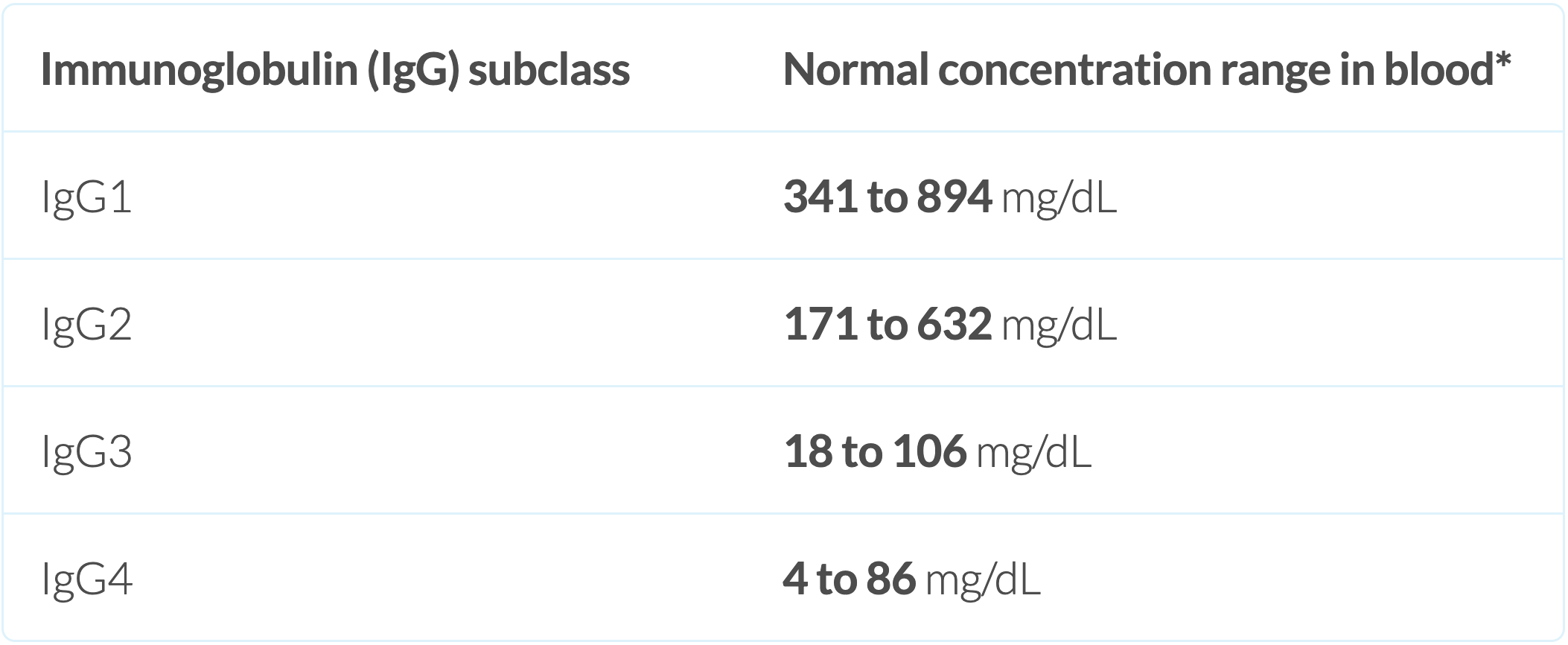
* The range of "normal"
Important Point:
IgG4 is present in the blood of everyone. This antibody is a normal part of the immune system.
What Is the Relationship Between IgG4 and Inflammation in IgG4-related disease (IgG4-RD)?
IgG4 becomes elevated in many people with IgG4-RD. Some people develop serum IgG4 concentrations that are many times higher than the upper limit of normal.
The upper limit of normal for a serum IgG4 concentration is 86 mg/dL.
In some cases, levels as high as 5,000 mg/dL may be reached — more than 50 times the upper limit!
More typically, serum concentration ranges from normal up to about 400–450 mg/dL.
Generally, the greater the number of organs involved, the higher the serum IgG4 concentration.
Important Point:
Some patients with IgG4-RD have normal serum IgG4 concentrations.
The percentage of patients with normal serum IgG4 values (even if they have not been treated) is about 10–20%.
IgG4 and Organ Biopsies:
The relationship between IgG4 and the diagnosis extends beyond the blood.
Biopsies of affected organs show increased concentrations of cells that make IgG4 within the tissue.
An example of this is shown below:
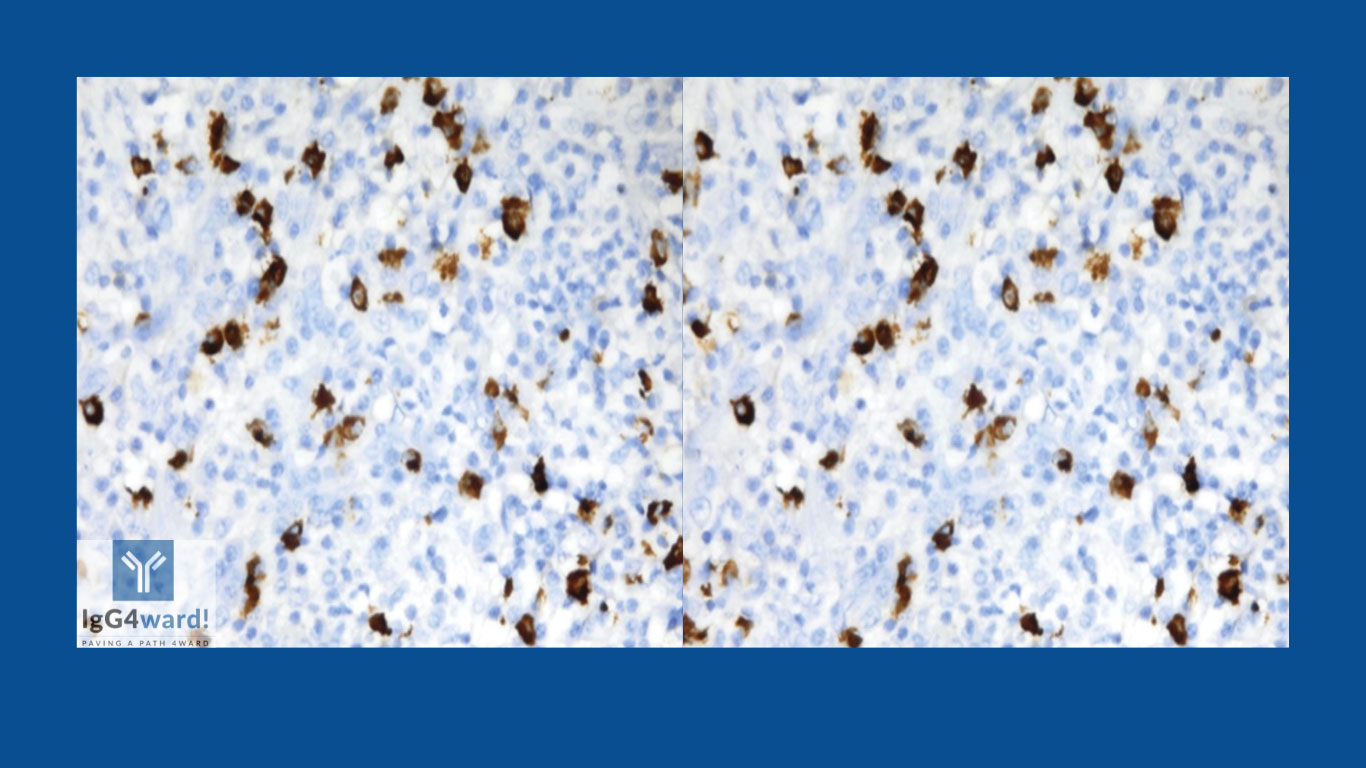
Biopsy of a lacrimal gland from a person with IgG4-RD and inflammation of the lacrimal gland (dacryoadenitis). All of the brown-staining cells in this image are plasma cells that are making IgG4.
Does IgG4 Cause IgG4-related disease (IgG4-RD)?
The short answer: we don’t think so.
Under most circumstances, IgG4 is not an “inflammatory” antibody — its presence alone does not lead to tissue inflammation.
In fact, scientists have understood for decades that IgG4 may calm the immune system, helping to quiet rather than cause inflammation.
We believe that the elevated levels of IgG4 seen in IgG4-RD are a counter-regulatory measure — the body’s attempt to suppress the immune response.
However, without the help of an effective treatment, like steroids or B cell depletion, this counter-measure fails. IgG4 levels then continue to rise until treatment is started.
Why Is It Called IgG4-related disease (IgG4-RD)?
Blood concentrations: Most people with IgG4-RD have high IgG4 levels.
Tissue findings: Affected organs have an increased number of IgG4-producing cells.
Response to treatment: IgG4 levels generally decline with successful treatment.
Although IgG4 is not thought to cause the disease, it remains a critical biomarker:
Helping to make the diagnosis
Helping to decide when treatment should start or restart.
Final Note:
Even though IgG4 itself is not the cause, tracking its levels gives doctors valuable information in caring for people with IgG4-RD.
Looking for more Good Questions?
We have a dedicated section for the Good Question Series in our Resources library. If you’ve missed any or want to revisit past topics, you can find them all there—each one answered by leading experts in the field.
Thank you to our sponsor for supporting patient education through our Good Question Series: