IgG4ward! Good Question Series: Measles and the Measles Vaccine – What IgG4-RD Patients Need to Know
Information and Recommendations on Measles and the Measles Vaccine
The recent measles outbreak in parts of the United States has raised a number of questions among the IgG4-RD community regarding measles and the measles vaccine. In this Good Question! piece, we address:
How to determine if you are adequately vaccinated against measles
Whether you should consider getting a booster
What to know if you're immunocompromised
Where more information is needed
Understanding Measles Immunity
The first and most important point to understand is that if you were immunized as a child, you probably have good immunity to the measles and are likely at very low risk even in the chance – still rare – of a measles exposure.
Supporting Facts:
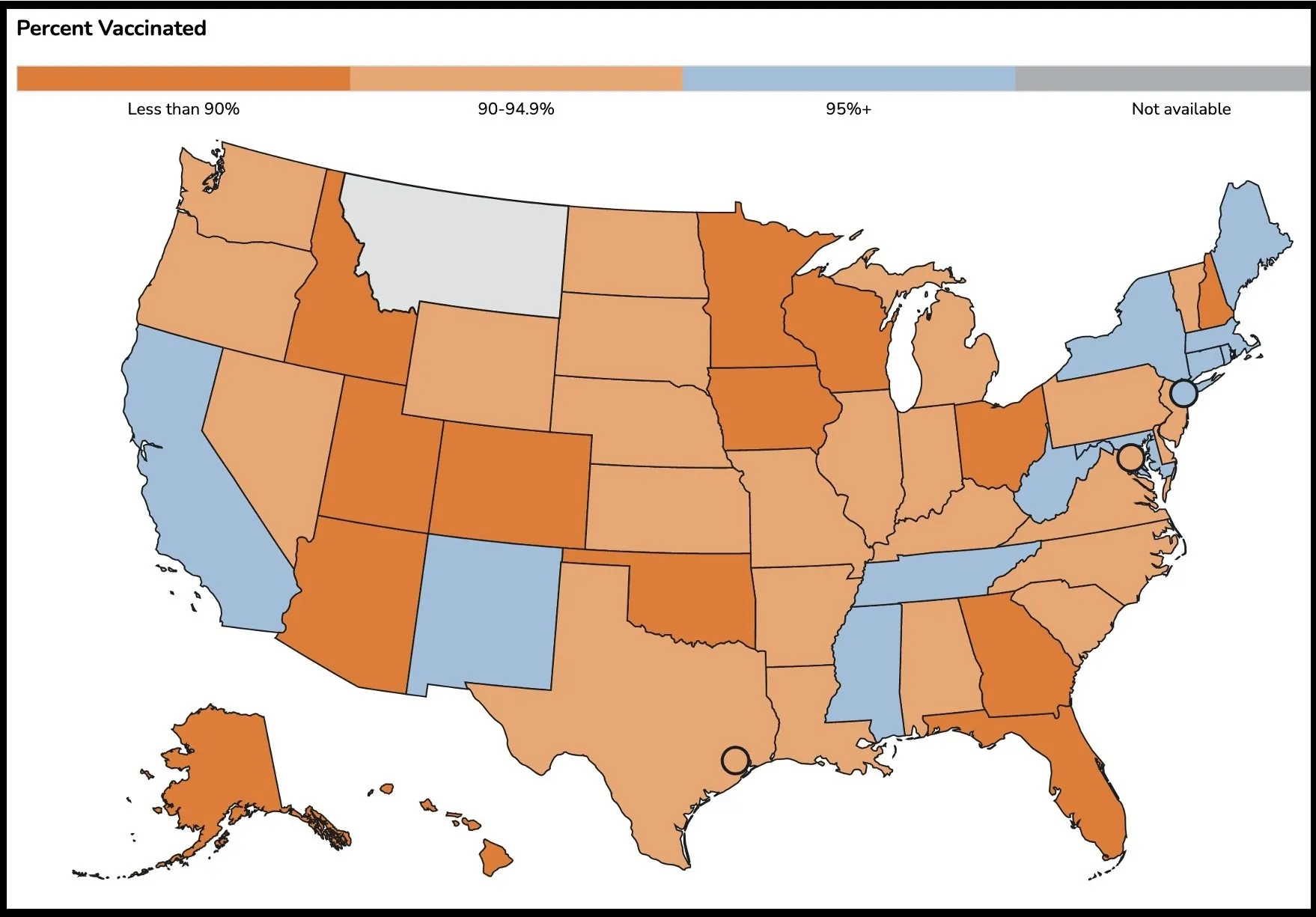
In most states in the U.S., more than 90% of people have been immunized against measles. In some states, the percentage is higher than 95% (the light blue color in the map below), the level above which “herd immunity” is achieved. You can see the vaccination rate in your state in the map provided.
Most people who were immunized since the late 1970s received two measles vaccines, providing excellent and long-lasting immunity to the virus.
People who were immunized between 1957 and the late 1970s probably received just one dose. Fortunately, the measles vaccine used in that time frame – essentially the same one used now – was highly effective. Therefore, it is likely that the immunity of people vaccinated before the late 1970s is still good.
An Area of Unknown:
The current measles vaccine is based on a live but weakened strain of the virus -attenuated is the word used in the literature. Vaccines based on attenuated viruses are generally more effective than those based on killed viruses. This is simply because our immune systems recognize attenuated strains better than they do killed strains.
Between 1963 and 1968, some people were immunized with a killed vaccine. This vaccine may have been less effective. People immunized during this period should be extra-careful to ensure that their immunity to measles is intact. Below, we discuss how to do that.
Facts About the Measles Vaccine and IgG4-RD:
The measles vaccine is given as part of the MMR vaccine-MMR = measles/mumps/rubella. The vaccine targets three formerly common childhood illnesses with one shot.
As noted above, MMR is a live, attenuated This means that it should NOT be given to individuals who are immunocompromised because it is capable of causing active measles infections in individuals whose immune systems are weakened.
People living with IgG4-RD may be immunocompromised if:
They are taking prednisone.
They are taking “disease-modifying anti-rheumatic disease drugs” (DMARDs) such as methotrexate, azathioprine, or mycophenolate.
They have received B cell depletion treatment (e.g., rituximab, ocrelizumab, obinutuzumab, inebilizumab) and have not had a return of B cell levels in the peripheral blood to normal levels.
They are actively receiving a medication that may suppress the function of B cells (e.g., obexelimab, rilzabrutinib), even if the medication does not deplete B cells.
People in any of these four categories should not receive the measles vaccine. Rather, they should discuss strategies for ensuring adequate immunity with their healthcare provider.
Recommendations:
If you were immunized since the late 1970s, it is reasonable to assume that you are immune to measles.
If you were immunized before the late 1970s and you are not potentially immunocompromised now (please see above), it is reasonable to get an MMR booster vaccine now.
You can get an MMR booster at your local pharmacy without a doctor’s prescription. Call first to make sure the pharmacy has the vaccine on hand.
You can get a good sense of whether or not your immunity to measles is intact by having your blood tested for measles IgG (IgG = immunoglobulin = an antibody. Measles IgG is an antibody to the measles virus). If you have antibodies to the measles virus, you are probably immune to infection.
Knowledge of whether or not you have antibodies to measles would be helpful in planning treatment in the event that you are exposed to measles. For example:
If you were immunized before the late 1970s and are potentially immunocompromised, it is reasonable to have your antibodies to measles tested in your blood. As described in the point above and illustrated by the figure below, this can be done by having your blood tested for “measles IgG”.
Knowledge of whether or not you have antibodies to measles would be helpful in planning treatment in the event that you are exposed to measles. For example:
If you have measles antibodies, there is a good chance that your immunity to measles is intact and that you are unlikely to contract measles even if exposed to a person with an active infection.
If you do not have antibodies to measles, it is important to know that, too. Treatment that may prevent an active infection is available. This medication is known as intravenous immune globulin (IVIg). IVIg should be administered quickly if you do not have immunity to the measles virus and have been exposed to a person with an active infection.
Knowledge of your measles antibody status in advance of any potential exposure to measles can be extremely helpful in planning what to do if you are exposed.
Below is a photo of the measles IgG results of a person vaccinated in 1964 who still has a very robust amount of antibodies to measles and is presumed to be immune:
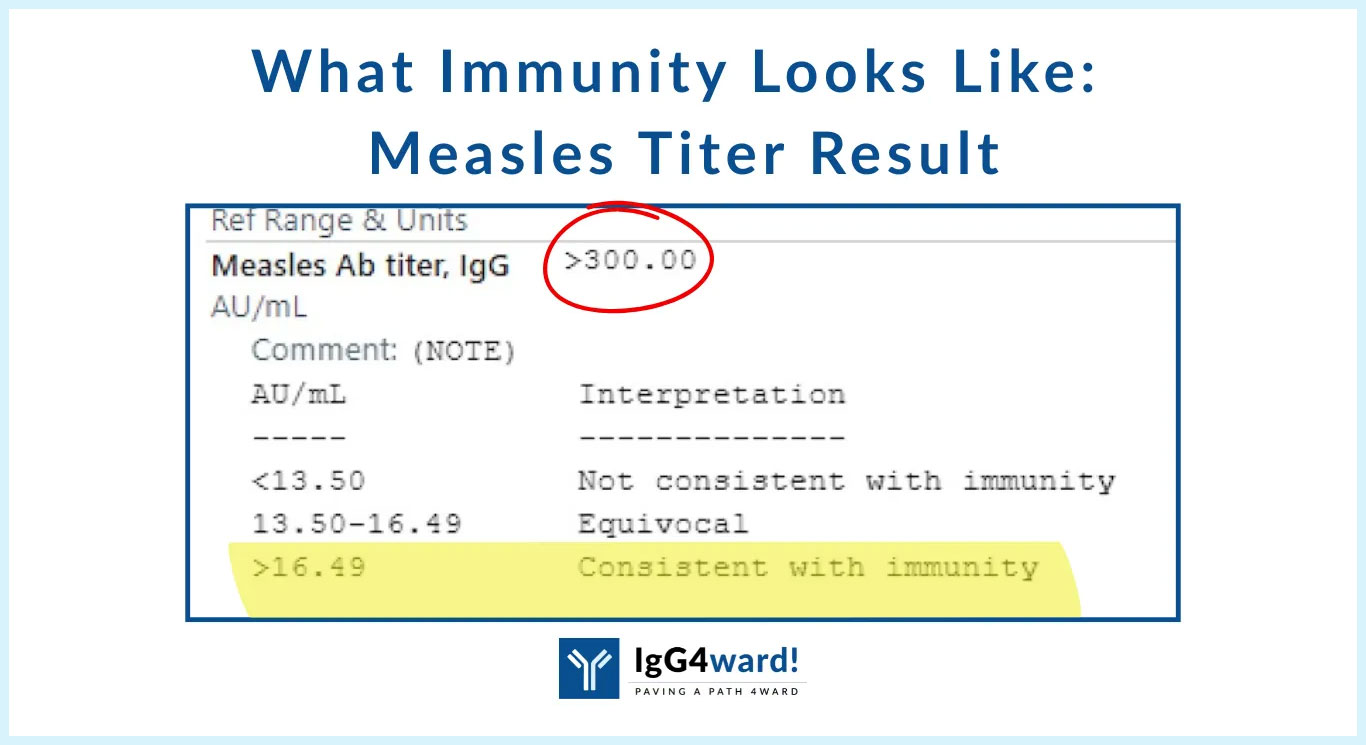
The finding of a titer (level) of anti-measles IgG of > 300.00 indicates that this person almost certainly has robust immunity against the measles. (This person, incidentally, was vaccinated in 1964, and the immunity has remained).
Is the MMR vaccine tolerated well?
Yes, generally very well.
85% of individuals who receive the measles vaccine have essentially no symptoms after vaccination. Unless you have been advised to avoid non-steroidal anti-inflammatory drugs (NSAIDs) (i.e., have chronic kidney disease or are taking a blood thinner), it is reasonable to take an NSAID (e.g., ibuprofen) or acetaminophen (Tylenol) on the day of and for a couple of days after vaccination. You should be ready to resume these medications if you develop muscle or joint aches within the first couple of weeks after vaccination. This happens in some people.
MMR vaccine causes a transient in approximately 5% of vaccine recipients. This rash, often a blotchy red rash on the face, usually appears 7 to 10 days after vaccination and goes away in a few days on its own.
Up to 15% of individuals vaccinated develop a fever of 103F or higher. This usually occurs 7 to 12 days after vaccination and generally lasts 1 or 2 days. Ibuprofen or acetaminophen may be given for the fevers. If you develop a fever within the first couple of weeks after the measles vaccine, let your doctor know. Your doctor will probably have you start ibuprofen or acetaminophen and monitor your temperature closely.
Conclusion and Key Takeaways:
VERY IMPORTANT TO REMEMBER: If you were vaccinated against measles as a child, then you are likely at a very low risk of contracting measles even if exposed to a person who has measles.
If you were immunized before the late 1970s and you are not potentially immunocompromised now (please see above), it is reasonable to get an MMR booster vaccine now.
If you were immunized before the late 1970s and are potentially immunocompromised, it is reasonable to have your antibodies to measles (measles IgG levels) tested in your blood.
Please review your overall vaccine status with your physician regularly. It is important to keep in mind the vaccinations that are relevant to people living with IgG4-RD. The big six are: COVID, shingles, flu, pneumovax (“the pneumonia shot”), RSV, and measles.
Access our Vacine guidelines here.
If you have a question about measles or other vaccines that are relevant to the entire IgG4-RD community, feel free to share it on the IgG4ward! Online Community. If you’ve got a question, it’s likely that many others have the same one. The Online Community can be accessed HERE.
For more information about measles and the measles vaccine, visit the CDC’s measles information page.
Thank you to our sponsor for supporting patient education through our Good Question Series: