Mental Health and IgG4-RD – Part Two: A Caregiver’s Perspective
Supporting a Loved One’s Mental Health Is Its Own Act of Strength
Last week, we shared a heartfelt conversation between Andy, a person living with IgG4-related disease (IgG4-RD) and his physician, Dr. John Stone, about the moment mental health became part of his care journey. This week, we continue the story—this time through the lens of his caregiver and partner.
In Part Two of our Mental Health Awareness Month series, Katharine—Andy’s wife, caregiver, and a clinical social worker—joins Dr. Stone to reflect on the deeply personal and complex role of recognizing a loved one's emotional decline and knowing when and how to step in.
"It's not always easy for us to broach those conversations and to say, 'You're not acting yourself. You're not yourself.'" - Katharine shares
Katharine reflects on the moment she realized something more was going on beyond the physical symptoms of the disease - and how carefully she worked with Andy to help him recognize it, too. With his permission, she reached out to Dr. Stone. That email became a turning point in Andy's care.
"I knew what was happening. I then got his permission to reach out to you, which was one of the most important steps I think that we took in his care." - Katharine
This email became a pivotal moment. Dr. Stone remembers:
"I thought, uh-oh...but then I breathed a sigh of relief. You were thinking exactly as I was thinking."
Together, they reflect on how important it was that Andy was part of the conversation – and that no discussions were held behind his back. They also speak honestly about how fragile a person can feel during a long diagnostic and treatment journey.
Watch Part Two: The Caregiver's Role in Mental Health
Caregiving with Compassion
Katharine discusses how Andy's diagnosis, treatment journey and confrontations with mortality affected not just Andy – but their three boys and the broader family unit, as well. She emphasizes that for many people living with IgG4-RD, mental health struggles are an understandable, human response to the isolation, fear and uncertainty that often accompany rare diseases.
"It's really important the approach that we take... because they are already very vulnerable." -Katharine
Katharine's message is clear: we need to create space for these conversations. We also need to treat mental health as an essential part of care — not something to get to later.
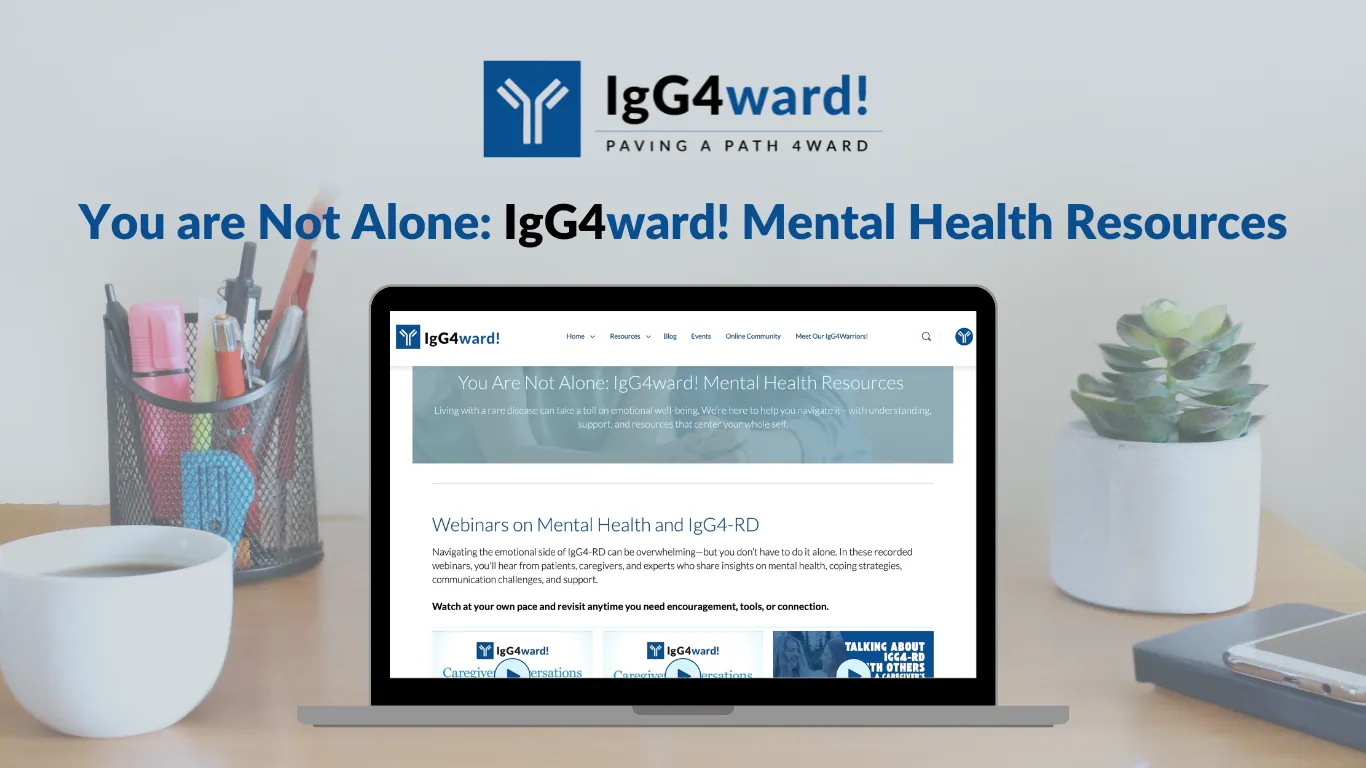
Explore our Mental Health Resource Hub
Mental Health IS health.
If you or someone you love is living with IgG4-RD, we invite you to explore the emotional side of this journey. Our dedicated Personal Health Resource Page offers:
Expert-led webinars
Downloadable tools
Crisis hotline links and phone numbers
Caregiver resources
Real stories from people living with IgG4-RD and their families
In crisis? Call or text 988 for 24/7 support
Explore mental health resources at GiveAnHour.org
Coming Next Week: A "Good Question" on Mental Health
As Mental Health Awareness month continues, stay tuned for an important edition of our Good Question Series where a clinical social worker will answer a timely and honest question about mental health and chronic illness.