Reflection from American College of Rheumatology (ACR) Convergence 2025
Last week, the IgG4ward! Foundation attended the American College of Rheumatology (ACR) Convergence in Chicago, Illinois.
This event is the world’s leading rheumatology conference. Experts, advocates, and innovators gather to share discoveries shaping the future of rheumatic disease care.
For the IgG4ward! Foundation, this gathering was a marvelous opportunity to educate, connect, and raise awareness about IgG4-related disease (IgG4-RD).
It was also a chance to stand with physicians, researchers, and advocates who are helping move this rare disease forward.
At the Booth
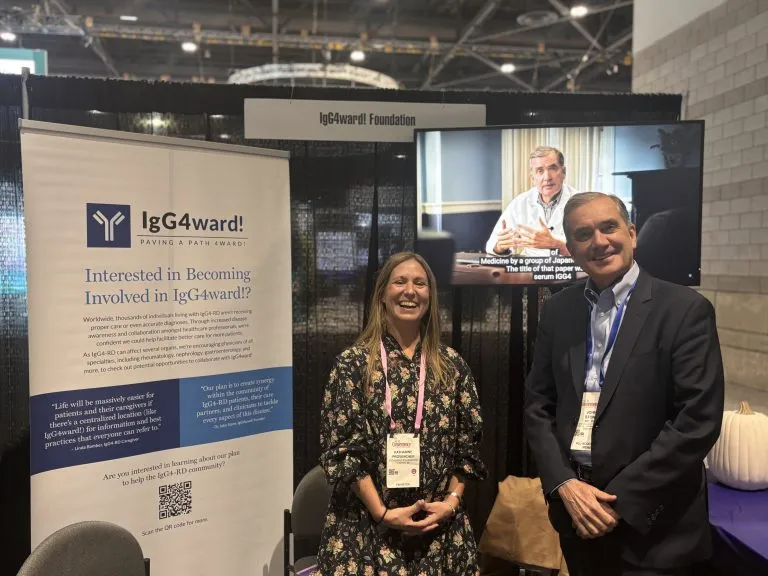
Our booth was located in the non-profit section of the Exhibitor Hall. It quickly filled with meaningful conversations.
Physicians, researchers, medical students, and industry colleagues stopped by, eager to learn more about IgG4-RD. They wanted to understand its complexity, its challenges, and the stories behind the science.
We shared educational resources and invited clinicians to join the IgG4ward! Physician Network. Visitors also got a first look at the trailer for our upcoming documentary, The History of IgG4-RD, coming in 2026.
Each conversation reminded us why this work matters. Every new connection expands awareness, builds understanding, and strengthens the bridge between research and real life.
By the end of the ACR, several new physicians had joined the IgG4-RD Physician Network. It was a clear sign of growing engagement and commitment across the medical community.
A Year of Progress
As both a caregiver to my husband, who lives with IgG4-RD, and as the Foundation’s Director of Advocacy, I was deeply moved by what I witnessed this year.
The difference from just one year ago was remarkable. There was a genuine buzz — in poster sessions, hallway discussions, lectures, and around our booth.
More clinicians talked about IgG4-RD and knew about the IgG4ward! Foundation. They shared their own patient experiences and explored new treatment approaches.
IgG4-RD is truly moving 4ward. From earlier diagnosis to FDA approval and new therapies in clinical trials, momentum is building quickly.
The sense of collaboration and curiosity across the rheumatology community gave me hope for what's to come next.
A Moment of Recognition
One of the most powerful moments of the week came when our Executive Chairman, Dr. John Stone, delivered the prestigious Philip Hench, MD, Memorial Lecture titled “IgG4-related disease: Bedside to Lab Bench and Back to Bedside.”
Presented on the 75th anniversary of Dr. Hench’s Nobel Prize for the discovery of steroids for clinical use, this lecture is a highlight of every ACR.
It draws physicians, researchers, and industry professionals who are shaping the field.
Dr. Stone’s talk traced the evolution of IgG4-RD – from its earliest clinical recognition to today’s expanding scientific understanding – showing how research and patient experience continually inform each other. His message emphasized the translational nature of the field: bridging what is seen in the clinic (“at bedside”) with discoveries in the lab (“at the lab bench”) and then – most important - bringing those scientific insights back to the bedside to improve patient care.
The room was full and focused, a sign of how far awareness has come. For those of us who live this journey every day, seeing IgG4-RD featured so prominently before an audience of global medical leaders was both humbling and profoundly hopeful.
As someone who stands both at the bedside of my husband and in the advocacy space, I felt a shift in that room, a recognition that IgG4-RD is no longer a little-known condition but a growing priority within the field of rheumatology.
ACR 2025 Highlight Reel (90 Seconds)
MANAGE. HOPE.
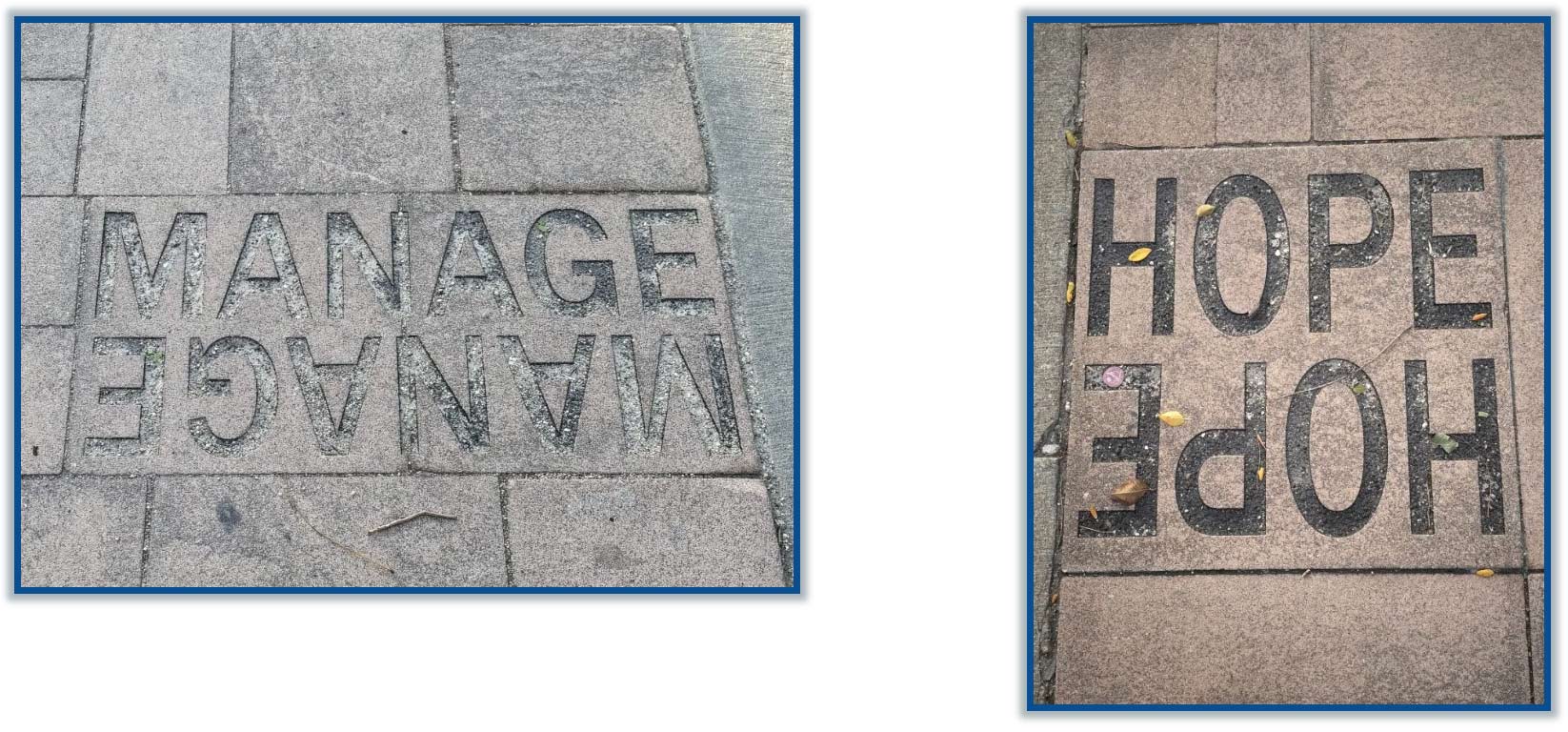
One morning in Chicago, I noticed two words etched into the sidewalk – MANAGE and HOPE. They appear briefly in the highlight reel above, but their message has stayed with me ever since.
Those two words capture the essence of this journey. Manage reflects the daily effort – the doctor’s appointments, the uncertainty, and the resilience it takes to live with or care for someone with a chronic illness. Hope is what sustains that effort – the belief that through research, connection and compassion, tomorrow can be brighter and better than today.
Together, MANAGE and HOPE tell the story of our community – patients, caregivers, physicians and advocates – all working side by side toward progress and healing.
Looking Ahead
From where I stand, both as a caregiver and in my role with the Foundation, the future of this community has never looked brighter. The science has gained critical mass and is advancing rapidly. Awareness is growing. Together, we will HOPE, MANAGE – and THRIVE.