Vaccines & IgG4-RD: Expert Guidance from Our Fireside Chat
Vaccines are powerful tools to help people living with IgG4-related disease (IgG4-RD) protect themselves from infectious diseases. The timing, type of vaccine, and current treatment plan for IgG4-RD are all important when considering how to use vaccines, however. The IgG4ward! Foundations makes it a priority to help our community understand the optimal ways to employ these interventions.
In our latest Fireside Chat, Executive Chairman Dr. John Stone and Dr. Camille Kotton, an Infectious Disease specialist at the Massachusetts General Hospital, tackle the community’s questions about vaccine safety, scheduling, and effectiveness for people with IgG4-RD.
From shingles to COVID-19, measles to flu, this conversation covers what patients and caregivers need to know in 2025.
Watch the Fireside Chat from August 8, 2025:
What You Will Learn:
How B-cell depletion therapy affects vaccine response
The best timing for vaccinations to gain the greatest benefit
Which antibody tests are worth doing?
Why the shingles vaccine is important for all immunocompromised adults, even those under age 50
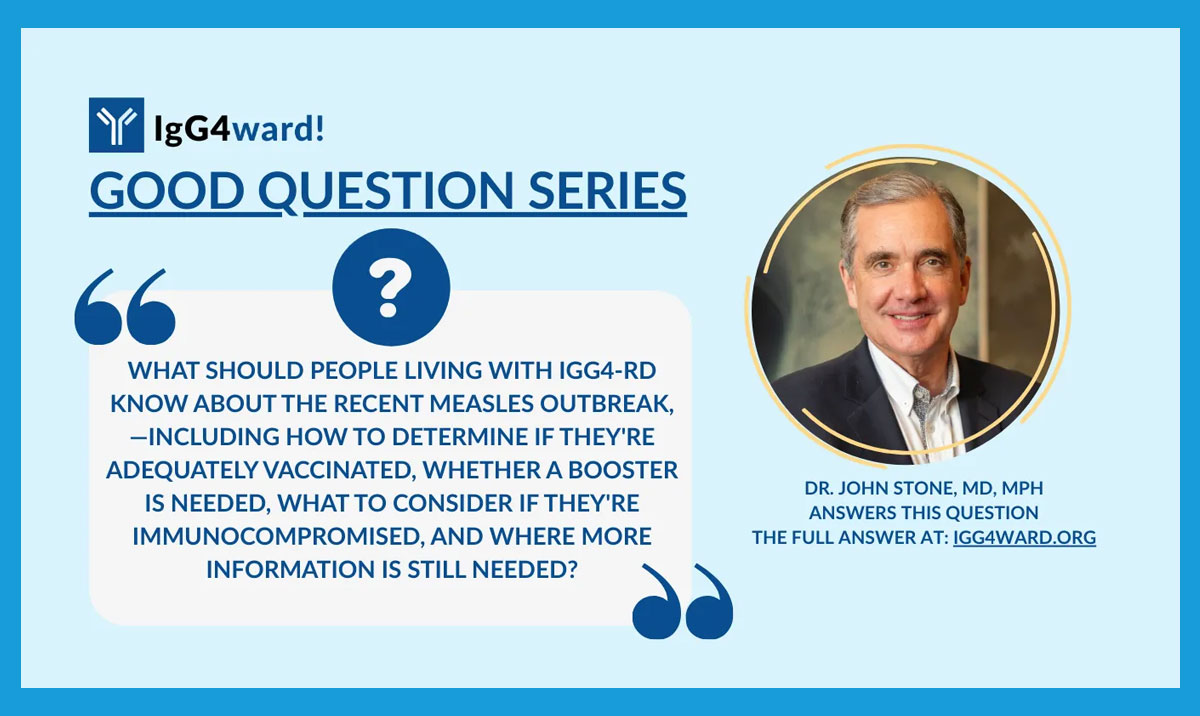
Updates on measles outbreaks and what they mean for people living with IgG4-RD
COVID-19 vaccine guidance, including frequency and vaccine options
Respiratory Syncytial Virus (i.e., RSV), Influenza (flu) and other vaccines for people living with IgG4-RD to consider
Reading Guide
We have prepared a Reading Guide to accompany this conversation and help provide a clear overview of the discussion.
Vaccine Basics in IgG4-RD
Vaccines protect against specific pathogens (measles, chickenpox, flu)
The immune system’s goal: to create specific antibodies for each pathogen (humoral immunity)
B-cell depletion therapies target the cells that make antibodies, thereby impairing antibody production and vaccine responses, inhibiting our ability to respond to vaccines and guard against infections
Optimal vaccine timing: 2-4 weeks before the next B-cell depletion dose. Vaccination immediately after B-cell depletion should be avoided whenever possible.
On the other hand, even if the timing of vaccination is not optimal for ensuring a good antibody response to the vaccine, it is usually wise to get the vaccine on schedule and then perhaps consider a booster dose in the future.
Antibody Testing for Immunity
Frequently used: Varicella IgG (chickenpox/shingles virus) and Measles IgG. This testing can guide vaccination if history is incomplete or unknown
Less valuable or not recommend are:
Covid-19 spike protein antibodies
Pneumococcal antibody panels
Key Vaccine Recommendations
Shingles (Shingrix): 2 doses for all immunocompromised adults, even under 50; safe for people on immunosuppression
COVID-19: every 6 months for immunocompromised individuals
Influenza: annually, best in late October-November for peak coverage
Measles (MMR): safe only if not immunosuppressed
Household members should be fully vaccinated to help protect (“cocoon”) the patient
Timing vs. B-cell Counts
Checking B-cell counts before vaccination is not necessary; timing vaccines 2-4 weeks before the next infusion is preferred
If vaccinated during a period of strong immunosuppression (for example, right after B cell depletion), then boosters may be considered later
Shingles: Why Prevention Matters
Caused by reactivation of the Varicella zoster (chickenpox) virus, which hides in nerve tissue near the spinal cord for decades following childhood infection with chickenpox
Can cause severe pain, nerve damage, and rare complications such encephalitis (a brain infection)
Shingrix is non-live vaccine that is safe and effective for use even in immunocompromised adults
Measles Considerations
Outbreaks in several states; testing for measles IgG may be warranted if vaccination history is unclear
If measles immunity is lacking and the patient is immunocompromised, the live MMR vaccine is not safe. Vaccine therapy should be deferred in such cases.
COVID-19 Guidance
Fall vaccine expected to target current variants
No clear advantage to mixing mRNA vaccine brands
Novavax is a non-mRNA vaccine option
IgG4 levels may rise after vaccination as a natural response to the vaccine but do not indicate worsening of IgG4-RD
Frequency Summary:
Shingles (Shingrix): 2 doses, then complete
Flu: yearly, timed for October or November
COVID-19: every 6 months if immunocompromised
RSV: one time vaccine at age 50+ for immunocompromised adults
Download the reading guide (PDF)
You may also access the IgG4ward! Vaccine Guidelines here
Disclaimer: This guide is for educational purposes only. It is not a substitute for medical advice, diagnosis, or treatment. Always consult your own healthcare provider before making decisions about vaccinations, medications, or any medical care.