
Bookmark this lesson
Login or create an account to save and access your bookmarks
Bookmark this lesson
Login or create an account to save and access your bookmarks
Not yet registered?
What you can access by simply creating a account:
Register today to get the most out of the education academy. Save your progress, bookmarks lessons, track your progress plus more...

Save your progress in this lesson so you can pick it up where you left off.

Add lessons to your bookmarks so you can quickly return to them in the future.

Track your progress throughout the course to see what you have achieved.
Organ affected: lungs
IgG4-RD can affect the lungs quietly. Learn about symptoms, diagnosis, treatments and long term management.
 6 lessons
 Total: tbc
Medical management
Managing lung IgG4-RD over time
Once lung involvement is recognized, the next question is often the most practical one: “What do we do now?” That question can feel urgent, especially if a scan shows a lung nodule, scarring, airway narrowing, or enlarged lymph nodes.
It can also feel confusing if you do not have many symptoms, or if your symptoms sound like something common, such as asthma, bronchitis, or pneumonia.
This lesson focuses on disease management. That means how your care team follows lung IgG4-related disease over time, decides when treatment is needed, selects the most appropriate treatment, watches for side effects, and adjusts the plan if the disease or other circumstances change.
In this video, Dr. Leigh Minuk, a pulmonologist/respirologist from Vancouver General Hospital, explains that treating IgG4-RD in the lungs requires whole-body care.
Is the lung disease active, stable, or fibrotic?
After the diagnosis work is done, the care team tries to understand what kind of lung problem is present right now.
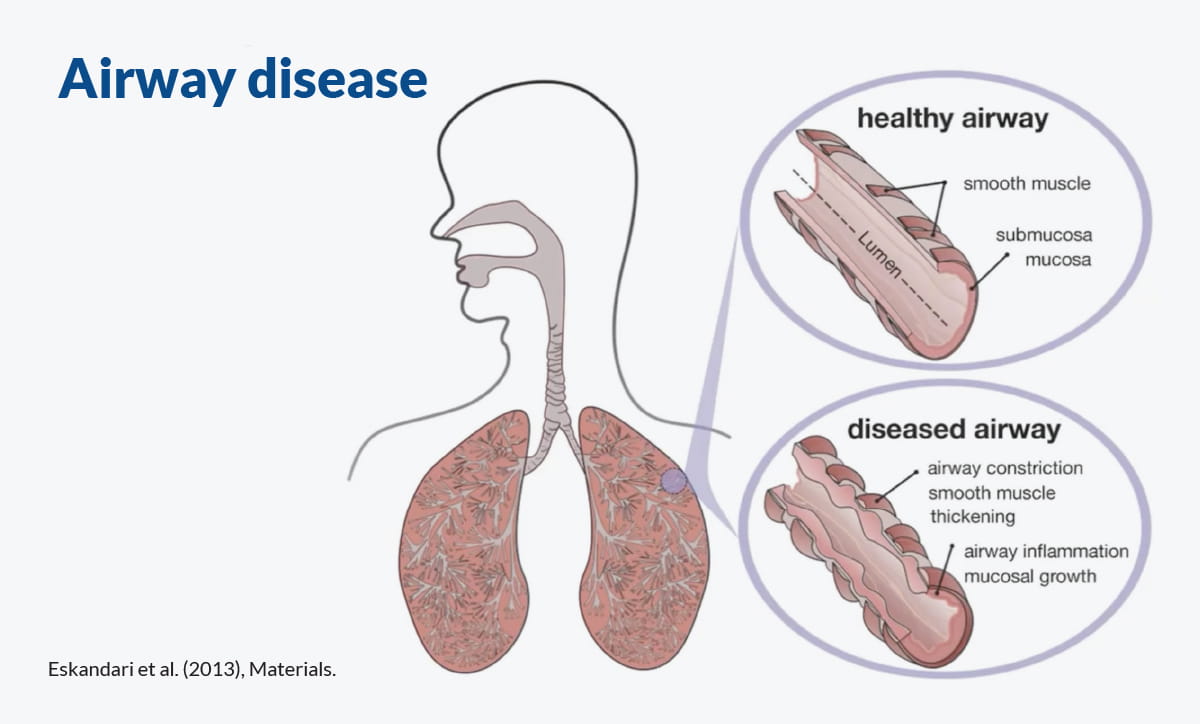
Active inflammation means the immune system is still busy in the lung tissue. This is the part of IgG4-RD that may respond best to immune treatment. You can think of inflammation like a fire alarm that has not turned off. Treatment aims to quiet that alarm before it causes more damage. Fibrosis means scar-like tissue has formed.
Fibrosis can make lung tissue or nearby structures stiffer. Fibrosis may not improve as easily as inflammation, especially if it has been present for a long time. But treatment may still be important if there is active inflammation around the scarred area or if the team is trying to prevent more scarring.
Stable disease means the lung findings are not changing much and your breathing tests are steady. Some people with stable lung findings may not need immediate treatment. Instead, careful follow-up may be the best approach.
This distinction matters because treatment is not chosen from the scan alone. A small stable finding may be watched. Worsening symptoms, falling breathing test results, increasing oxygen needs, growing radiologic abnormalities within the lung, or inflammation in other organs may push the team toward treatment.
Monitoring is part of treatment
For some people, the first treatment step is not a new medicine. It is a monitoring plan.
Monitoring means watching the disease in a structured way. This is different from “doing nothing.” It means the team has a plan for what will be checked, how often it will be checked, and what kind of change would lead to treatment.
A lung monitoring plan may include observing symptoms, CT scans, pulmonary function tests, walking tests, oxygen levels, blood tests, and updates from other specialists. The exact plan depends on what lung pattern you have and whether other organs are involved.
Pulmonary function tests, often called PFTs, are especially helpful because they show how the lungs are working, not just how they look. These breathing tests can measure airflow, lung volume, and how well oxygen moves into the blood. A walking test can show whether oxygen levels drop during activity.
In this short video clip, Dr. Minuk explains the role of pulmonary function tests and walking tests in the management of lung disease over time.
When treatment is considered
Treatment is usually considered when lung IgG4-RD is active, risky, or causing symptoms. It may also be chosen when other organs, such as the kidneys, pancreas, or blood vessels, are active and need systemic therapy, i.e., treatment that targets inflammation wherever it is, anywhere in the body.
If an old fibrotic lung finding has not changed for years and breathing is stable, the team may decide that close monitoring is safer than immune treatment. The goal is to choose the safest plan for this person, with this lung pattern, at this moment.
This is why management is individualized. The question is not simply, “Do you have lung IgG4-RD?” The better question is, “What is the safest plan for this person, with this lung pattern, at this moment?”
Treatment options your team may discuss
In addition to careful, watchful waiting, what other treatments might be appropriate?
Glucocorticoids, often called steroids, are medicines such as prednisone that can calm inflammation quickly. In lung IgG4-RD, they may be used when inflammation is causing symptoms, scan changes, or worsening breathing tests. Glucocorticoids are also effective for asthma symptoms, which many patients with IgG4-RD also have.
Steroids usually work well, but they can also affect sleep, mood, weight, blood sugar, bones, and infection risk, among other things. A good plan should include the dose, how long it will be used, when the taper begins, when steroids will be discontinued completely, and how the potential for side effects will be watched and avoided, whenever possible.
B-cell treatments help quiet part of the immune system that is overactive in IgG4-RD.
Rituximab has been used off-label to lower certain B cells and reduce the need for long-term steroids.
Inebilizumab, a medication that is approved by regulatory agencies such as the U.S. Food & Drug Administration (FDA), the European Medicines Agency (EMA), and others, targets a broader group of B cells and offers theoretical advantages over rituximab.
Other B-cell-directed therapies such as obexelimab, a medication that inhibits but does not deplete B cells, may also be effective. Obexelimab was shown to be effective in a randomized clinical trial but has not yet been approved by regulatory agencies.
— Dr. Leigh Minuk, pulmonologist
Personalized support on your steroid journey
Get support and education on your steroid journey with a new digital companion, Sam (Steroids and Me). Find answers and learn how to work with your doctors for the best care and taper plan.
Visit siteOther medicines your team may discuss
Some people may receive other immune medicines, such as mycophenolate mofetil, azathioprine, methotrexate, or cyclophosphamide. These medicines are used differently across practices and depend on which organs are involved, disease severity, previous treatments, and side-effect risks.
For lung scarring, your team may also discuss whether anti-scarring medicines have any role. Researchers are still studying this question in IgG4-RD. If the main issue is older fibrosis rather than active inflammation, the treatment goal may shift from reversing old damage to preventing new damage and supporting breathing.
Supportive care and infection planning
Supportive lung care is also part of treatment. This may include treating asthma or COPD if present, managing reflux or post-nasal drip that worsens cough, using oxygen if needed, pulmonary rehabilitation, exercise planning, and vaccines.
Because many IgG4-RD treatments calm the immune system, your care team may review infection risks before treatment. You may need vaccines for flu, COVID-19, pneumococcal, shingles, and RSV before treatment. Confirm the best timing with your care team.
Call your team for fever, worsening cough, chest pain, new shortness of breath, or a sudden drop in oxygen.
What a flare can look like
A flare means symptoms or inflammation return after a period of control. In lung IgG4-RD, this may look like worsening cough, wheeze, shortness of breath, chest discomfort, drops in oxygen levels, worsening breathing tests, or new CT changes.
These symptoms can also come from infection, asthma, COPD, heart disease, or medication side effects, so it is important not to assume.
A flare plan should tell you who to call, what symptoms matter, and what information to share, such as oxygen readings, recent infections, medication changes, and symptoms in other organs.
The specialists who may be involved
For lung IgG4-RD, care often works best when specialists communicate with each other. The team may include:
a pulmonologist or respirologist, who focuses on lung structure and function
a rheumatologist, who manages immune-mediated disease
a radiologist, who interprets imaging
a pathologist, who studies biopsy tissue
and sometimes an oncologist, infectious disease specialist, thoracic surgeon, cardiologist, or primary care clinician
A good care plan should answer practical questions:
Who is following the CT scans?
Who is tracking breathing tests?
Who is managing immune treatment?
Who should be called if symptoms change?
And how will the team decide whether the treatment is working?
When specialists can see the same records and communicate easily, care is often smoother. But even when they work in different systems, you can help by keeping a current medication list, bringing scan reports, asking that biopsy slides be reviewed by a pathologist familiar with IgG4-RD, and making sure each specialist knows who else is involved.
Get the IgG4ME! app
Keep your IgG4-RD story organized in one place. Track your history, labs, and care team so you can share what matters when it matters most.
Download app nowSummary
Treating lung IgG4-RD is a careful process of putting clues together and managing long-term health. Treatment planning depends on the diagnosis, scarring, how active the lung disease is, how much function is affected, and what risks treatment may bring.
Some people need close monitoring. Others need steroids, B-cell-depleting therapy, another immune medicine, supportive lung care, or a combination. The goal is not just to treat based on a scan. The goal is to protect breathing, prevent organ damage, reduce flares, and help you live as fully and safely as possible.
References
Overfield C, Doffinger R, Jeyaratnam J, et al. Pulmonary manifestations, treatments and outcomes of IgG4-related disease: a systematic literature review. Rheumatology International. 2024;44:1875–1886. doi:10.1007/s00296-024-05611-7. https://link.springer.com/article/10.1007/s00296-024-05611-7
Wallace ZS, Naden RP, Chari S, et al. The 2019 American College of Rheumatology/European League Against Rheumatism classification criteria for IgG4-related disease. Arthritis & Rheumatology. 2020;72(1):7–19. doi:10.1002/art.41120. https://pubmed.ncbi.nlm.nih.gov/31793250/
Stone JH, Khosroshahi A, Zhang W, et al. Inebilizumab for treatment of IgG4-related disease. New England Journal of Medicine. 2024. doi:10.1056/NEJMoa2409712. https://www.nejm.org/doi/full/10.1056/NEJMoa2409712
U.S. Food and Drug Administration. UPLIZNA® (inebilizumab-cdon) prescribing information. 2025. https://www.accessdata.fda.gov/drugsatfda_docs/label/2025/761142s004lbl.pdf
Minuk L. The Lungs and IgG4-RD. IgG4ward CanJAM Film 8
Springer J. IgG4-RD lung breakout session / IgG4-RD and the lungs, https://igg4ward.org/resources/igg4ward-jam-video-series-video-3-igg4-rd-and-the-lungs/
 Save this lesson so you can resume it later
 Copy Link
 Share On X
 Share On Facebook
 Share On LinkedIn
 Share in Whatsapp
Patient guides for doctor appointments
Educating new doctors and healthcare professionals on your IgG4-RD journey can feel like a full-time job. Download, print, or have your doctor scan the QR code of our patient guides to make every appointment more productive.
View guides