CamJAM 2026 recap: The hands that still go up
At CamJAM in Cambridge, people living with IgG4-related disease and their families learned from leading doctors and met others who understand. A reflection on the day and an invitation to join us at TexasJAM in Austin.
November 3, 2026
By Katharine M. Provencher, MSW, Director of Advocacy and Community Engagement
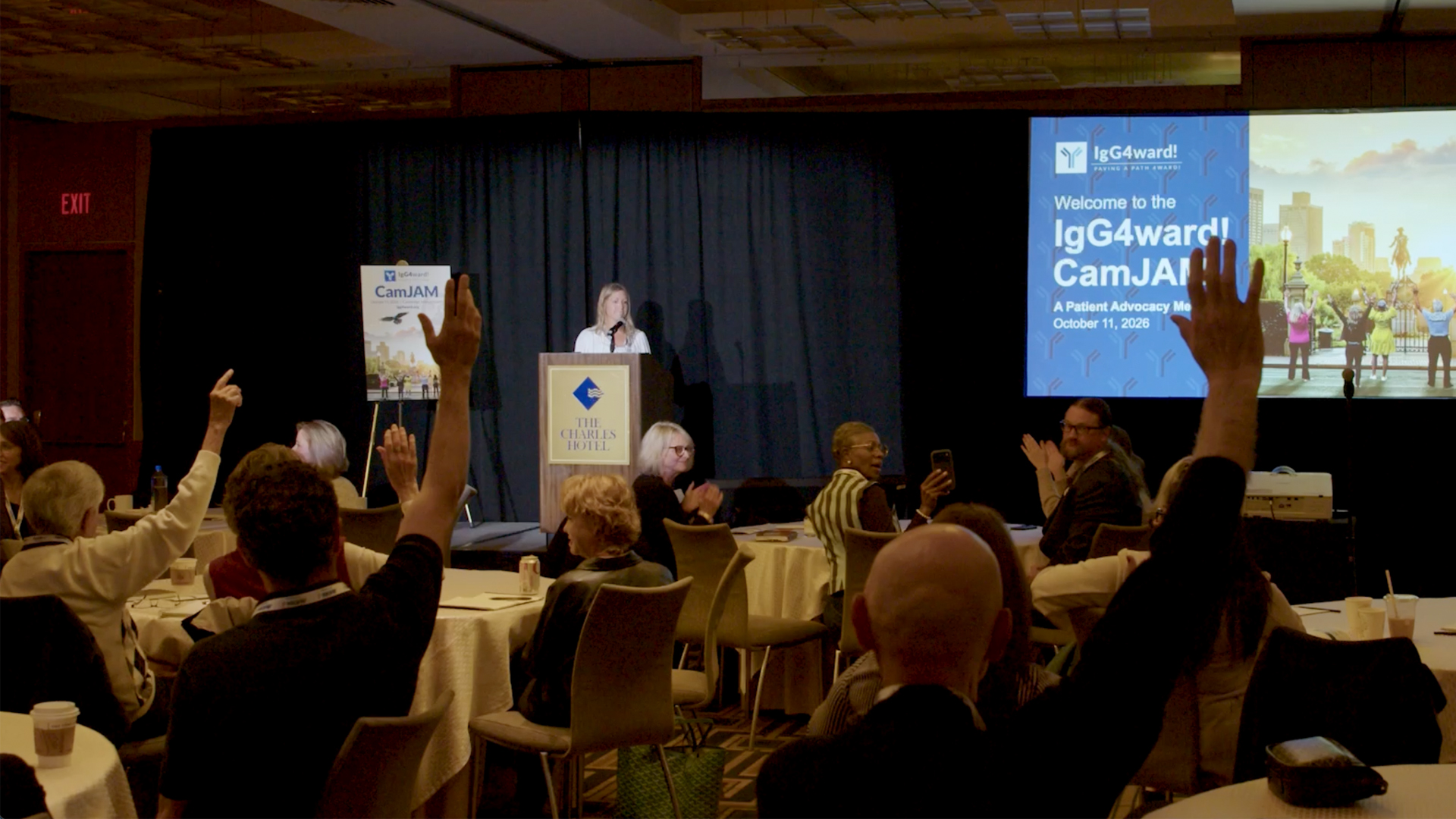
There is a question I ask at every JAM that stays with me long after the event is over:
If this is your first time meeting someone with IgG4-related disease, outside of your family, raise your hand.
Every time, so many hands go up.
Behind each hand is someone who has been trying to understand this disease and what it means for their life. Someone who may have spent years searching for answers. Someone who has tried to explain a diagnosis most people have never heard of.
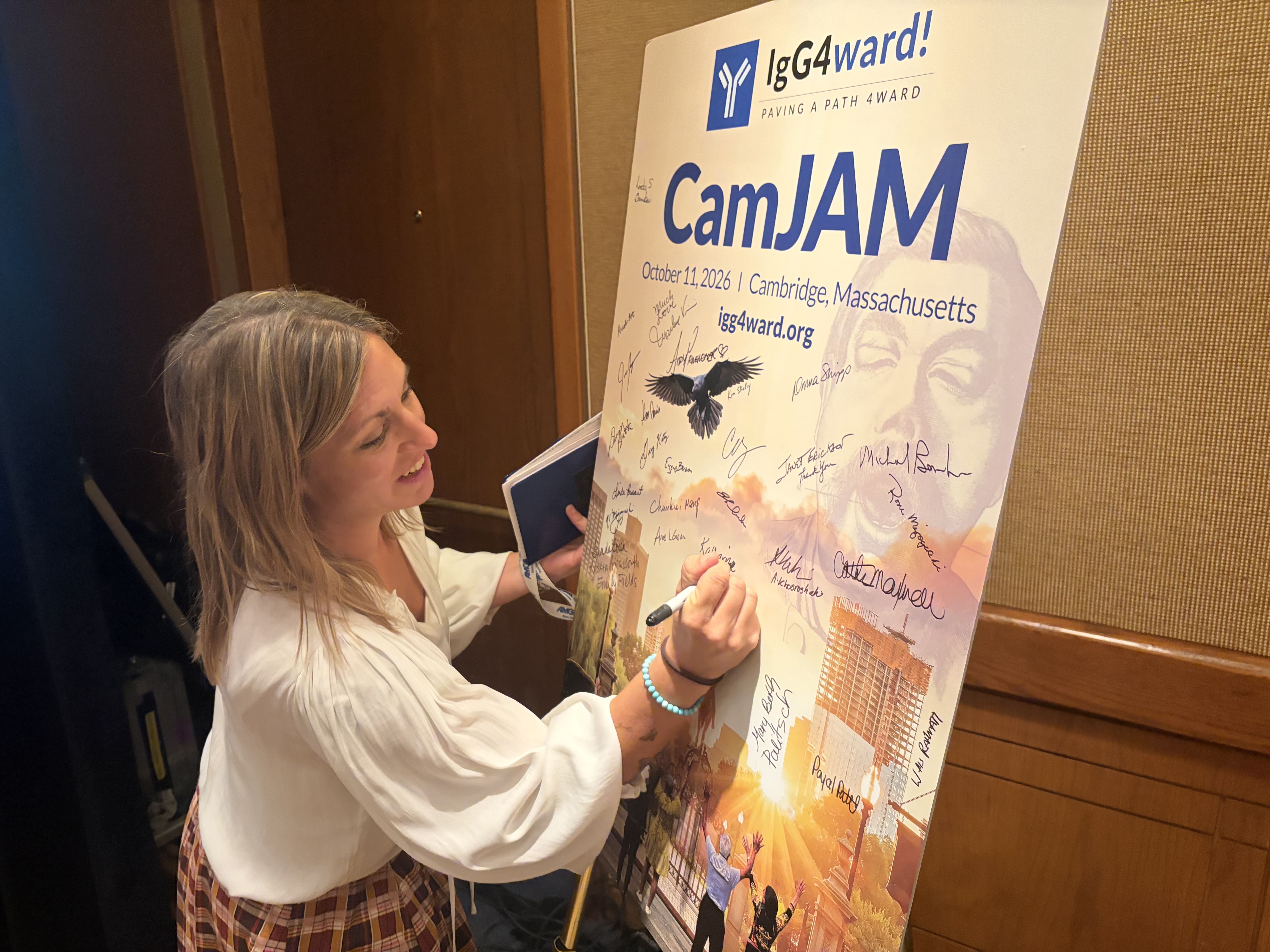
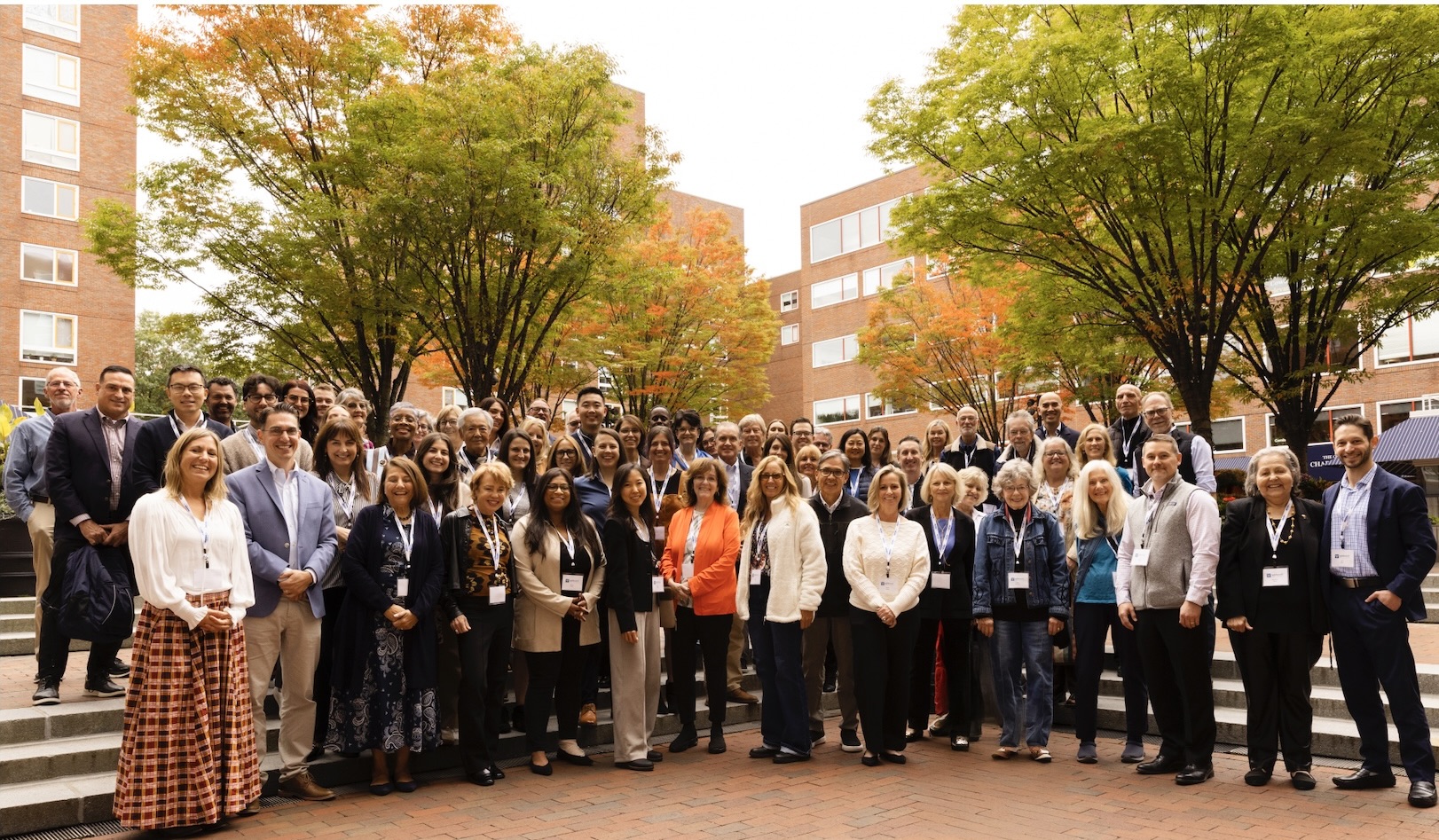
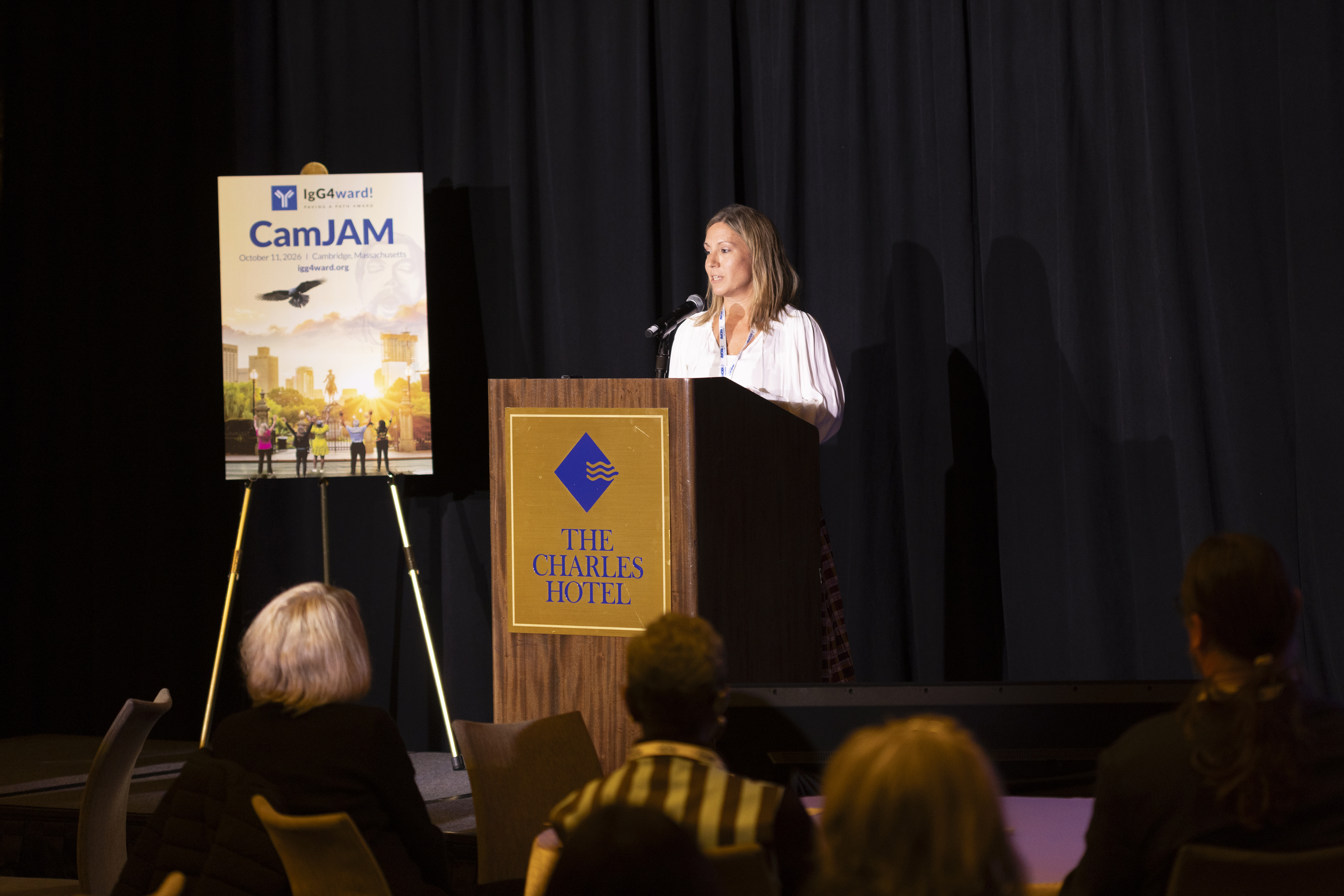
On October 11, at CamJAM at the Charles Hotel in Cambridge, Massachusetts, those hands reminded me again why bringing the community together matters so much. And they are why I hope you will join us at our next gathering, TexasJAM in Austin.
What so many of us carry
So many people in our community know what it feels like to leave an appointment with more questions than answers. To wonder how much of what you are seeing at home is related to the disease. To want information, but also to want someone who understands why you are asking.
I know those feelings too. My husband, Andy, lives with IgG4-related disease, and as his caregiver, I have sat in those appointments and carried those questions home. Through my work with the IgG4ward! Foundation, I hear the same feelings from patients and families everywhere. None of us should have to carry them alone.
At CamJAM, there was room for all of it: the questions, the worries, and the need to be with people who understand.
What we learned at CamJAM
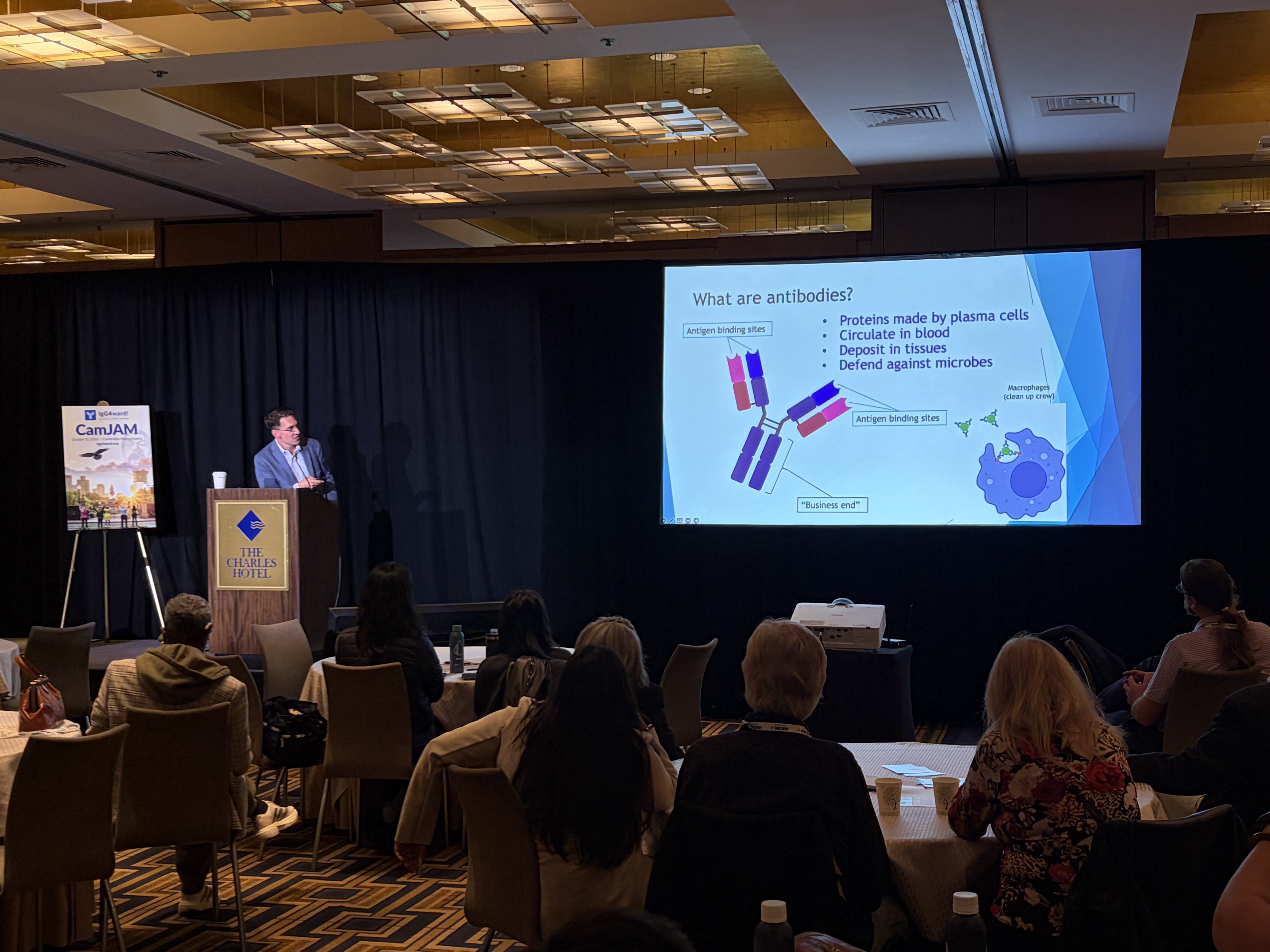
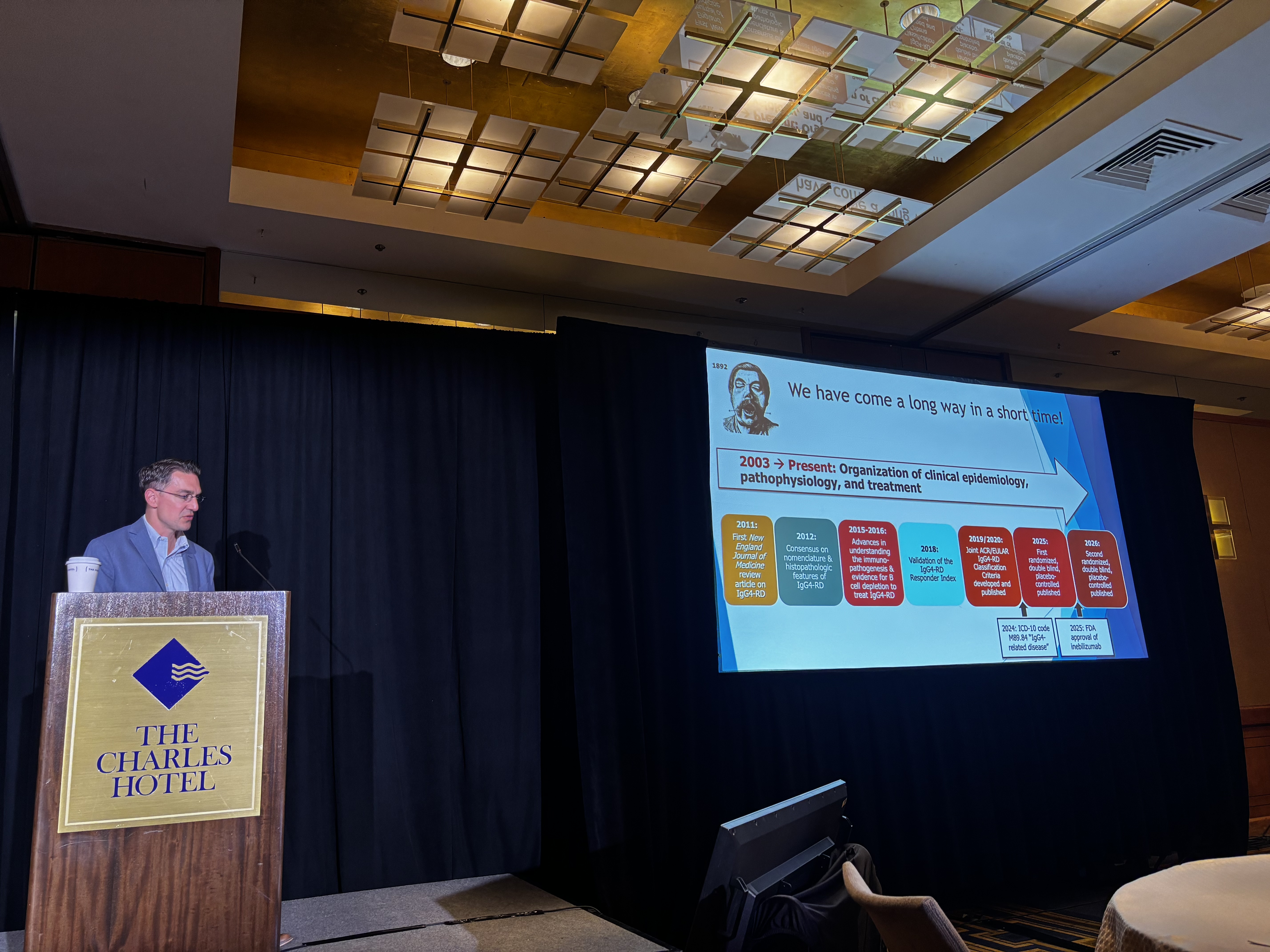
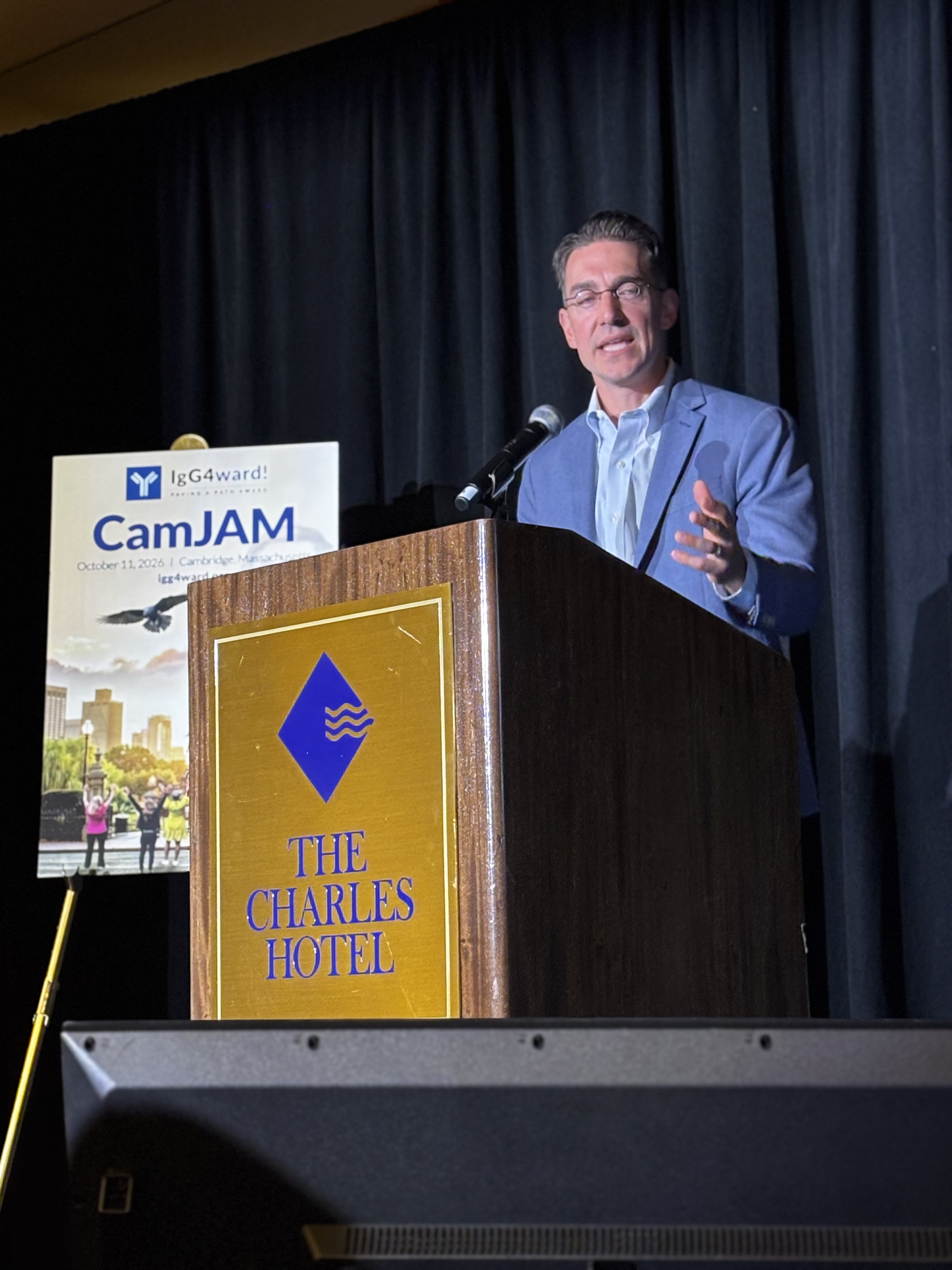
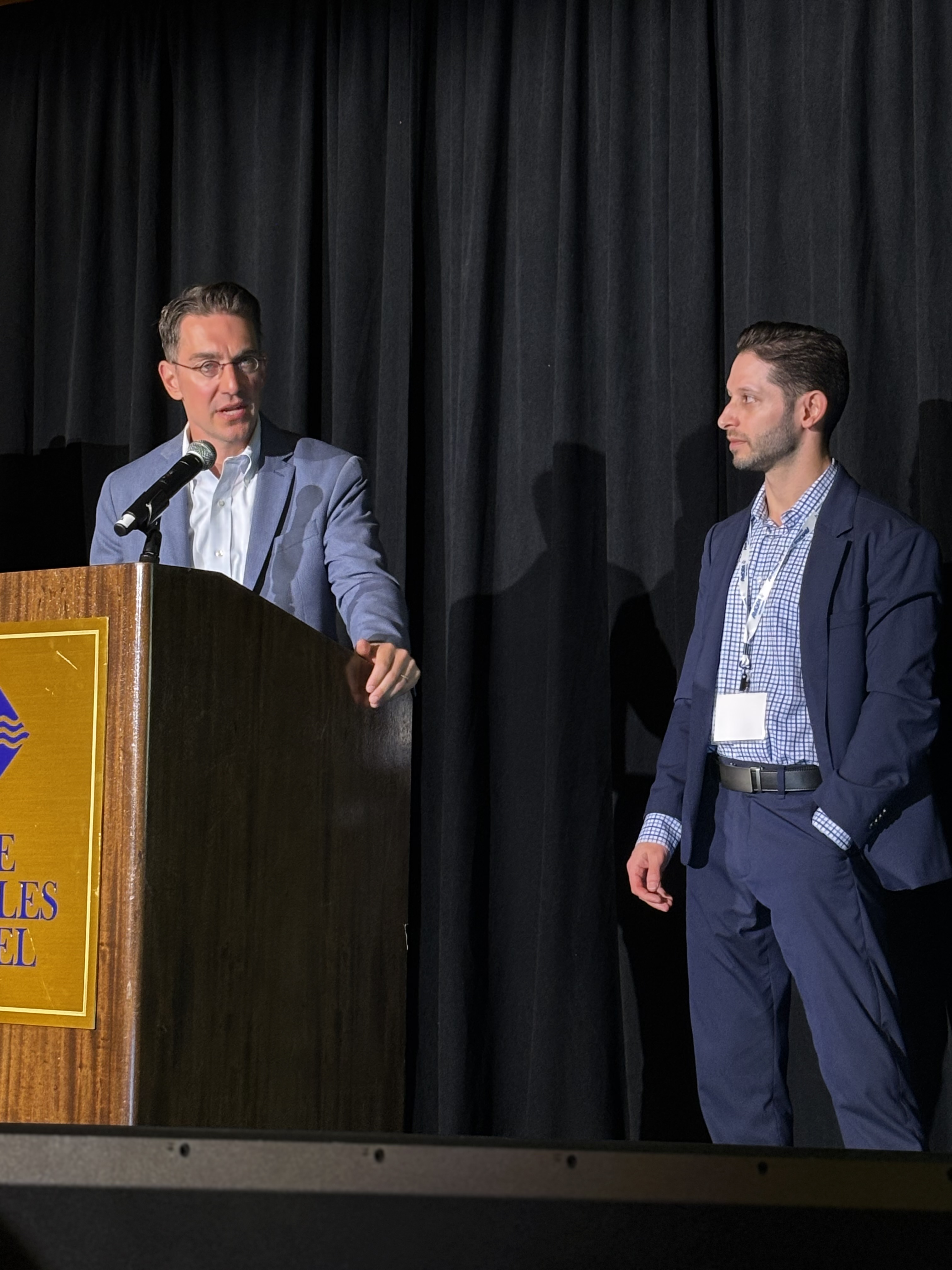
Our hosts, Dr. Guy Katz and Dr. Cory Perugino, brought together doctors who care for people with IgG4-RD and work to better understand it.
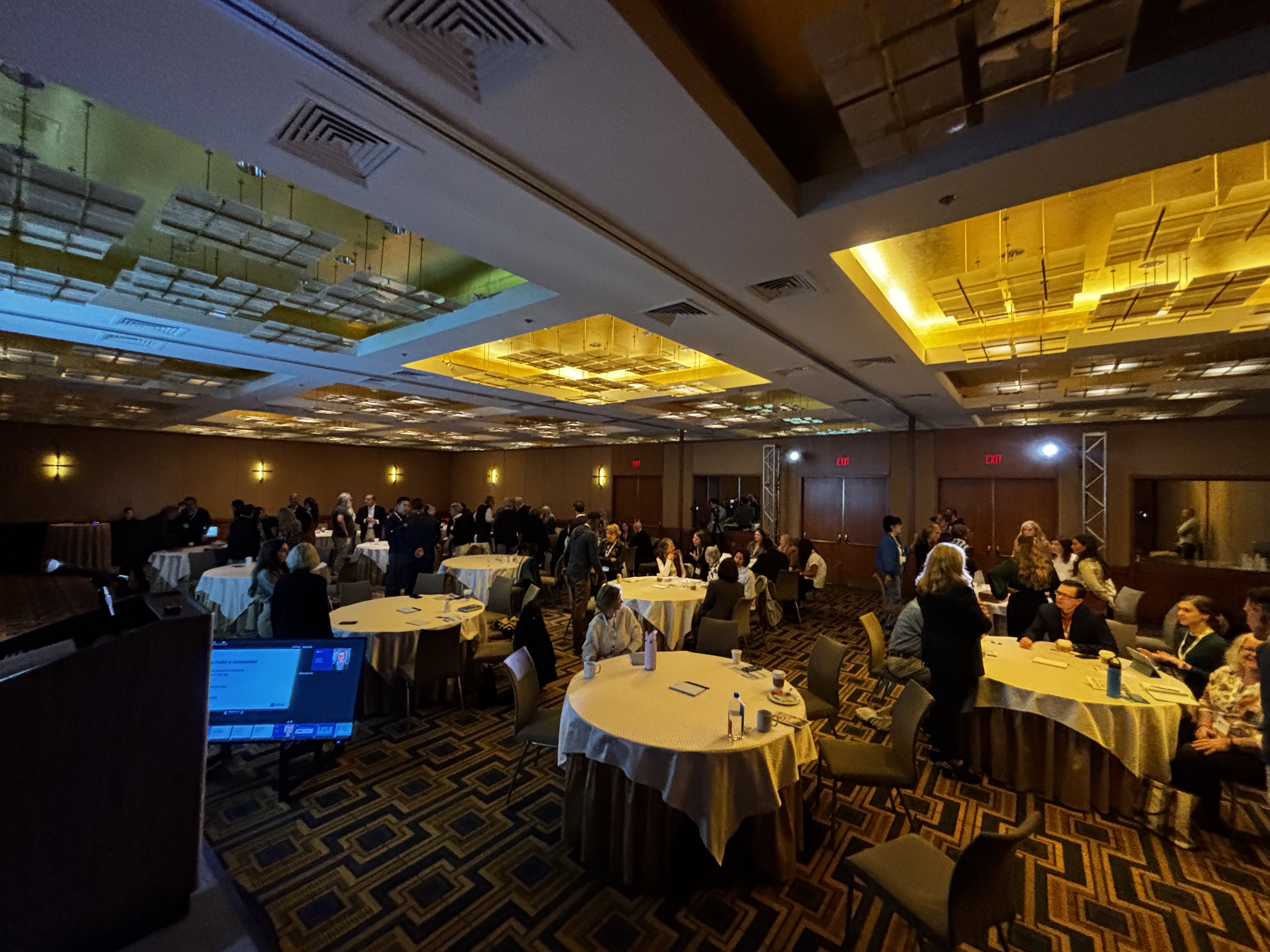
Dr. Katz opened the day with an overview of IgG4-RD and the many ways it can affect the body. Then people chose the small group sessions that fit their own experience. Topics included the pancreas and bile ducts, the head, neck, and eyes, understanding diagnosis, treatment options, and living with the disease over time.
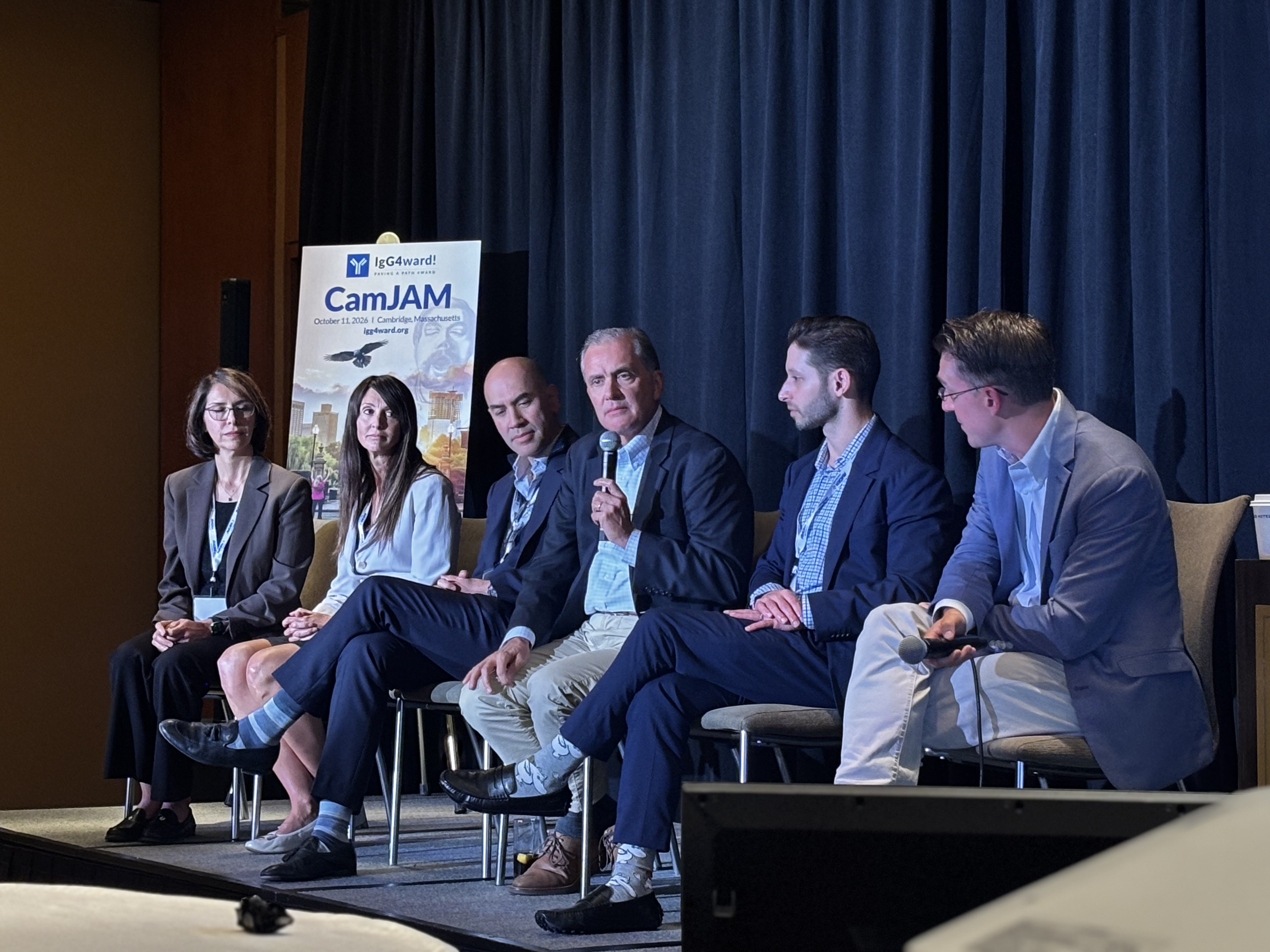
In the afternoon, Dr. Perugino shared where IgG4-RD research stands today and what may be ahead. The day ended with an expert panel where people could ask the doctors anything and the audience asked many thoughtful, informative questions.
Much of every session was set aside for that kind of conversation, and it made a difference. Sometimes another person asks the very question you have been struggling to put into words.
Life beyond the diagnosis of IgG4-related disease
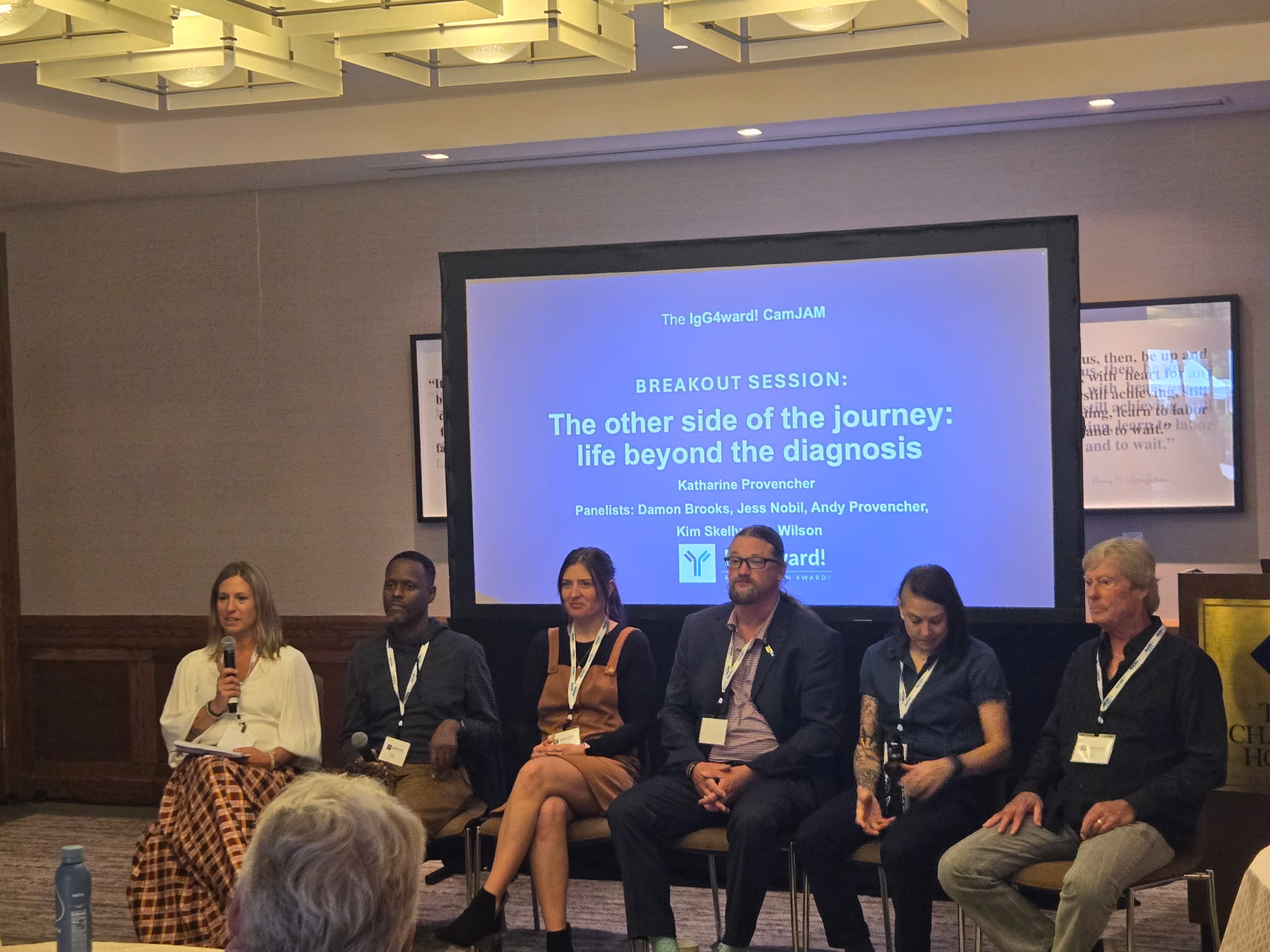
Leading our patient panel, The other side of the journey: Life beyond the diagnosis of IgG4-RD, was one of the most meaningful and impactful part of the day for me.
There is something powerful about giving the people living with the disease the space to tell their own stories, in their own words. We can learn about a disease from expert talks and medical facts. We also need to hear what it feels like to live with it. How it may change family routines. How it affects relationships, plans, and the way someone thinks about the future.
Each person’s story deserves to be heard without the pressure of speaking for everyone. IgG4-RD can look different from one person to the next. Hearing those differences helps us understand our community more fully.
While every story was different, people in the audience kept finding pieces of their own. As the panelists spoke, you could see people nodding, leaning in, and sometimes wiping their eyes. Many heard their own experiences in someone else’s words for the first time.
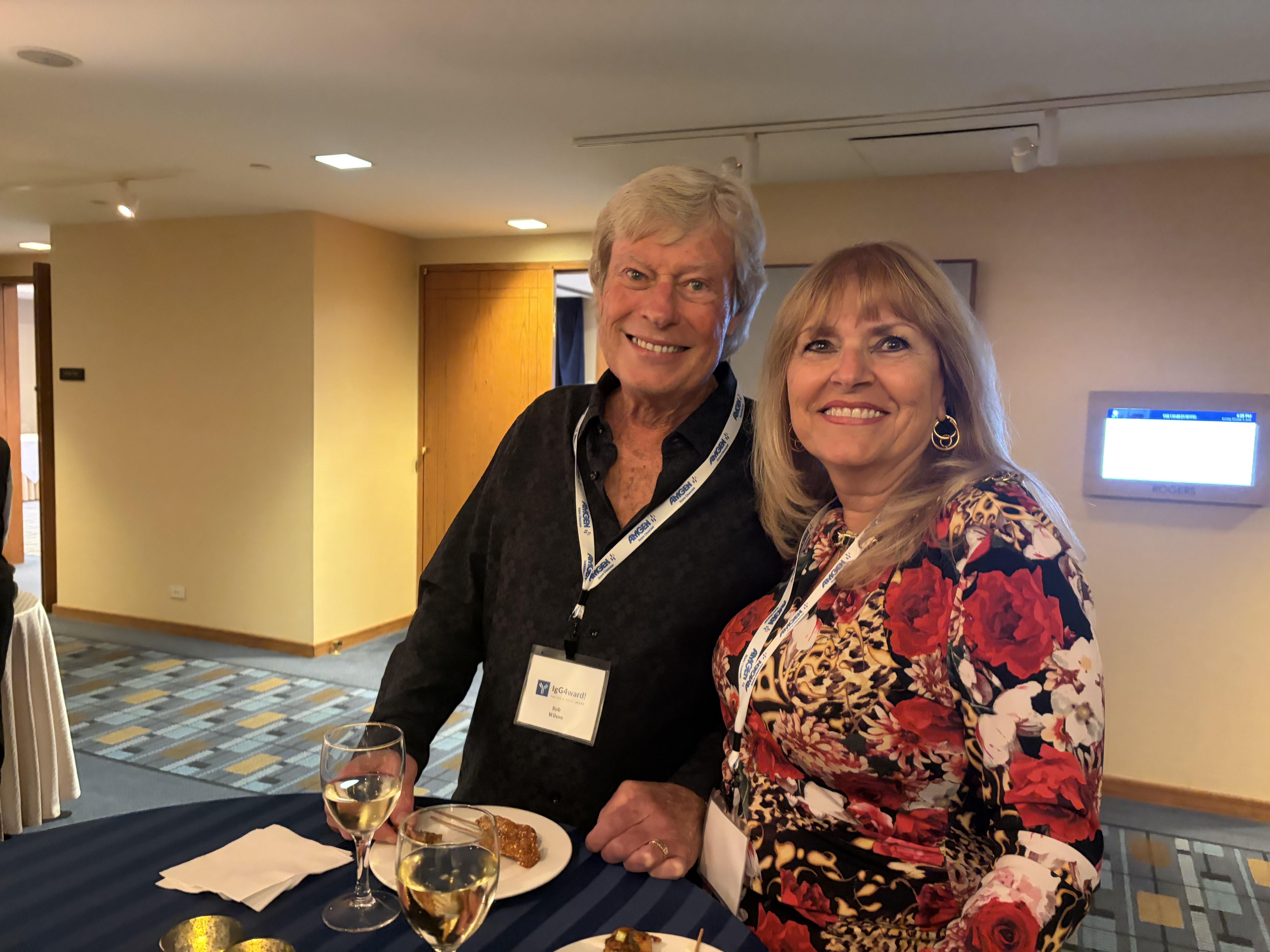
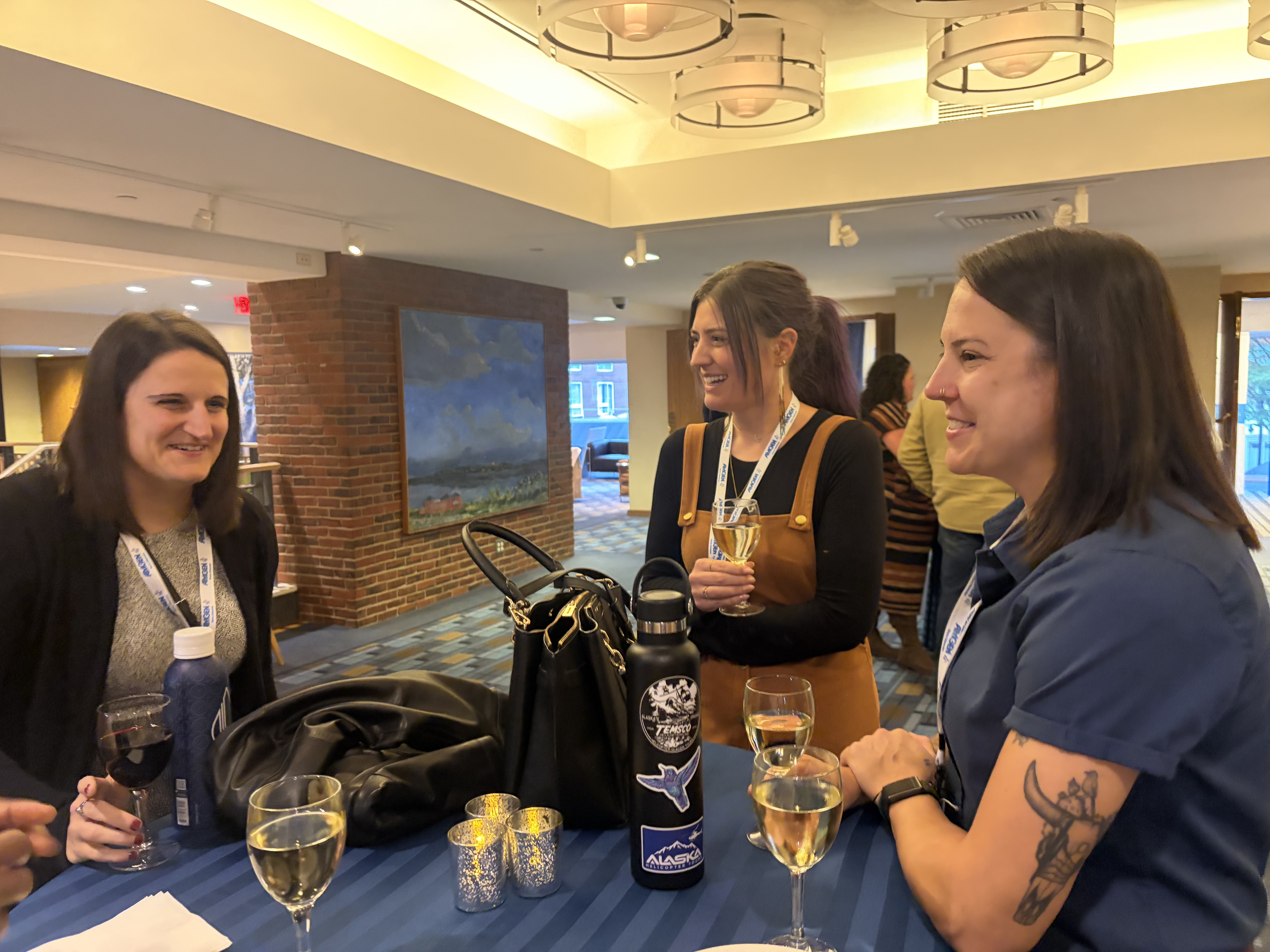
That kind of recognition can bring a relief that is hard to explain. Someone describes what they have been through, and you think: “I have felt that too.” For many in the room, that moment was the beginning of a connection that continued during breaks and at the reception that evening.
What people take home
That connection is part of what people take home from a JAM. Along with new information and questions for their next appointment, many leave knowing someone else who understands, and who they can reach out to long after the day is over.
To me, this is what advocacy looks like. It means listening to people and making space for their voices. It means helping them find good, reliable information and find each other. It also means carrying what we hear forward, so that the experiences of our community help shape our programs, inform our partnerships with doctors and researchers, and guide the work of the IgG4ward! Foundation.
I am grateful to Dr. Katz, Dr. Perugino, and all the doctors who spoke, and to the panelists, people living with IgG4-RD, caregivers, and families who made CamJAM what it was. Every person who asked a question or shared part of their story helped someone else feel a little less alone.
Join us in Austin
If you have never met someone with IgG4-RD outside of your family, I hope you will come to TexasJAM.
TexasJAM | November 14 | University of Texas - Dell Medical School, Austin, Texas
Whether this is your first JAM or you have joined us before, you are welcome. Bring a family member, friend, or caregiver who supports you. You will spend the day learning from doctors who specialize in IgG4-RD and connecting with people who understand what it is like to live alongside it.
If you were with us in Cambridge and are able to join us, please do! Some people in Austin will be raising their hands for the first time. It means so much to be welcomed by someone who once raised theirs.
REGISTER FOR TEXASJAM
Planning is already underway for 2027, and we look forward to sharing more soon.
To those who raised their hands at CamJAM, I am so glad we were in that room together. I hope we will see you, and welcome some new faces, in Texas.
Frequently asked questions
IgG4-related disease (IgG4-RD) is a rare, immune-mediated condition that can involve nearly any organ in the body. It causes inflammation and symptoms that can mimic other illnesses, which is why it is often hard to diagnose. The condition can cause swelling, lumps, or scarring in different organs.
A JAM, short for Patient JAMboree, is an in-person gathering hosted by the IgG4ward! Foundation. People living with IgG4-related disease, their caregivers, doctors, and other members of the community come together to learn and connect.
TexasJAM takes place on November 14 at Dell Medical School in Austin, Texas
JAMs are designed for people living with IgG4-RD and their families and caregivers. Physicians, nurses, researchers, and other healthcare professionals who want to learn more about the disease and connect with the patient community are also welcome. You do not need any prior connection to the Foundation.
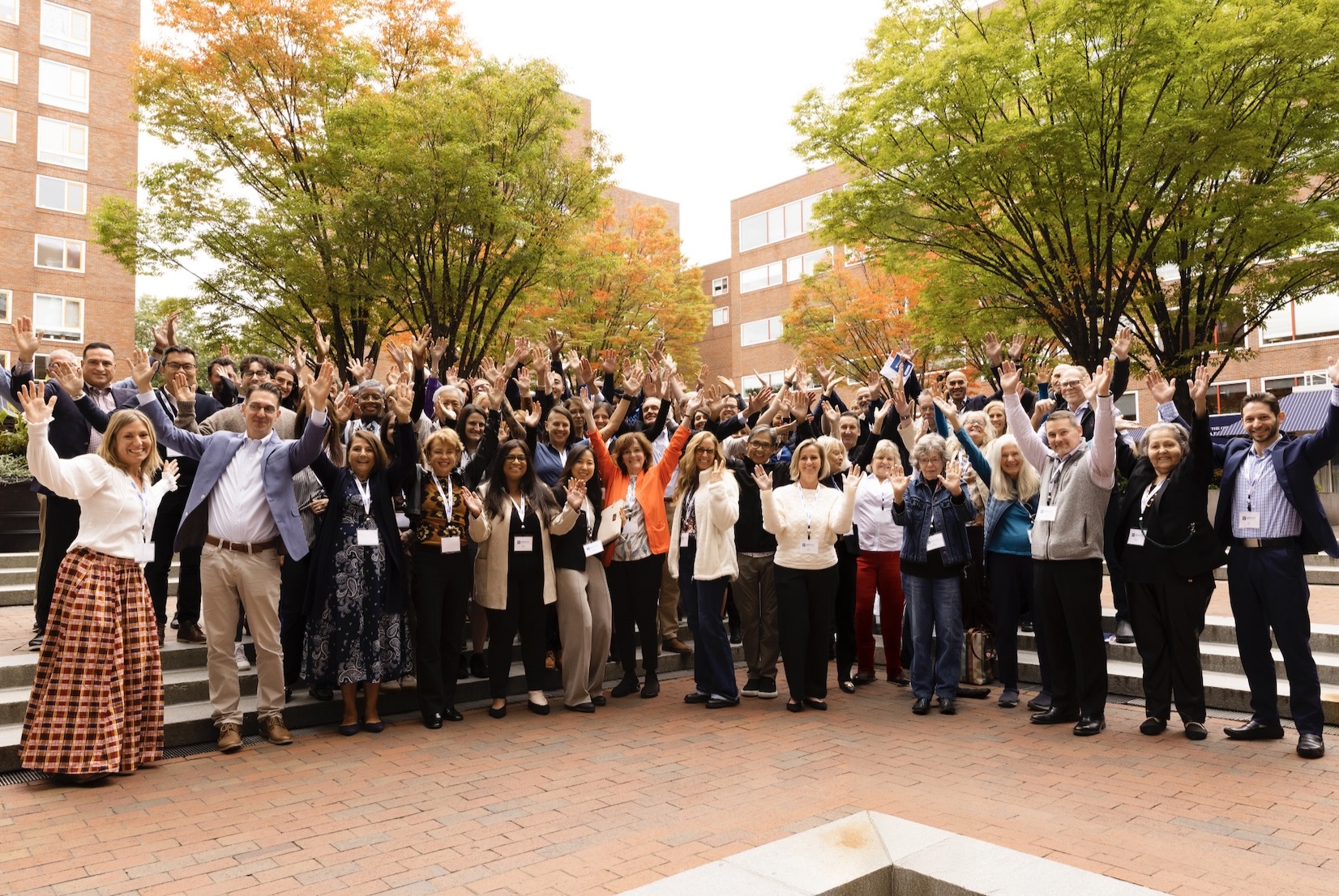
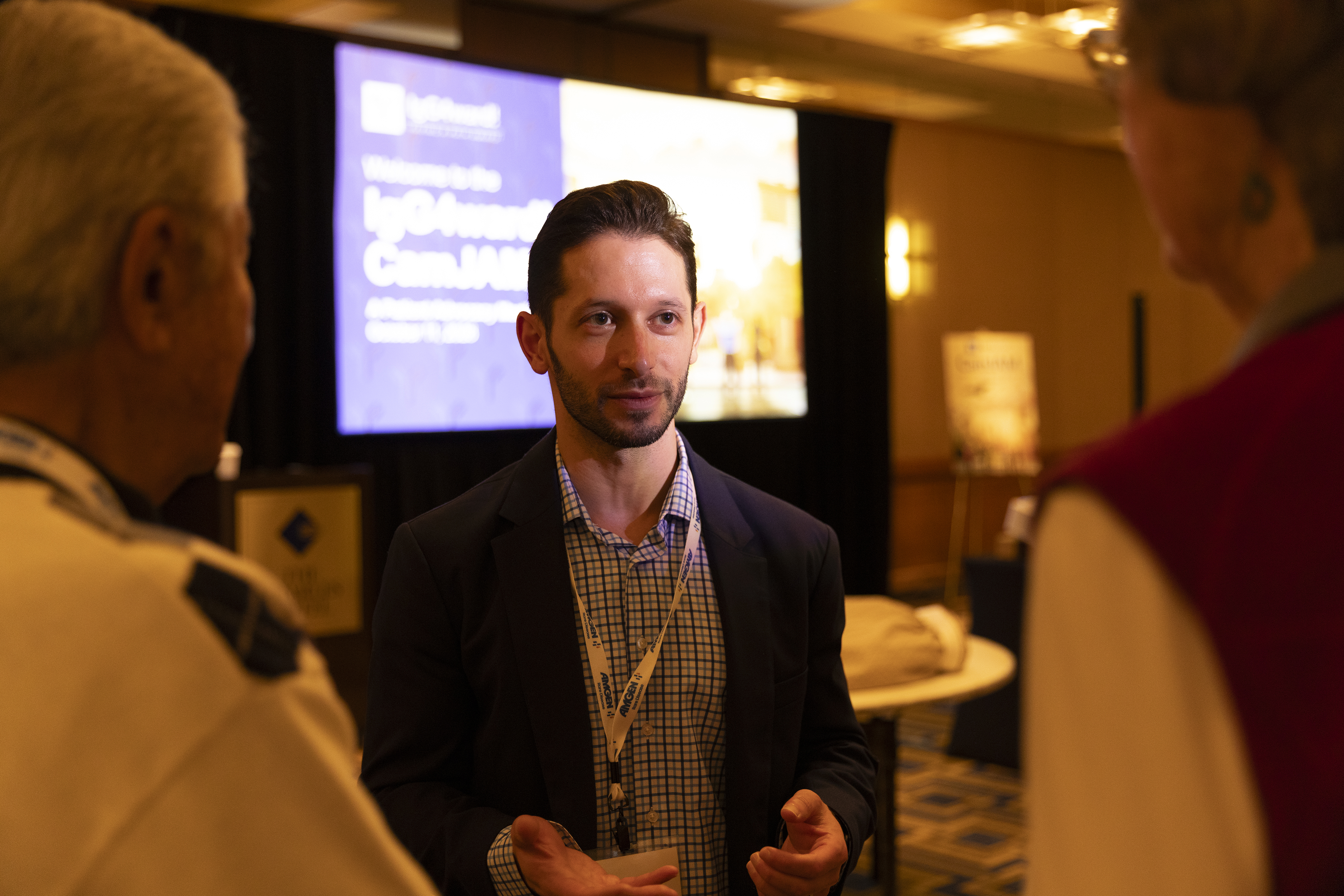
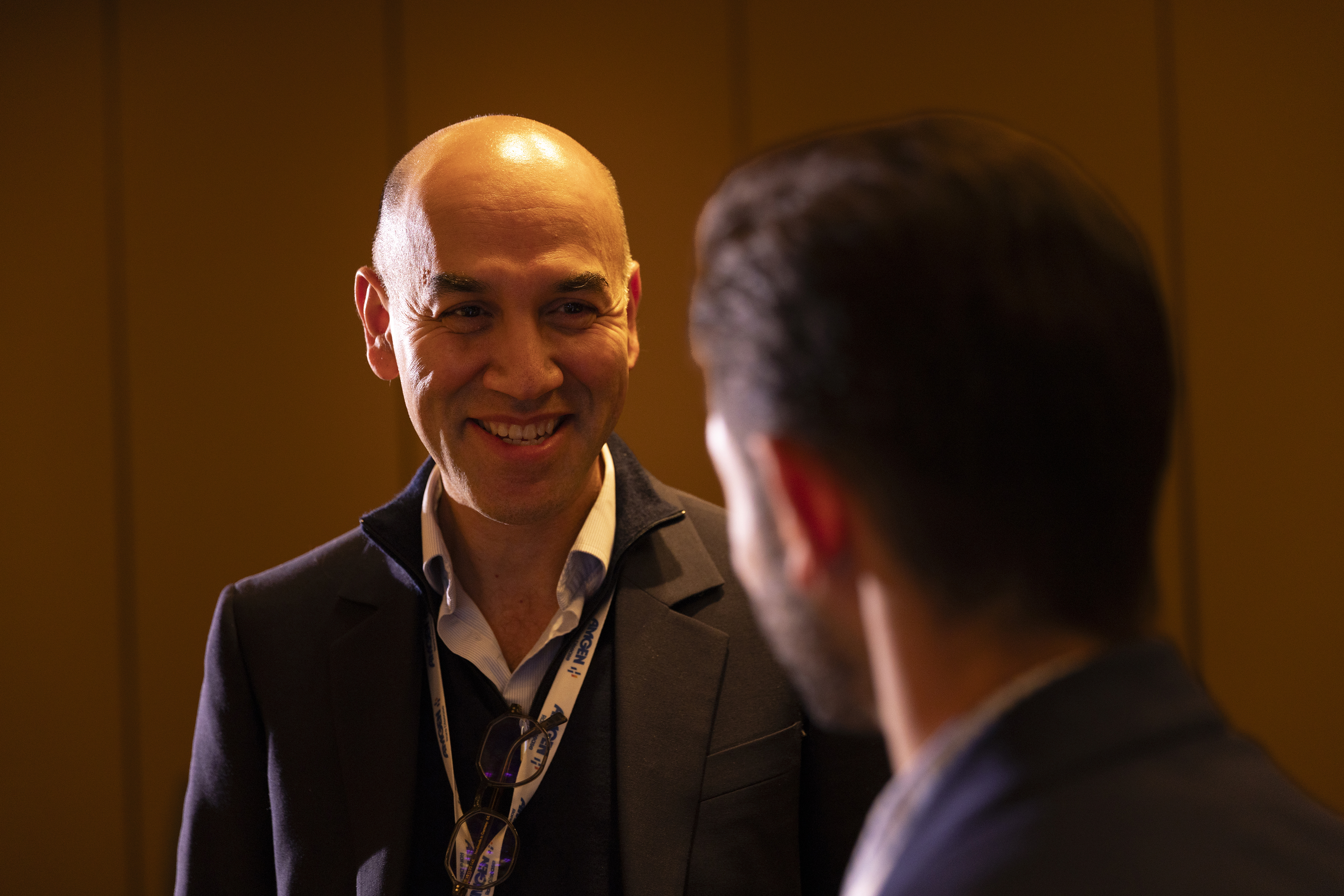
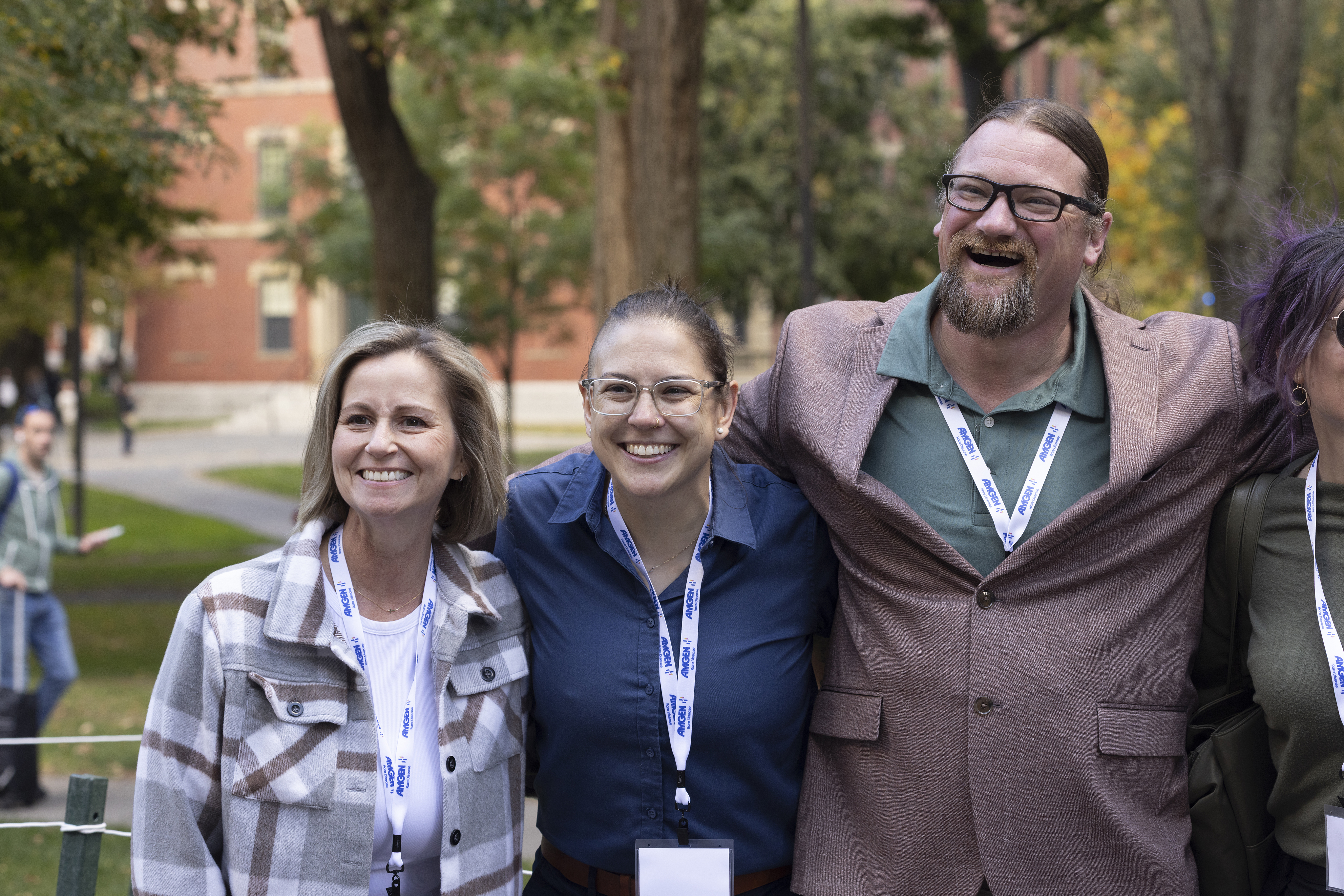
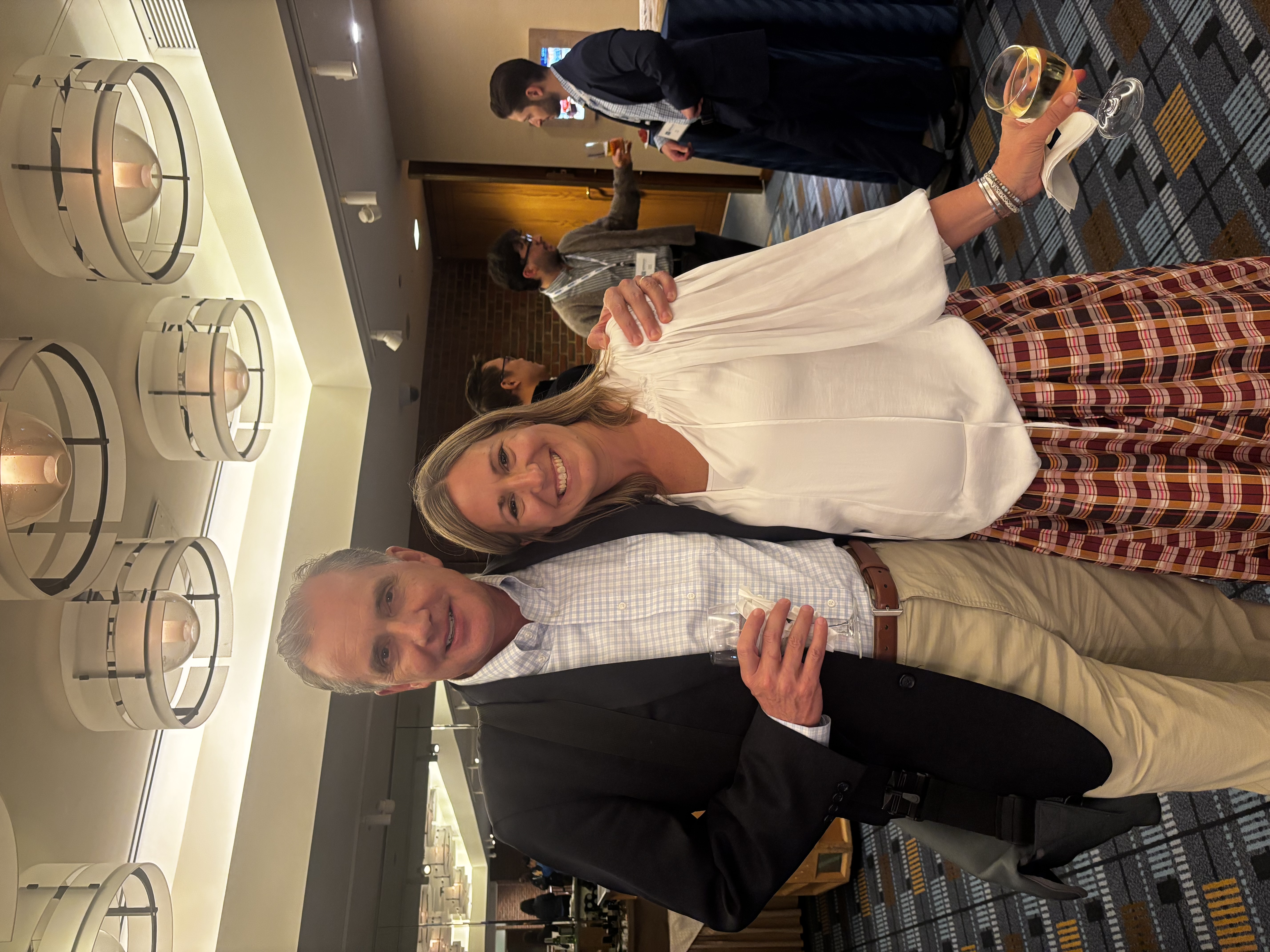
A look back at CamJAM
Thank you to our CamJAM sponsors




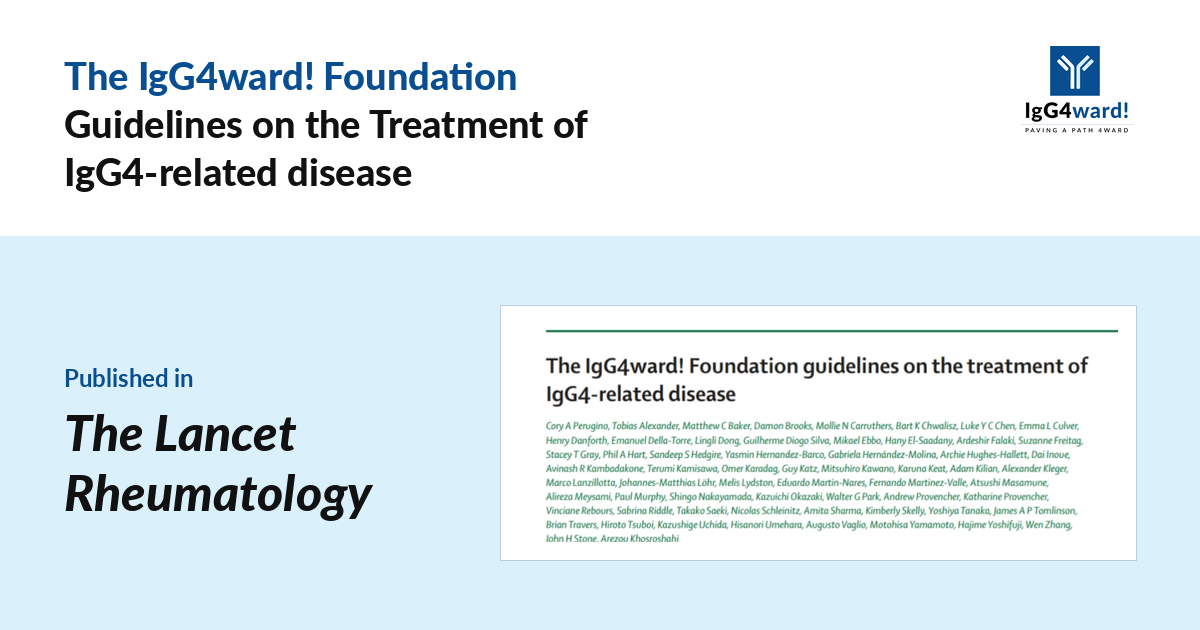
The IgG4ward! Foundation guidelines on the treatment of IgG4-related disease are now published in The Lancet Rheumatology
The IgG4ward! Foundation guidelines on the treatment of IgG4-related disease are now published in The Lancet Rheumatology. Developed over ten months by 52 physicians and 10 patients and caregivers from six continents, the Guidelines offer 28 Statements to guide treatment decisions for IgG4-RD.
Read more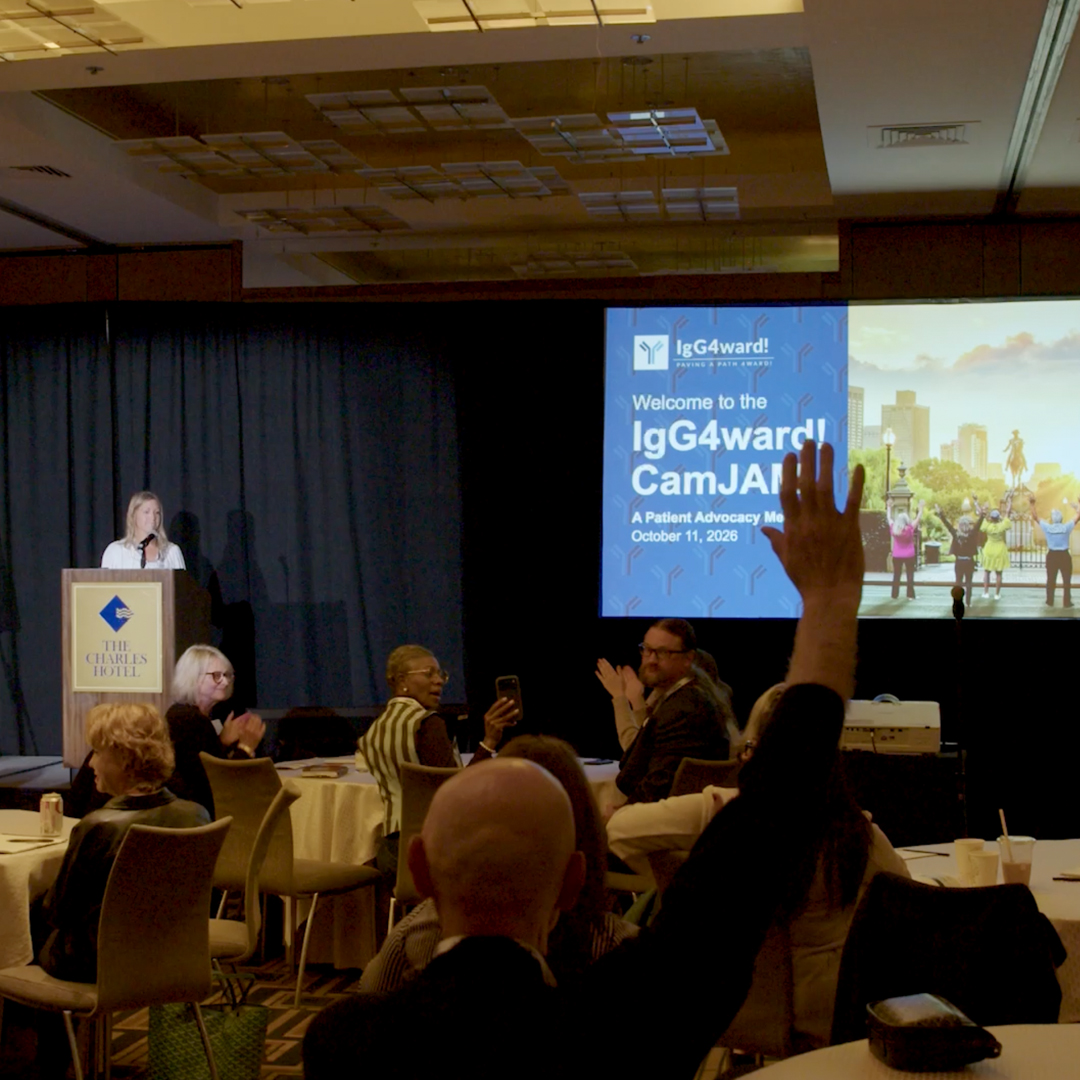
CamJAM 2026 recap: The hands that still go up
At CamJAM in Cambridge, people living with IgG4-related disease and their families learned from leading doctors and met others who understand. A reflection on the day and an invitation to join us at TexasJAM in Austin.
Read more
TexasJAM travel scholarships and parking assistance
A limited number of travel scholarships and parking vouchers are available for patients and caregivers attending TexasJAM on November 14, 2026, in Austin, Texas. Review eligibility, scholarship levels, and how to apply.
Read more