
Bookmark this lesson
Login or create an account to save and access your bookmarks
Bookmark this lesson
Login or create an account to save and access your bookmarks
Not yet registered?
What you can access by simply creating a account:
Register today to get the most out of the education academy. Save your progress, bookmarks lessons, track your progress plus more...

Save your progress in this lesson so you can pick it up where you left off.

Add lessons to your bookmarks so you can quickly return to them in the future.

Track your progress throughout the course to see what you have achieved.
Organ affected: kidneys
Kidney problems in IgG4-RD: what labs, urine, and scans show, and how care protects kidney function long-term.
 6 lessons
 Total: tbc
Medical management
Lesson 3 Medical management
Learn how clinicians evaluate kidney involvement, choose treatment, monitor relapse, and protect kidney function in daily care.
How IgG4-RD medical care protects your kidneys
When IgG4-related disease, or IgG4-RD, affects the kidneys, the goal of care is both simple and urgent: calm the inflammation and protect kidney function. That may sound straightforward, but kidney involvement can be quiet. Some people feel flank or back pain. Others feel nothing at all, even while blood tests or imaging show that the kidneys are under stress.
That silence can feel unsettling. Many people living with IgG4-RD have already been through long stretches of uncertainty, repeated tests, and worries about cancer or another serious disease. Kidney care adds another layer, because the kidneys do not always “speak” loudly when they are inflamed or when urine flow is blocked.
This is why medical management matters so much. It gives your care team a plan: look carefully, treat active inflammation, relieve any blockage, and keep watching over time.
In this video from PeachJam, Dr. Jason Cobb, Nephrologist, Emory Healthcare explains how kidney care in IgG4-RD has two goals: treating the immune inflammation and protecting kidney function.
Preventing kidney problems
Your kidneys are the body’s blood-cleaning filters. They remove extra fluid, balance salts and electrolytes, help control blood pressure, and clear waste products from the bloodstream. When IgG4-RD involves the kidneys, it can cause trouble in two major ways:
Inflammation within the kidney itself
Inflammation within the kidney itself has two forms: tubulointerstitial nephritis (TIN) and membranous glomerulonephritis (MGN). Of these two forms, TIN is by far the more common. Sometimes, TIN and MGN occur together.
TIN refers to inflammation occurring in the microscopic tissues in between the blood-filtering units of the kidneys, the glomeruli. This “tubulo-interstitium” – the name of this region – becomes inflamed, leading to damage in the small tubes (the tubules) that help process urine through the kidneys. In plain language, the kidney filter system becomes swollen and irritated. If that inflammation stays active for too long, it can lead to fibrosis, which is scar-like tissue that can make an organ stiffer over time.
MGN refers to inflammation within the small blood-filtering units of the kidney – the glomeruli. Inflammation of the glomeruli (or “glomerulonephritis”) causes damage to the filtering units, permitting proteins and sometimes red blood cells to escape from the blood into the urine. This leads to findings of proteinuria (excessive protein in the urine) and hematuria (red blood cells in the urine).
Because the kidneys are critical organs whose function is critical to the normal workings of other organs and the entire human body, the occurrence of TIN, MGN, or both can have profound consequences for the patient. It is important to identify these problems as early as possible and to treat them effectively.Retroperitoneal fibrosis (RPF)
The retroperitoneum is a deep space in the back of the abdomen where the kidneys, ureters, and major blood vessels sit. The ureters are the tubes that carry urine from the kidneys to the bladder. In IgG4-RD, inflamed tissue can form in this space and wrap around the ureters. If the ureters become squeezed, urine can back up toward the kidneys. This backup is called hydronephrosis. It is like a drainpipe being pinched from the outside: the kidney may still be making urine, but the urine cannot flow freely.
IgG4-RD is often a long-lasting condition that can relapse, meaning inflammation may return after a period of control. Because kidney involvement can be quiet, long-term follow-up is important—especially when IgG4-RD causes direct kidney inflammation or retroperitoneal fibrosis that can squeeze the ureters and block urine flow.1
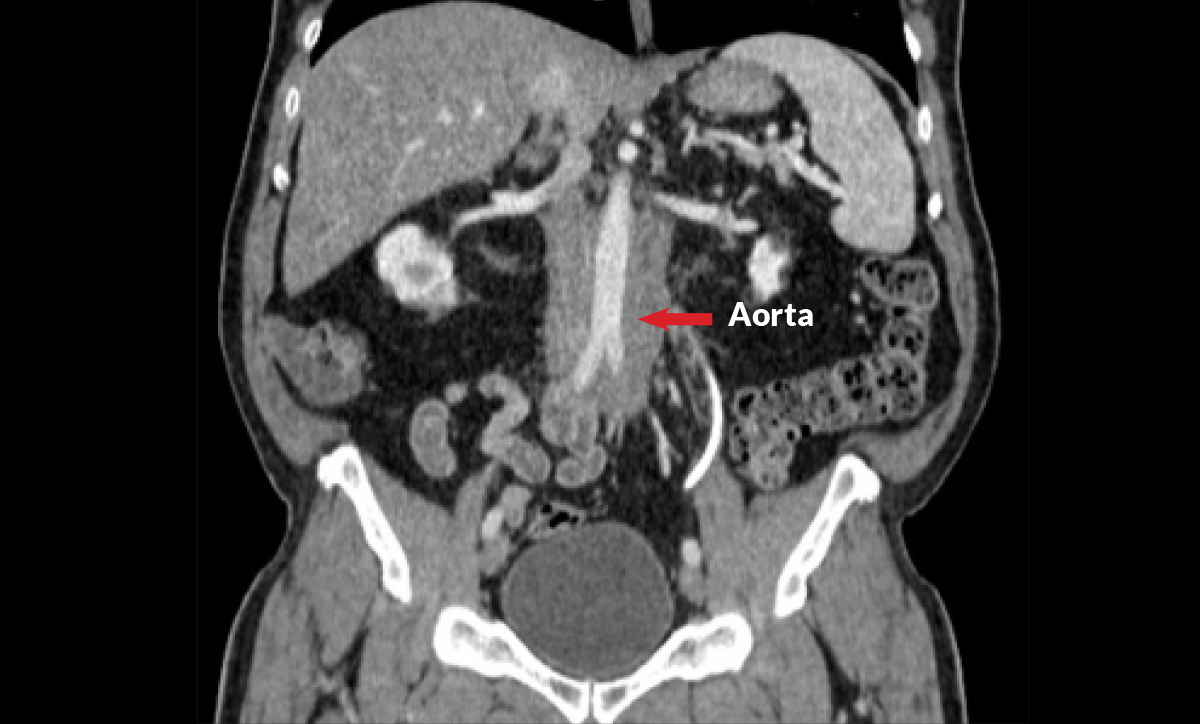
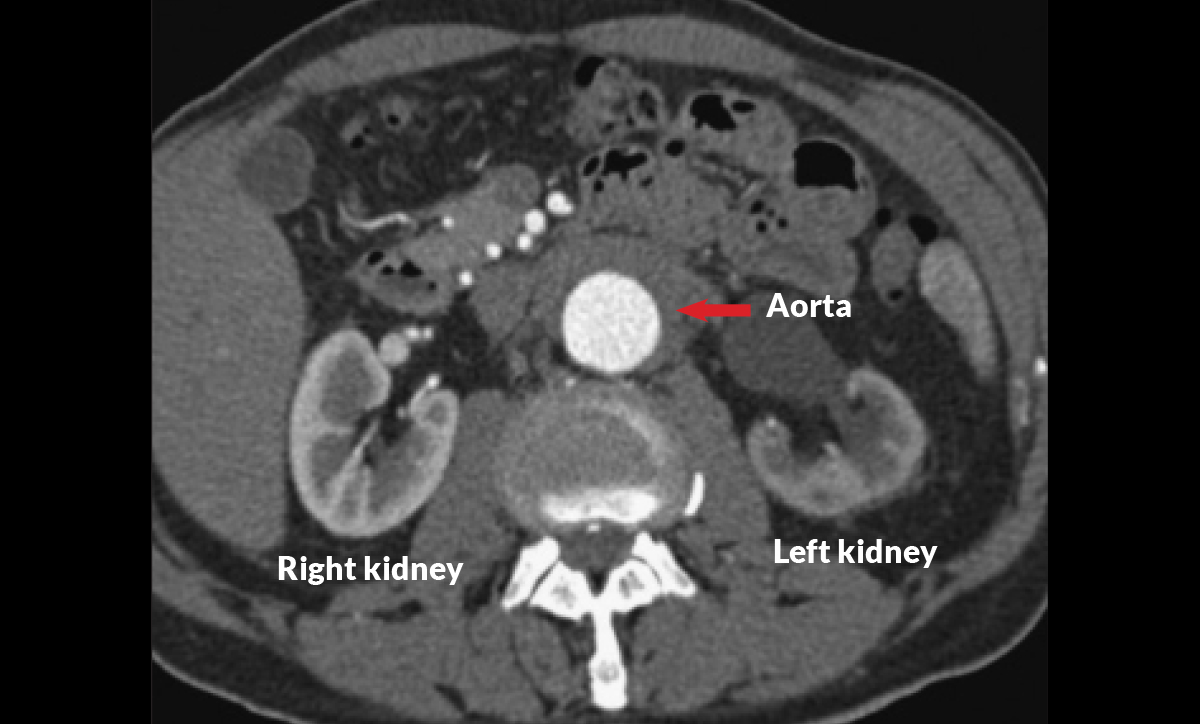
Retroperitoneal Fibrosis surrounding the aorta
Fibrosis = excessive buildup of connective tissue—mainly collagen—that occurs as part of the body’s response to certain injuries, such as inflammation. Fibrosis causes thick, permanent scar tissue and impairs normal organ function.
The first step is careful evaluation
Evaluation means gathering the information needed to understand what is happening and how urgent it is. For kidney IgG4-RD, this usually starts with a careful story, a physical exam, blood tests, urine tests, and imaging. The goal is to answer a few important questions:
Are the kidneys inflamed?
Is urine flow blocked?
Is kidney function changing?
Could something besides IgG4-RD be causing the problem?
Clinicians look for several kinds of clues:
Symptoms
Symptoms can be flank pain, back pain, groin pain, changes in urination, swelling in the legs, fatigue, fevers, weight loss, or symptoms in other organs.
Kidney risk factors
Risk factors for worsening kidney disease include high blood pressure, diabetes, kidney stones, recent infections, medicines, supplements, or contrast dye used for imaging tests.
Blood and urine results
Important tests include: creatinine, eGFR, and urine tests that look for blood, protein, or other signs of kidney stress.
Creatinine is a waste product that can rise when the kidneys are not filtering well. Early TIN may have no obvious symptoms, so a rising creatinine may be one of the first signs that the kidneys need closer attention.
eGFR is an estimate of how well the kidneys are filtering. Urine tests are important because blood or protein in the urine can sometimes appear before a person feels any symptoms.
In IgG4-related tubulointerstitial nephritis urine findings can sometimes be mild. That means a normal-looking urine test does not always rule out kidney involvement.
In IgG4-related membranous glomerulonephritis, the urine findings are often more significant. MGN is usually associated with a significant increase in the amount of protein in the urine.
Imaging is often essential
An ultrasound can quickly show whether urine is backing up into the kidneys. A CT scan or MRI can give more detail, especially if the care team is looking for retroperitoneal fibrosis, kidney lesions, or disease around the aorta and ureters.
Sometimes a biopsy is needed
A biopsy is a small tissue sample examined under a microscope. In kidney disease, a biopsy can help distinguish IgG4-related TIN from other causes of kidney injury.
In retroperitoneal fibrosis, biopsy may be considered when the diagnosis is uncertain, when cancer must be excluded, or when the imaging pattern is not typical. This matters because IgG4-RD can mimic cancer, infection, and other inflammatory diseases.2
Treatment starts by calming active inflammation
Treatment means using medicines and procedures to stop active disease and prevent long-term damage. In IgG4-RD, treatment decisions depend on which organs are involved, how active the inflammation is, whether fibrosis has already caused scarring, and whether the kidneys are in danger.
Glucocorticoids, often called steroids, are medicines such as prednisone that quickly calm inflammation. They have been used for many years as first-line therapy in IgG4-RD. Recent clinical reviews describe steroids as standard initial treatment in many settings, often started at a moderate to high dose and then tapered over weeks to months depending on organ severity and response.3
For the kidneys, speed can matter. Nephrologists often say that “time is nephrons”; that is, the longer inflammation within the kidneys persists, the greater the loss of nephrons and the greater the permanent damage. If creatinine is rising because of active TIN, or if imaging shows active inflammation around the ureters, clinicians may treat promptly to prevent permanent loss of function.
Steroids can reduce swelling and inflammation, and are often critical in the early phases of treatment. However, steroids also have important side effects, including high blood sugar, weight gain, mood changes, sleep trouble, bone thinning, infection risk, and blood pressure changes.
Personalized support on your steroid journey
Get support and education on your steroid journey with a new digital companion, Sam (Steroids and Me). Find answers and learn how to work with your doctors for the best care and taper plan.
DOWNLOAD APP NOWB-cell targeted treatment may be part of the plan
B cells are immune cells that help make antibodies and help coordinate immune activity. In IgG4-RD, B cells are part of the immune system’s safety team that has become overactive and misdirected. Some B-cell treatments try to quiet the disease by lowering certain B cells.
Inebilizumab is a medicine that targets CD19, another marker on B cells. In the MITIGATE randomized trial, inebilizumab reduced IgG4-RD flares and increased the chance of flare-free complete remission at one year.54 This is an important development in IgG4-RD care, but individual treatment choices still depend on the person’s organ involvement, infection risk, medication history, access, insurance coverage, and clinician judgment
Rituximab is a medicine that targets CD20, a marker found on many B cells. It has been used off-label in IgG4-RD, especially when disease relapses, when steroids cause too many side effects, or when organ-threatening disease calls for a steroid-sparing approach. Evidence for rituximab in IgG4-RD includes open-label studies and organ-specific reports, including kidney involvement, but it has not had the same type of randomized trial evidence in IgG4-RD as newer CD19-directed treatment. 4
For kidney-protective care, the main idea is not “one medicine for everyone.” The main idea is matching treatment intensity to risk. A person with mild, stable findings may need close monitoring and a careful treatment discussion. A person with rising creatinine, obstructed urine flow, or multiple active organs may need faster and stronger intervention.
Relieving blockage protects the kidney while medicines take effect
When retroperitoneal fibrosis blocks the ureters, immune treatment alone may not be enough at the start. The kidney may need a temporary way to drain urine while inflammation is being treated.
A ureteral stent is a small tube placed inside the ureter to help urine pass from the kidney to the bladder.
A nephrostomy tube is a tube placed through the skin into the kidney to drain urine into a bag outside the body.
These procedures do not treat the immune cause of IgG4-RD, but they can protect kidney function when urine is trapped.
Peer-reviewed papers of retroperitoneal fibrosis describe management as a combination of relieving obstruction and suppressing inflammation. In other words, clinicians may need to fix the “plumbing problem” and extinguish the “immune fire” at the same time.6 By extinguishing the flames of inflammation quickly, the goals of treatment are to preserve kidney function and place any stents or nephrostomy tubes that are required as quickly as possible.
Adjustment to the treatment program in retroperitoneal fibrosis can be emotionally difficult. Stents and nephrostomy tubes can feel like a sudden change in daily life. But they are often used as protective bridges. They give the kidneys room to drain while the care team treats the underlying disease and watches whether the fibrotic tissue shrinks.
“Retroperitoneal fibrosis is affecting that connection from the kidney down to the bladder. So this inflammation happens around the ureter. It causes an obstruction. That pressure causes damage to the kidney.”
— Jason Cobb, MD, nephrologist, associate professor of medicine, Division of Renal Medicine, Emory University School of Medicine
Kidney-protective care happens every day
Medical treatment is only one part of kidney protection. Day-to-day kidney care also matters, especially because IgG4-RD kidney involvement can be quiet and long-lasting.
Blood pressure control is one of the most important steps. High blood pressure can strain the kidneys, especially if IgG4-RD has already caused injury.
Blood sugar control matters too. This is especially important for people taking steroids, because steroids can raise blood sugar.
Medication safety is part of kidney care. Some medicines can stress the kidneys, including nonsteroidal anti-inflammatory drugs such as ibuprofen or naproxen. These medicines are not always forbidden, but people with kidney involvement should ask their clinician before using them.
Imaging tests may need planning. Contrast dye for CT scans may need extra care if kidney function is reduced.
Hydration, infection prevention, and vaccines also help protect the kidneys. Supplements can seem harmless, but some can affect the kidneys or interact with medicines. The safest approach is to bring a full medication and supplement list to every visit.
What remission means in kidney IgG4-RD
Remission means the disease is quiet. In kidney IgG4-RD, remission may mean symptoms have improved, creatinine has stabilized or improved, urine findings are better, imaging looks improved, and no new organ involvement is appearing.
But remission does not always mean the kidneys return to exactly where they were before. If inflammation is treated early, kidney function may improve a great deal. If fibrosis has been present for a long time, some scarring may remain. This is why early recognition matters. The goal is to treat inflammation while there is still tissue that can recover.
Researchers are still studying the best long-term treatment strategies for IgG4-related kidney disease. Some people need only a defined course of treatment and monitoring. Others need maintenance therapy to prevent relapse. Decisions are individualized.
Summary
Kidney involvement in IgG4-RD can be quiet at first, even when important changes are happening. That is why clinicians need a clear way to approach it: look carefully, act early when kidney function or urine flow is at risk, and keep watching after the disease becomes quiet.
The heart of medical management is partnership. Rheumatologists, nephrologists, urologists, radiologists, pathologists, primary care clinicians, and patients each bring an important piece of the picture. With the right team and regular follow-up, treatment can do more than calm inflammation. It can help protect kidney function, reduce the chance of lasting damage, and give patients a clearer path forward.
References
Peyronel F, Della-Torre E, Maritati F, Urban ML, Bajema I, Schleinitz N, Vaglio A. IgG4-related disease and other fibro-inflammatory conditions. Nature Reviews Rheumatology. 2025;21:275–290. https://doi.org/10.1038/s41584-025-01240-x URL: https://www.nature.com/articles/s41584-025-01240-x
Stone JH, Zen Y, Deshpande V. IgG4-related disease. New England Journal of Medicine. 2012;366:539–551. DOI: 10.1056/NEJMra1104650. DOI URL: https://doi.org/10.1056/NEJMra1104650
Wallace ZS, Perugino CA, Stone JH. Current and future advances in practice: IgG4-related disease. Rheumatology Advances in Practice. 2024;8:rkae020. DOI: 10.1093/rap/rkae020. URL: https://pmc.ncbi.nlm.nih.gov/articles/PMC11003820/
Stone JH, et al. Inebilizumab for treatment of IgG4-related disease. New England Journal of Medicine. 2025. DOI: URL: https://doi.org/10.1056/NEJMoa2409712
Quattrocchio G, Roccatello D, et al. IgG4-related kidney disease: the effects of a rituximab-based immunosuppressive therapy. Oncotarget. 2018;9:21337–21347. URL: https://www.oncotarget.com/article/25095/text/
Mizushima I, et al. Renal involvement in retroperitoneal fibrosis: prevalence, impact and management challenges. International Journal of Nephrology and Renovascular Disease. 2021;14:279–289. DOI: 10.2147/IJNRD.S313371. URL: https://pmc.ncbi.nlm.nih.gov/articles/PMC8328390/
Retroperitoneal Fibrosis surrounding the aorta
Fibrosis = excessive buildup of connective tissue—mainly collagen—that occurs as part of the body’s response to certain injuries, such as inflammation. Fibrosis causes thick, permanent scar tissue and impairs normal organ function.
 Save this lesson so you can resume it later
 Copy Link
 Share On X
 Share On Facebook
 Share On LinkedIn
 Share in Whatsapp
Further reading
IgG4ward reading guide on retroperitoneal fibrosis and kidney risk. IgG4ward Q&A on RPF, kidney obstruction, TIN, imaging, and treatment questions. IgG4ward! Jam Video Series- Video 4 - Retroperitoneal FibrosisPatient guides for doctor appointments
Educating new doctors and healthcare professionals on your IgG4-RD journey can feel like a full-time job. Download, print, or have your doctor scan the QR code of our patient guides to make every appointment more productive.
View guides