
Bookmark this lesson
Login or create an account to save and access your bookmarks
Bookmark this lesson
Login or create an account to save and access your bookmarks
Not yet registered?
What you can access by simply creating a account:
Register today to get the most out of the education academy. Save your progress, bookmarks lessons, track your progress plus more...

Save your progress in this lesson so you can pick it up where you left off.

Add lessons to your bookmarks so you can quickly return to them in the future.

Track your progress throughout the course to see what you have achieved.
Organ affected: pancreas
Pancreas and bile duct inflammation that can mimic cancer: symptoms, key tests, and why early treatment matters.
 6 lessons
 Total: tbc
 2 minutes
Chapter 6 introduction
Understanding IgG4-RD in the pancreas
IgG4-related disease (IgG4-RD) can affect many parts of the body. In this chapter, we’ll focus on the pancreas—an organ that quietly helps you digest food and control blood sugar every day. When IgG4-RD involves the pancreas, it can cause a specific problem called autoimmune pancreatitis (AIP).
Pancreas symptoms can be very concerning—and sometimes quite severe—so the evaluation often moves quickly, especially when jaundice appears. This chapter will walk you through what might be happening, why autoimmune pancreatitis can be confusing at first, and the main clues your clinicians use to distinguish IgG4-RD from other look- alike problems, and how it is managed.
Autoimmune pancreatitis and its complications
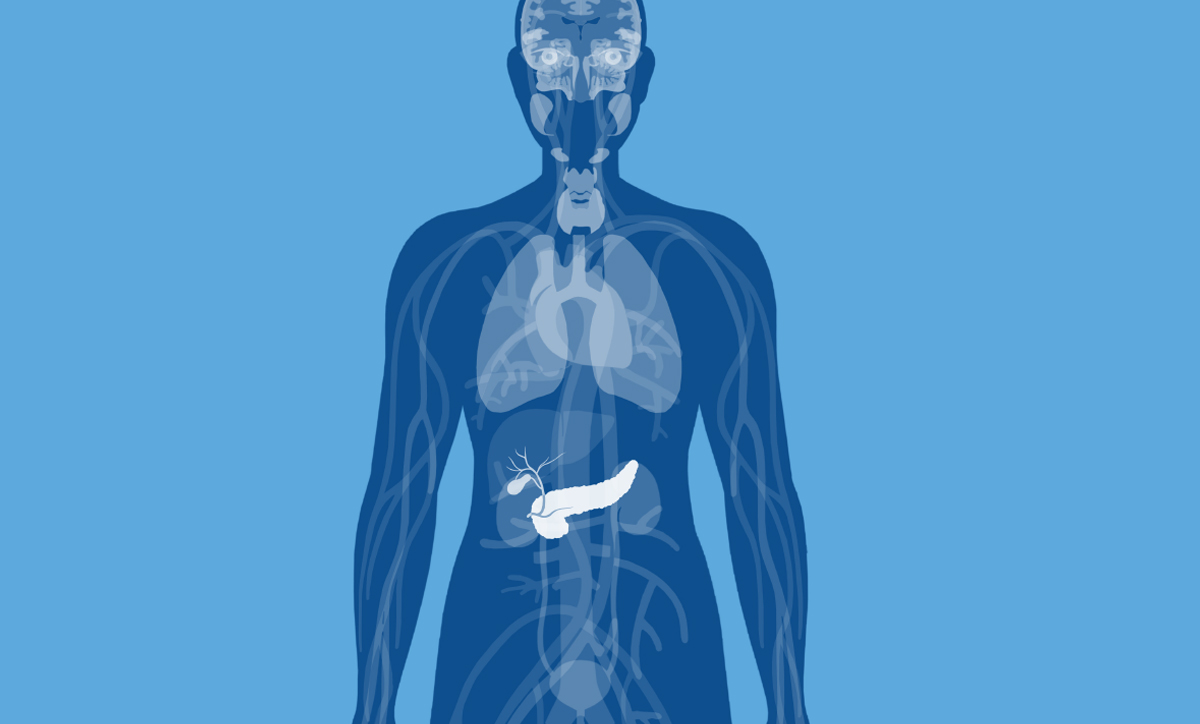
What you’ll learn in this chapter
This chapter follows a steady path: expert teaching first, then patient and clinician conversations, then common questions—so you can build confidence step by step.
Lesson 1: Experts explain (pancreas)
What the pancreas does, how IgG4-RD causes AIP, common symptoms (like jaundice and pain), and why it can look like cancer.
Lesson 2: Patient roundtable
Real experiences of living with pancreatic and bile-duct involvement.
Lesson 3: Clinician roundtable
How specialists work together to diagnose, treat, and monitor p ancreas disease.
Lesson 4: Common questions
Clear answers to the questions patients and caregivers ask most often.
Quiz: Test your knowledge – Chapter 5
A short knowledge check to reinforce the key takeaways.
As you move through the lessons, keep this simple idea in mind: early inflammation is often more reversible than later scarring. The sooner the pattern is recognized, the more options you usually have.
References
1. Stone JH, Zen Y, Deshpande V. IgG4-Related Disease. N Engl J Med. 2012;366:539–551. https://www.nejm.org/doi/full/10.1056/NEJMra1104650
2. IgG4ward! Foundation. IgG4-RD Pancreas – Bile Ducts. https://igg4ward.org/igg4ward-educational-resources/igg4-rd-pancreas-bile-ducts/
3. Mayo Clinic. Autoimmune pancreatitis—Diagnosis and treatment. https://www.mayoclinic.org/diseases-conditions/autoimmune-pancreatitis/diagnosis-treatment/drc-20369804
 Save this lesson so you can resume it later
 Copy Link
 Share On X
 Share On Facebook
 Share On LinkedIn
 Share in Whatsapp
Further reading
Website. NIH GARD overview of IgG4-related disease for patients and families. Website. Mayo Clinic overview of how AIP is diagnosed and why it can mimic cancer.Patient guides for doctor appointments
Educating new doctors and healthcare professionals on your IgG4-RD journey can feel like a full-time job. Download, print, or have your doctor scan the QR code of our patient guides to make every appointment more productive.
View guides