
Bookmark this lesson
Login or create an account to save and access your bookmarks
Bookmark this lesson
Login or create an account to save and access your bookmarks
Not yet registered?
What you can access by simply creating a account:
Register today to get the most out of the education academy. Save your progress, bookmarks lessons, track your progress plus more...

Save your progress in this lesson so you can pick it up where you left off.

Add lessons to your bookmarks so you can quickly return to them in the future.

Track your progress throughout the course to see what you have achieved.
Organ affected: pancreas
Pancreas and bile duct inflammation that can mimic cancer: symptoms, key tests, and why early treatment matters.
 6 lessons
 Total: tbc
 11 minutes + video
Medical management
Learn how doctors choose steroids, stents, enzymes, and follow-up plans to protect the pancreas and coordinate care.
Medical management of pancreatic and bile duct IgG4-RD
When the pancreas is affected by IgG4-related disease (IgG4-RD), treatment is about more than putting out today’s fire. It is also about protecting digestion, preserving blood sugar control, preventing scarring, ensuring that IgG4-RD is not involving organs other than the pancreas, and making sure the right specialists are talking to each other. That can feel like a lot. The reassuring part is that pancreatic IgG4-RD is very treatable—and treatment-responsive—when the care team recognizes it early and follows it closely.
This chapter covers medical management, and reviews some ideas presented in Chapter 3, Lesson 1 regarding treatment.
Decision making and coordinated care
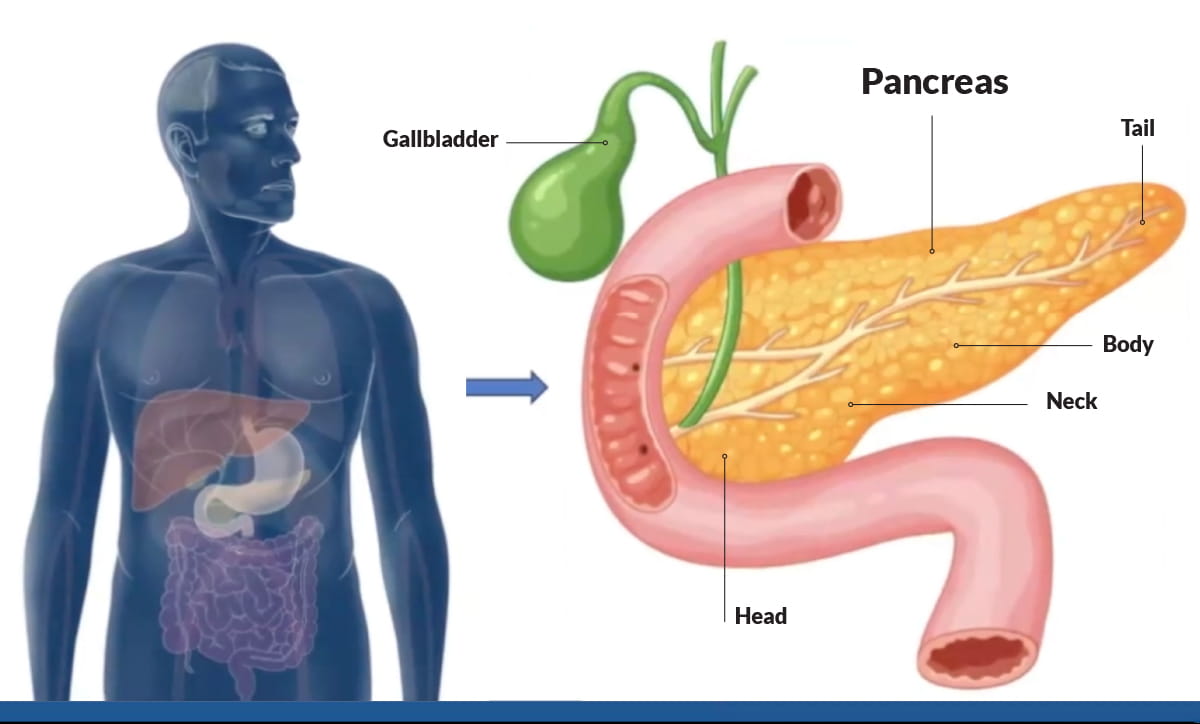
How doctors make treatment decisions
Physicians usually begin with a few practical questions:
How active is the inflammation right now?
Is the pancreas the only organ involved, or are the bile ducts also affected? And beyond the pancreas and bile ducts, what other organs might be affected by IgG4-RD?
Is there a blockage causing jaundice, itching, infection, or trouble with bile flow?
Is there pancreatic insufficiency (when the pancreas does not make enough digestive enzymes)?
Has the disease already caused long-term damage, such as scarring, exocrine insufficiency or diabetes?
Could this still be cancer or another condition that mimics IgG4-RD?
That last question matters because pancreatic IgG4-RD can look very similar to pancreatic or bile duct cancer on scans. For that reason, treatment decisions are built from the whole picture: symptoms, blood tests, imaging, sometimes endoscopic procedures, and sometimes biopsy.
In other words, good management starts with careful diagnosis, not with rushing into one procedure or one medicine.
The first goal is to calm inflammation
For most patients with active pancreatic IgG4-RD, glucorticoids are the first medicines used to bring inflammation down. These medicines are used to reduce inflammation and calm the immune system.
Doctors often choose them first because pancreatic IgG4-RD usually responds quickly, and that early improvement can help confirm that the team is treating the right problem. In this context, glucocorticoids often have a special role in the treatment of disease in the pancreas and bile ducts. Because IgG4-related inflammation in the pancreas and bile ducts often resembles a cancer—and vice versa—a month of treatment with glucocorticoids is often used to differentiate these two possibilities.
Following a month of prednisone, most cases of IgG4-RD affecting the pancreas or bile ducts will improve substantially: clinically, serologically, and radiologically. A standard approach when IgG4-RD and cancer cannot be distinguished immediately, therefore, is to employ a course of prednisone and to re-evaluate the patient thoroughly a few weeks later, with repeat blood testing for IgG4 and repeat imaging. A brisk response to the intervention with prednisone strongly favors IgG4-RD, and treatment may be adapted accordingly.
When steroids are working, physicians often look for several signs of improvement:
jaundice begins to improve
pain may lessen
blood tests start to settle down
swelling on imaging may shrink
Another medication such as a B-cell-depleting agent may be considered if the disease returns, does not respond completely, or when steroid side effects become too burdensome.1-3
At the same time, physicians are already thinking one step ahead. Steroids can work very well, but they can also cause important side effects, including:
sleep problems
mood changes
weight gain
high blood sugar
higher infection risk
bone loss
That is why treatment planning usually includes a taper strategy from the start, along with discussion of bone protection, glucose monitoring, and whether a steroid-sparing plan may be needed.
When a stent is needed, and when it is not
Sometimes physicians may consider a stent, which is a small tube placed during an endoscopic procedure to help keep a narrowed bile duct open so bile can drain. Stents are not always needed in pancreatic or bile duct IgG4-RD, and when they are used, they are required for only a short time—a matter of a few weeks.
A stent is more likely to be considered when inflammation has narrowed the bile duct enough to create a meaningful blockage problem, causing symptoms or signs such as jaundice, intense itching, worsening liver tests, infection or concern about infection, or poor bile flow seen on evaluation. In that setting, endoscopic treatment can help relieve the blockage while immune treatment starts working.2,4
This is why doctors do not decide about stents based only on the name of the diagnosis. They focus on function and safety. Common questions include:
Is bile flow blocked?
Is the patient jaundiced?
Is the blockage severe enough to be dangerous?
Will medical therapy reverse the blockage quickly?
Is there infection or a high risk of infection?
When B-cell-directed treatment enters the plan
Pancreatic and bile duct IgG4-RD often responds well to steroids, but many physicians think early about whether steroids are the right long-term fit for a particular patient. Teams may start thinking about a steroid-sparing plan sooner when:
the disease has already returned before, demonstrating its tendency to recur
more than one organ is involved
steroid side effects could be especially hard on the patient
diabetes is already present or blood sugar is at higher risk of worsening
That last point matters in pancreatic disease because both the disease itself and steroids can worsen blood sugar control.
This is where B-cell depletion becomes important. Inebilizumab is an approved approach to B-cell depletion for the treatment of IgG4-RD. B cell depletion has been used widely in IgG4-RD when:
the burden of disease at baseline suggests that use of B-cell depletion is in the patient’s best interest
the disease relapses
steroid tapering repeatedly leads to flares
steroid toxicity becomes a major concern
More recently, MITIGATE trial showed that inebilizumab, a B-cell-directed therapy depleting medication, reduced the risk of IgG4-RD flares by 87% compared with placebo during the 52-week controlled period.1-3
Ninety percent of the patients who received inebilizumab from the start of the trial were able to discontinue prednisone after two months and not have to resume glucocorticoid treatment. In contrast, only 37% of the patients who received prednisone alone from the start of the trial achieved that endpoint.
That does not mean every patient with pancreatic involvement needs B-cell-directed therapy. But it does reinforce an important physician perspective. When the disease keeps coming back, or when steroids are likely to cause more harm than help, B-cell-targeted treatment may be a very thoughtful next step.
In addition, for many patients, because of their burden of disease or their high likelihood of steroid side effects, B-cell-targeted strategies should be considered from the start.
Common treatments for pancreas and bile duct disease
Treatment or support | How it is used in induction care | How it is used in ongoing maintenance or repeat/rescue care |
|---|---|---|
Glucocorticoids | Often the first treatment used to bring active inflammation under control quickly, especially when there is pancreatic swelling, pain, jaundice, or abnormal liver tests | Usually tapered after initial response; sometimes used again for relapse, but repeated courses may be limited by side effects such as diabetes, weight gain, infection risk, and bone loss |
Inebilizumab, or another B-cell-depleting strategy | Sometimes chosen early when steroids are risky or not a good fit, or when disease is severe and the team wants a steroid-sparing strategy | Commonly used for relapsing disease, repeated flares during taper, or planned maintenance in selected patients at high risk of recurrence |
ERCP with biliary stent or drainage | Used when bile duct narrowing is causing meaningful blockage, jaundice, worsening liver tests, or infection risk; helps restore bile flow while medical therapy starts working | Stents may need follow-up exchange or removal depending on healing; repeat ERCP may be needed if narrowing returns or obstruction recurs |
Pancreatic enzyme replacement | Started when active disease has caused poor digestion, greasy stools, bloating, weight loss, or vitamin absorption problems | Continued long term when pancreatic enzyme production does not fully recover; dose may be adjusted based on symptoms, weight, and nutrition |
Diabetes treatment | Added when pancreatic inflammation or steroid treatment raises blood sugar during the active treatment phase | Often requires ongoing management if endocrine pancreatic function remains impaired; treatment may need adjustment as steroid doses change |
Nutrition and vitamin support | Used early when poor intake, weight loss, or fat-soluble vitamin problems are present during active illness | Continued as needed to support long-term digestion, weight stability, and recovery from chronic pancreatic or biliary dysfunction |
Supporting the pancreas while it heals
Medical management is not only about suppressing the immune system. It is also about helping the pancreas do its job. If inflammation or scarring has reduced enzyme production, doctors may prescribe pancreatic enzyme replacement to help with digestion, weight stability, bloating, greasy stools, or vitamin absorption.
If blood sugar has been affected, diabetes treatment may need to be added in order to restore effective glucose control. Some patients also need monitoring of fat-soluble vitamins because pancreatic and bile duct disease can interfere with absorption. Chronic damage can lead to both exocrine and endocrine dysfunction, so symptom control and function support are part of core treatment, not an afterthought.2,4
Physicians also pay attention to lifestyle details that support healing: avoiding smoking, being cautious with alcohol, and maintaining steady nutrition. These steps do not replace medical therapy, but they can reduce extra stress on an already inflamed pancreas.
Making a plan for the months and years ahead
Once the pancreas and bile ducts settle down, the next question is how to keep them that way. Physicians usually think in two broad patterns.
Reactive monitoring: treat the flare, taper carefully, then watch closely for symptoms, lab changes, or imaging changes that suggest the disease is returning.
Scheduled maintenance: planned repeat treatment for patients whose disease has been hard to control, has relapsed before, or could do serious harm if it returns quietly.
Neither approach is automatically right for everyone. The choice depends on how the disease has behaved before, how reliable follow-up can be, how much silent damage might occur before symptoms become obvious, and how risky a flare would be for that organ.
In pancreas and bile duct disease, quiet recurrence can matter because inflammation may return before a patient clearly feels it. That is one reason teams often combine symptom review with labs and, when appropriate, repeat imaging.
A quick guide to common management decisions
Clinical situation | What physicians may do | What they are watching for |
|---|---|---|
Active pancreatic inflammation without dangerous blockage | Start glucocorticoids, consider early use of a B-cell-targeted therapy, and taper with close follow-up | Symptom relief, shrinking inflammation, safer labs, steroid side effects |
Bile duct narrowing with jaundice, worsening liver tests, or cholangitis risk | Add ERCP-based drainage or stenting while medical therapy begins | Return of bile flow, infection risk, timing of safe stent removal |
Relapsing disease or high steroid burden | Consider inebilizumab, or another B-cell-directed approach | Fewer flares, lower steroid exposure, infection risk, vaccine timing |
Ongoing greasy stools, weight loss, bloating, or vitamin issues | Add pancreatic enzyme replacement and nutritional support | Better digestion, weight stability, vitamin absorption |
Rising glucose or known diabetes | Coordinate diabetes management with pancreatic treatment | Blood sugar control during and after steroid treatment |
What doctors watch for over time
Even when treatment works well at the beginning, follow-up still matters. The main things clinicians watch for are relapse, medication side effects, and signs of lasting organ damage. That usually means repeat visits, repeat blood work, and follow-up imaging at intervals chosen for the individual situation. Doctors may monitor liver tests, bilirubin, blood sugar, symptoms of malabsorption, and signs that bile duct narrowing is returning.
They also watch for clues that the pancreas is becoming more scarred over time, such as calcifications, duct stones, worsening enzyme deficiency, or harder-to-control diabetes. IgG4-RD is often a chronic relapsing condition, so long-term follow-up is part of good care even after an early response.2-4
Why care coordination matters so much
Pancreatic IgG4-RD often sits at the crossroads of several specialties.
A gastroenterologist or pancreatologist may help with diagnosis, endoscopy, enzymes, and complications of pancreatic damage.
A hepatologist or advanced endoscopist may help when the bile ducts are involved.
A rheumatologist often helps guide the overall immune treatment plan.
A primary care clinician helps monitor blood pressure, blood sugar, bone health, vaccines, and the day-to-day impact of long-term treatment.
This team approach matters because the best decision for one organ is not always the best decision for the whole patient unless people are coordinating.
For example, a patient may need a steroid plan that also takes diabetes risk into account. Another may need rituximab planning that lines up with infection prevention and vaccine timing. Another may need endoscopic stent management while immune therapy is adjusted. Good care coordination turns separate treatments into one coherent plan.
Summary
The medical management of pancreatic IgG4-RD is guided by two goals at the same time: calm the inflammation, and protect organ function. Steroids are often the first step, but physicians also think about relapse prevention, side effects, and when B-cell-directed therapy such as rituximab is the better long-term fit. Stents are useful when bile duct blockage is causing trouble, but they are not automatically required just because the pancreas is inflamed. Over time, careful monitoring for digestive problems, diabetes, recurrent obstruction, medication side effects, and fibrosis helps the care team keep treatment aligned with what your body needs.
References
1. Stone JH, Zen Y, Deshpande V. IgG4-Related Disease. N Engl J Med. 2012;366:539-551. https://www.nejm.org/doi/full/10.1056/NEJMra1104650
2. Peyronel F, Della-Torre E, Maritati F, et al. IgG4-related disease and other fibro-inflammatory conditions. Nat Rev Rheumatol. 2025;21:275-290. https://doi.org/10.1038/s41584-025-01240-x
3. Stone JH, Della-Torre E, Barisoni L, et al. Inebilizumab for Treatment of IgG4-Related Disease. N Engl J Med. 2024. https://doi.org/10.1056/NEJMoa2409712
4. Miyazawa M, Takatori H, Kawaguchi K, et al. Management of biliary stricture in patients with IgG4-related sclerosing cholangitis. PLoS One. 2020;15(4):e0232089. https://doi.org/10.1371/journal.pone.0232089
5. Nikolic S, Ljubicic N, Duvnjak M, et al. Exocrine and Endocrine Insufficiency in Autoimmune Pancreatitis: A Matter of Treatment or Time? J Clin Med. 2022;11(13):3748. https://doi.org/10.3390/jcm11133748
6. IgG4ward. Fireside Chat: Pancreatic & Biliary Insights in IgG4-related disease. 2025. https://igg4ward.org/igg4ward-educational-resources/igg4-rd-pancreas-bile-ducts/
 Save this lesson so you can resume it later
 Copy Link
 Share On X
 Share On Facebook
 Share On LinkedIn
 Share in Whatsapp
Further reading
Health website: Explanation of autoimmune pancreatitis, testing, treatment, and follow-up. Review: Chapter 3, Lesson 1, Overview of treatment.Patient guides for doctor appointments
Educating new doctors and healthcare professionals on your IgG4-RD journey can feel like a full-time job. Download, print, or have your doctor scan the QR code of our patient guides to make every appointment more productive.
View guides