
Bookmark this lesson
Login or create an account to save and access your bookmarks
Bookmark this lesson
Login or create an account to save and access your bookmarks
Not yet registered?
What you can access by simply creating a account:
Register today to get the most out of the education academy. Save your progress, bookmarks lessons, track your progress plus more...

Save your progress in this lesson so you can pick it up where you left off.

Add lessons to your bookmarks so you can quickly return to them in the future.

Track your progress throughout the course to see what you have achieved.
Treatment and disease management
Understand how inflammation is managed through steroids, immune therapies, and supportive care—and what to expect at each step.
 8 lessons
 Total: tbc
 8 minutes + video
Treatment overview
Treatment for IgG4-RD includes calming inflammation, protecting organs, watching for relapse, and adjusting care over time.
Overview of IgG4-RD treatment and disease management over time
When you hear the word treatment, it is easy to think only about medicine. But in IgG4-related disease (IgG4-RD), treatment is part of a much bigger picture. It includes calming inflammation, protecting organs, checking whether the disease is improving, and watching over time for signs that it may become active again.
That larger picture is called disease management. In medical language, disease management means the long-term plan used to control illness and reduce harm. In everyday language, it means helping you stay as well as possible, not just today, but over time.
For many people, this part of the journey can feel uncertain and bring up many questions. This lesson is meant to answer those questions before we move into the specific treatment options later in the chapter.
Treatment is a process, not a single step
Doctors often think about IgG4-RD care in two broad phases:
Induction treatment
The first phase is induction treatment. That is the medical term for treatment used to quickly reduce active inflammation. In simpler terms, this is the phase where doctors try to “put out the fire.” When an organ is inflamed, the goal is to cool that inflammation down quickly before it causes more swelling, blockage, pain, or scarring. Often, glucocorticoids such as prednisone are the usual first treatment because they often work fast.1
Maintenance therapy
The second phase is maintenance therapy. That means treatment, or sometimes close observation, after the first inflammation has settled down. Its purpose is to help keep the disease quiet and reduce the risk of another flare.
This matters because IgG4-RD is not only a disease of inflammation. It is also a disease in which repeated inflammation can leave damage behind. Even if one flare improves, repeated flares in the same organ can lead to more fibrosis, which is scar-like tissue that can make the organ work less well over time. 3,4
A simple way to picture the journey
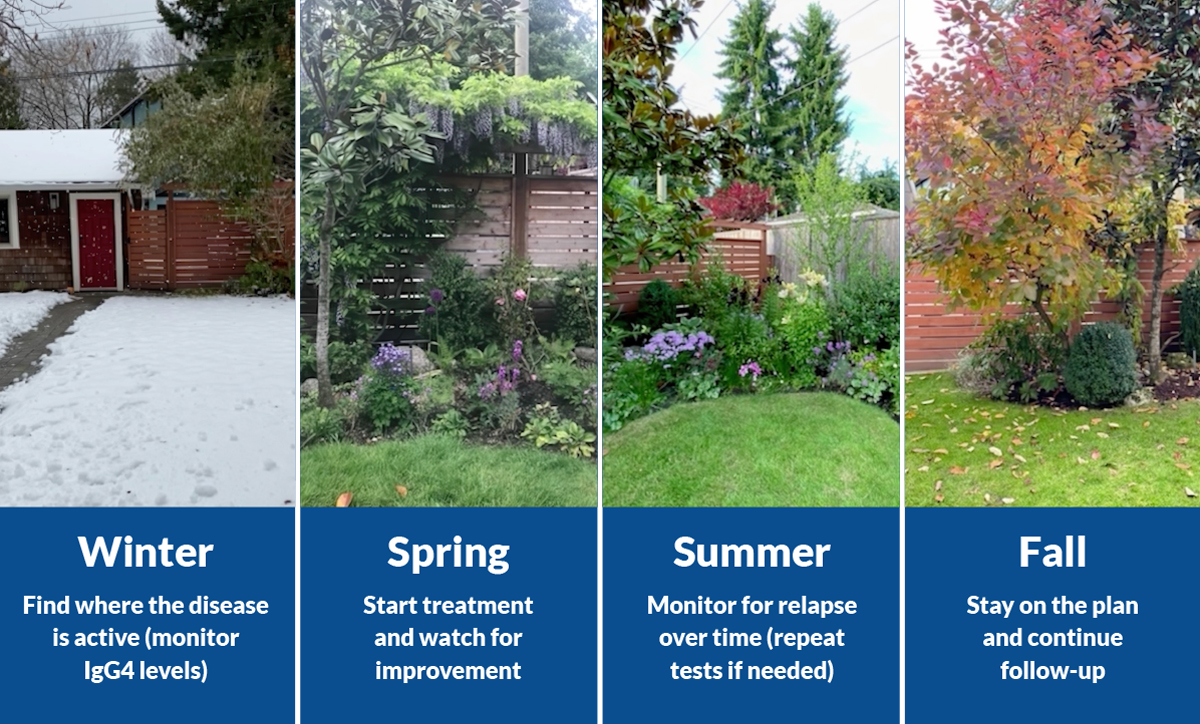
One helpful way to think about this process is the idea that IgG4-RD often changes over time the way seasons change.2 There may be a season of diagnosis, a season of treatment, a season of watching, and sometimes a season when the disease becomes active again.
Why treatment plans differ from person to person
No single treatment plan fits every person with IgG4-RD. Some people have only one organ involved. Others have several. Some have disease in an area where even a small amount of extra inflammation could cause serious trouble, such as the pancreas, kidneys, lungs, bile ducts, blood vessels, or tissue around the aorta or ureters. Some respond quickly and stay stable for a long time. Others have a more relapsing pattern.1,3
That is why doctors usually ask three important questions when planning treatment:
How active is the disease right now?
How much risk is there of organ damage?
How likely is the disease to return if treatment is reduced or stopped?
Doctors also consider something that matters deeply in real life: your own experience. A medicine may be effective in general, but side effects, personal priorities, other health conditions, and day-to-day burden all matter.1
Not everyone is treated the same way right away
Most people with IgG4-RD do need treatment, because untreated inflammation can quietly damage organs over time. But there are some situations in which careful monitoring may be reasonable before long-term treatment is started.
This comes up most often when disease seems limited to the head and neck (for example, enlargement of the salivary or tear glands) and symptoms are mild. Even then, doctors usually do not simply “leave it alone.” They look carefully for signs of disease elsewhere and follow the patient over time.1
That distinction matters. Sometimes people hear “we are going to monitor this” and worry that nothing is being done. But monitoring is a form of care. It means watching thoughtfully and being ready to act if the picture changes.
What monitoring means for you
Monitoring is the medical term for regular follow-up to see whether the disease is improving, staying quiet, or becoming active again. In practical terms, it means that your doctors are tracking both the disease and the effects of treatment.
Monitoring often includes several parts:
How you feel. That may include changes in swelling, pain, pressure, breathing, dry mouth, dry eyes, appetite, fatigue, urination, jaundice, or other symptoms related to the organs involved.
Physical exam. Doctors may look for enlarged glands, new lumps, tenderness, signs of fluid buildup, changes around the eyes, or other clues that inflammation is active.
Blood and urine tests. These may include kidney and liver tests, inflammation markers, blood counts, blood sugar, urine testing, and sometimes serum IgG4 (the amount of IgG4 in the blood).
Imaging. Such as CT, MRI, ultrasound, or other studies to see whether an inflamed area is shrinking, stable, or growing.
Medication side effects. This is an important part of follow-up. If you are on steroids, doctors may watch for sleep trouble, mood changes, high blood sugar, high blood pressure, bone loss, or infection risk. If you are on B-cell-depleting treatment, they may watch for infections, infusion reactions, and low antibody levels over time.
So a follow-up visit is not “just checking in.” It is one of the main ways doctors protect your organs and adjust treatment safely.
What doctors are looking for
One of the hardest things about IgG4-RD is that disease activity is not always easy to feel. Some organs can become inflamed quietly. That means doctors are looking for both obvious symptoms and more subtle warning signs.
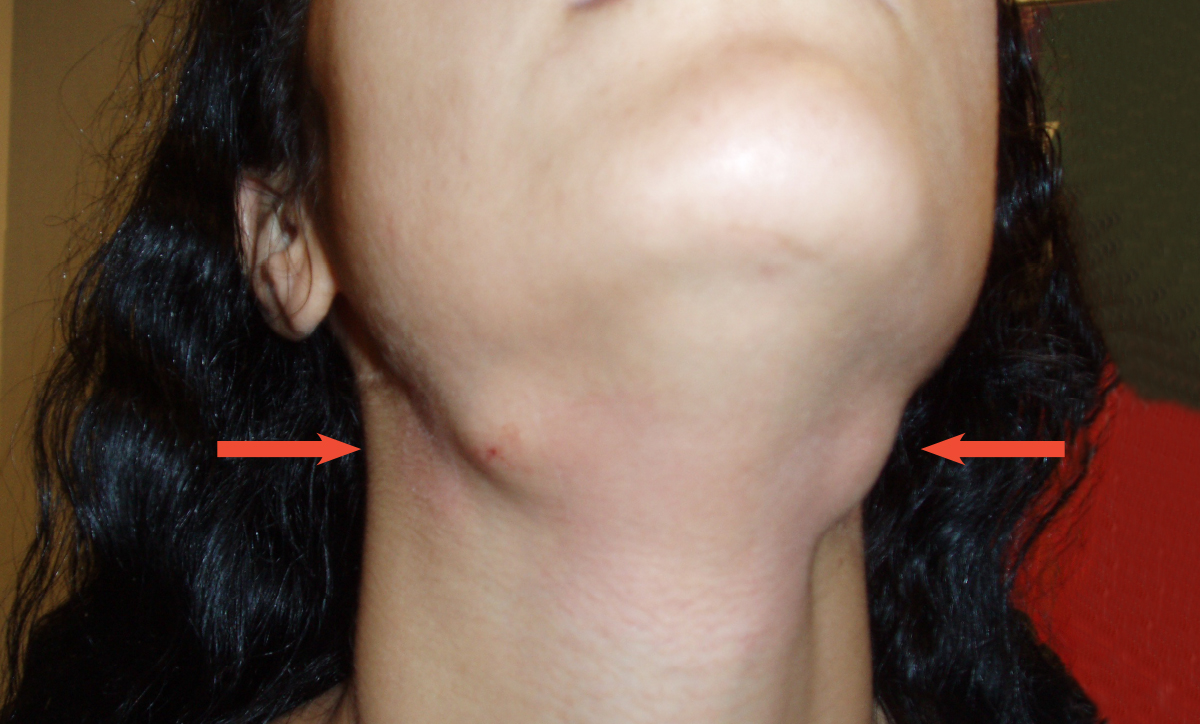
They may watch for things you can notice, such as new gland swelling, yellowing of the eyes or skin, changes in urination, cough, shortness of breath, dry mouth, belly discomfort, or back pain.
They also watch for things you may not notice right away, such as changing kidney or liver tests, new findings on scans, or rising markers in the blood. This is one reason regular follow-up matters even when you feel fairly well.
This whole-body reassessment is compared to the careful work done at diagnosis: symptoms, exam, labs, biopsy when needed, and imaging to look for disease in other places. Monitoring often repeats many of those same steps over time.2
Signs and symptoms of flare
IgG4-related disease (IgG4-RD) can cause inflammation in different organs. Doctors do full-body checks to catch signs of the disease progression, including subtle warning signs.
Swollen glands: Enlarged salivary, tear, or lymph glands
Dry mouth: Dry, sore, or irritated
Shortness of breath, cough: Lung inflammation
Changing liver function tests: Liver inflammation
Changing kidney function tests: Kidney inflammation
Belly pain or back pain: Pancreas or tissue inflammation
Changes in urination: Kidney inflammation
New findings on scans: Changes seen on CT, MRI, or ultrasound
Rising markers in blood: High IgG4, IgE, eosinophils, others
Doctors check for these whole-body signs as well as changes in blood tests, scans, and biopsy results.
What serum IgG4 can tell us, and what it cannot
For some patients, the serum IgG4 level can help guide follow-up. If it was high at the start and falls clearly with treatment, then a rise later on may be one clue that the disease is becoming more active again. Higher IgG4 levels have also been associated with more extensive disease and greater relapse risk in some studies. 2,5
But this blood test has limits.
Not every person with IgG4-RD has a high serum IgG4. Some people improve even when the number does not return fully to normal. And the test does not always match symptoms perfectly. That’s why improvement matters more than serum levels. A treatment can be working well even if every lab number is not completely normal.2
So doctors use serum IgG4 as one part of the picture, not the whole picture.
What a relapse or flare means
A relapse, also called a flare, means that the disease becomes active again after a period of improvement or remission.
This can be frustrating because a person may feel hopeful after treatment, only to learn that IgG4-RD still needs watching. But this is a well-recognized part of the disease.3,4
A flare may look like:
the return of old symptoms
swelling in a gland or other organ
new inflammation in a different organ
changes in blood work
worsening findings on imaging
Sometimes a flare is obvious. Sometimes it is subtle. Sometimes it is picked up because you feel worse. Sometimes it is found on routine follow-up before you feel much at all.
That unpredictability is one reason not to rely only on symptoms.
Who may be more likely to flare
Doctors cannot predict the future with certainty, but some patterns can raise concern for relapse.
These include:
disease in more than one organ
involvement of organs where damage could be serious, such as the kidneys, pancreas, lungs, aorta, or retroperitoneum
a history of previous flares
higher baseline serum IgG4 levels
some other blood test patterns, such as elevated IgE or low complement levels in certain patients
Patients with greater disease burden often need closer follow-up and are more likely to need maintenance treatment rather than only a brief initial course of therapy.1,2
Monitoring after treatment begins
Once treatment starts, doctors are usually trying to answer four questions.
Is the inflammation getting better?
Is the affected organ being protected?
Are there side effects from treatment?
Is the improvement lasting?
The timing of monitoring depends on the situation. Someone with recent kidney, lung, or pancreatic disease may need close follow-up with repeated labs and imaging. Someone with single-organ disease that has stayed quiet for a long time may need less frequent follow-up.
That is helpful to remember: more monitoring does not always mean something is wrong. It often just means the organ involved needs more careful protection.
Staying on the plan matters
IgG4-RD experts stress that stopping treatment too early can increase the risk of relapse. That does not mean everyone needs the same medication for the same amount of time. But it does mean treatment changes should be thoughtful and guided by your care team.
Remember, care is not just about getting through the first treatment and moving on. It is also about staying steady during the quieter seasons, even when you are feeling better.
Treatment is bigger than medication alone
Later lessons in this chapter will look more closely at treatments such as steroids, B-cell depletion, B-cell inhibition, DMARDs, and procedures such as stents, as well as the role of lifestyle. But it’s important to remember:
Good disease management is not just about choosing a medicine. It is about building a plan.
That plan may include medications, repeat scans, blood work, side-effect prevention, communication among specialists, vaccine timing, and clear instructions about when to call your doctor sooner. That is what long-term care in IgG4-RD looks like. It is active, careful, and built around protecting you over time.
Summary
In IgG4-RD, keep in mind that treatment is not a single event. It is an ongoing process of calming inflammation, protecting organs, monitoring for side effects, and watching for relapse. Doctors often begin by putting out the active “fire” of inflammation, then shift toward maintaining control and preventing damage.
Monitoring is a central part of that work. It may include symptom checks, physical exams, lab tests, imaging, and attention to medication safety. Because flares can be unpredictable, regular follow-up remains important even when you feel well. The goal is not just to treat today’s disease, but to protect your health over the long run.
References
1. Stone JH, Khosroshahi A. PeachJAM Film 3_V1: Applying Clinical Trial Results. https://www.youtube.com/watch?v=qJSoMQqZZc4
2. Carruthers M. Understanding the extent of IgG4-related disease and monitoring over time for relapse. https://igg4ward.org/igg4ward-educational-resources/igg4ward-jam-video-series-jam-video-6-understanding-the-extent-of-the-disease-and-monitoring-over-time-for-relapse-with-dr-mollie-carruthers/
3. Peyronel F, Della-Torre E, Maritati F, Urban ML, Bajema I, Schleinitz N, Vaglio A. IgG4-related disease and other fibro-inflammatory conditions. Nat Rev Rheumatol. 2025;21:275-290. https://pubmed.ncbi.nlm.nih.gov/40195520/
4. Stone JH, Zen Y, Deshpande V. IgG4-related disease. N Engl J Med. 2012;366:539-551. https://pubmed.ncbi.nlm.nih.gov/22316447/
5. Wallace ZS, Mattoo H, Mahajan VS, Kulikova M, Lu L, Deshpande V, Choi HK, Pillai S, Stone JH. Predictors of disease relapse in IgG4-related disease following rituximab. Rheumatology (Oxford). 2016;55(6):1000-1008. https://pubmed.ncbi.nlm.nih.gov/26888853/
 Save this lesson so you can resume it later
 Copy Link
 Share On X
 Share On Facebook
 Share On LinkedIn
 Share in Whatsapp
Patient guides for doctor appointments
Educating new doctors and healthcare professionals on your IgG4-RD journey can feel like a full-time job. Download, print, or have your doctor scan the QR code of our patient guides to make every appointment more productive.
View guides