
Bookmark this lesson
Login or create an account to save and access your bookmarks
Bookmark this lesson
Login or create an account to save and access your bookmarks
Not yet registered?
What you can access by simply creating a account:
Register today to get the most out of the education academy. Save your progress, bookmarks lessons, track your progress plus more...

Save your progress in this lesson so you can pick it up where you left off.

Add lessons to your bookmarks so you can quickly return to them in the future.

Track your progress throughout the course to see what you have achieved.
Treatment and disease management
Understand how inflammation is managed through steroids, immune therapies, and supportive care—and what to expect at each step.
 8 lessons
 Total: tbc
 8 minutes + video
B cell inhibition
Next-gen options that quiet B cells are coming. Learn what trials show and how they may fit into your care.
Toward a safer path: New B‑cell–targeted treatments for IgG4‑related disease
We’re entering a hopeful moment with new treatment options. The goal is simple: control inflammation, prevent damage, and do it in the safest way possible. This lesson explains the newer therapies that inhibit B cells, rather than depleting them, what we know so far, and which questions we’re still answering.
Beyond steroids and B-cell depletion, new therapies promise to temper B-cell activity without fully depleting them, offering safer control.
What you’ll learn
What “B cell inhibition” means, and how it differs from B‑cell depletion.
The most advanced B-cell inhibiting medicines in development: Obexelimab, ACE1831, and Rilzabrutinib.
Ways to lower side‑effect risks while on therapy.
Why target B cells?
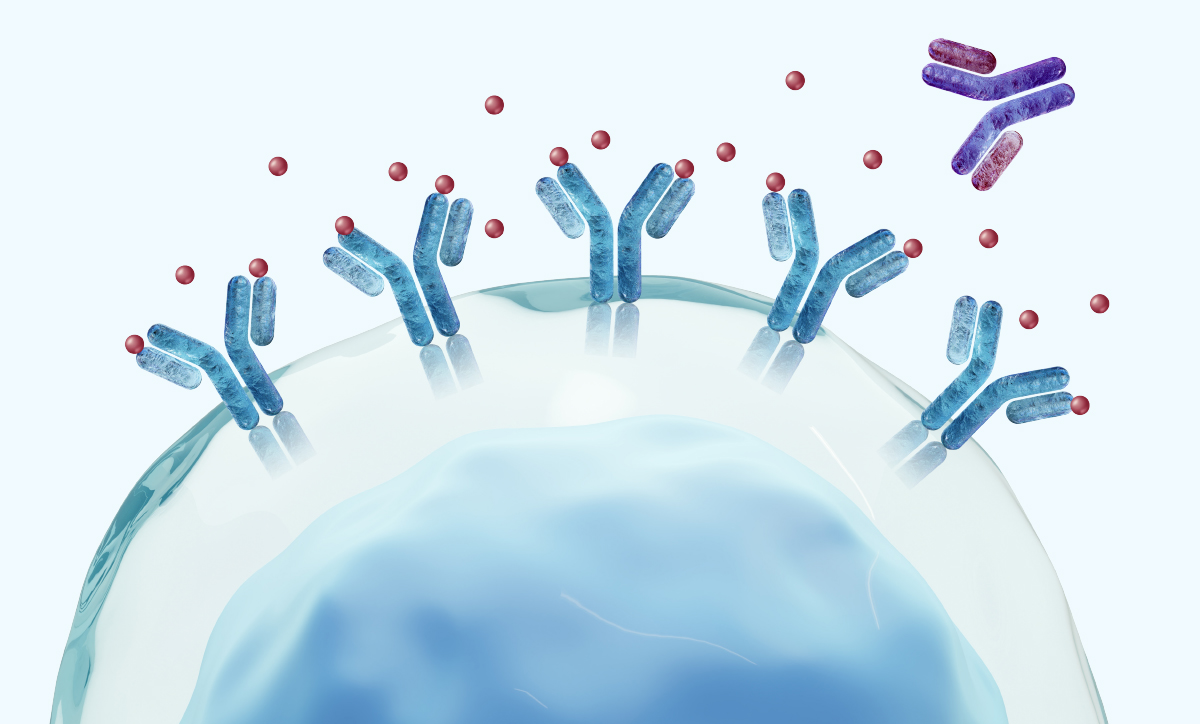
B cells are immune cells that can drive IgG4‑RD through their interactions with T cells and other components of the immune system. Medicines can:
Deplete B cells (remove them from blood for a time), or
Inhibit B cells (calm them down without fully removing them).
Why this matters: Depleting drugs (like rituximab or inebilizumab) work well for many people, but they aren’t the only option. B‑cell inhibition may maintain control with a different safety/side‑effect balance for some patients.1, 6
New and evolving therapies: B cell inhibition (and more)
1) Obexelimab (B cell inhibition)
What it is: A non‑depleting antibody that binds CD19 and the inhibitory FcγRIIβ receptor at the same time. This “two‑handed” binding sends a calm‑down signal to B cells, plasmablasts, and some plasma cells.
How it’s given: Subcutaneous (at home) injections in trials.
Where things stand: A Phase 3 trial (INDIGO) reported positive results, showing a 56% reduction in risk of disease flare over one year compared with placebo (both groups used the same short steroid taper). Obexelimab is investigational; regulatory reviews are expected next. 2,5
Why it matters: Offers a targeted option that inhibits rather than depletes B cells, potentially useful for patients aiming to limit prolonged B‑cell depletion.
2) Rilzabrutinib (BTK inhibitor; B cell signaling modulation)
What it is: An oral medicine that blocks Bruton’s tyrosine kinase (BTK), a key signal in B‑cell activation.
Where things stand: Global Phase 3 clinical trial has begun. Rilzabrutinib remains investigational for IgG4‑RD. 4
Why it matters: May provide pill‑based, adjustable control of B‑cell activity without depletion.
A NOTE ABOUT AVAILABILITY OF TREATMENTS
Availability and approval timing will differ by country. Some places may approve newer agents sooner than others. We’ll keep this page updated as approvals happen.
Snapshot of available and upcoming treatments
Approach | Example agent | How it’s given | Development status | Key idea |
|---|---|---|---|---|
B cell depletion (monoclonal antibodies) | Anti‑CD20 (rituximab) Anti‑CD19 (inebilizumab) | IV infusion | Rituximab widely used (varies by region/label) Inebilizumab approved in several regions for IgG4‑RD | Removes circulating B cells for a time [1,6] |
B cell suppression (non‑depleting) | Obexelimab | Subcutaneous injection | Investigational (positive Phase 3 topline) | Sends a “calm‑down” signal to B cells via CD19 + FcγRIIb [2,5] |
B cell modulation (BTK inhibitor) | Rilzabrutinib | Oral tablet | Investigational (Phase 3) | Blocks BTK signaling to dial down B‑cell activity [4] |
Watch a video discussion about emerging treatments
IgG4-RD Treatment Today: When to Treat, How to Choose
A physician conversation on treatment
In this video, doctors John H. Stone, MD, MPH — Rheumatology, Massachusetts General Hospital & Harvard Medical School; Guy Katz, MD — Rheumatology, Massachusetts General Hospital & Harvard Medical School; and Arezou Khosroshahi, MD — Rheumatology, Emory University Hospital, discuss when to treat versus monitor in IgG4-RD.
They outline why very high serum IgG4 or multi-organ involvement warrants earlier therapy, and how short steroid courses can “buy time” before transitioning to steroid-sparing options.
Reducing side‑effect risks
With many medications, finding a balance between benefits and potential side effects is the key to successful management. Here are simple ways to reduce risk while getting the benefits of B-cell inhibition
Plan vaccines early. When possible, update routine vaccines before starting B‑cell–active therapy (flu, COVID‑19, pneumonia per local guidance). Live vaccines are usually avoided during and shortly after treatment. [6]
Watch for infections. Call if you have fever, cough, burning with urination, or new swelling. Quick attention helps keep small issues small.
Use labs to guide timing. Periodic blood counts and immunoglobulin levels help your team choose safe dosing intervals. [1]
Respect steroids, but don’t rely on them forever. Short steroid courses can put out a flare. The goal is to avoid long‑term steroids by moving to an effective maintenance plan. [1]
A patient story
“Steroids helped my symptoms, but the side effects were hard.” — Donna Shipp
Donna Shipp, a nurse, learned she had IgG4-related retroperitoneal fibrosis after a frightening workup that initially looked like cancer. Because her disease was extensive, her team started steroids and planned B-cell–directed therapy (rituximab) early. Steroids helped her feel better, but the trade-offs were real: significant weight gain, rising blood sugar into the prediabetes range, and concerns about bone health that even affected whether she could safely take more steroids. Her experience shows why steroid-sparing options matter for long-term control.
For patients
How these pieces fit together in real life
If you’re flaring now: Short, time‑limited steroids can calm the immediate fire, then a B‑cell–targeted medicine keeps the embers from reigniting. [1–4,6]
Choosing among options: We weigh your organs involved, prior responses, other conditions, and personal preferences (infusion vs. injection vs. pill).
What to ask your clinician:
“Is a non‑depleting option (like obexelimab) reasonable for me?”
“Do I need infection prevention steps before starting?”
“How will we track remission and watch for side effects?”
Quick definitions
B cell depletion: Temporarily removing B cells from the bloodstream (e.g., inebilizumab, rituximab).
B cell inhibition: Calming B‑cell activity without fully removing them (e.g., obexelimab).
BTK inhibitor: A pill that blocks a key B‑cell signaling enzyme (e.g., rilzabrutinib).
Plasmablast/plasma cell: B cell stages that make antibodies like IgG4.
Remission: No active inflammation or organ flare, often with little or no steroid.
Summary
Targeting B cells has changed the outlook for many people with IgG4‑RD.
Inebilizumab showed in a rigorous trial that this strategy can keep disease quiet and reduce steroid dependence. [1]
Now, obexelimab, ACE1831, and rilzabrutinib are widening the toolkit, with approaches that inhibit, deplete in new ways, or modulate B cell signals. [2–4]
As evidence grows (and as approvals roll out country by country), your care team will match the right tool to your situation.
Personalized support on your steroid journey
Get support and education on your steroid journey with a new digital companion, Sam (Steroids and Me). Find answers and learn how to work with your doctors for the best care and taper plan.
GET SAM NOWReferences
1. Stone JH, et al. Inebilizumab for IgG4-related disease (MITIGATE). N Engl J Med. 2024. PubMed PMID: 39541094.
2. Zenas BioPharma. INDIGO Phase 3 topline results for obexelimab in IgG4-RD. Company press/news, 2026.
3. ClinicalTrials.gov. ACE1831 in IgG4-related disease. NCT07061938. Accessed 2025–2026.
4. ClinicalTrials.gov. Rilzabrutinib in IgG4-related disease. NCT07190196. Accessed 2025–2026.
5. Perugino CA, et al. Obexelimab in IgG4-RD (Phase 2). Lancet Rheumatology. 2023.
6. Peyronel A, Perugino CA, Stone JH, et al. IgG4-related disease: current concepts and treatments. Nat Rev Rheumatol. 2025.
 Save this lesson so you can resume it later
 Copy Link
 Share On X
 Share On Facebook
 Share On LinkedIn
 Share in Whatsapp
Further reading
NEJM — Inebilizumab in IgG4 ‑ RD (MITIGATE) ClinicalTrials.gov — Rilzabrutinib in IgG4 ‑ RDPatient guides for doctor appointments
Educating new doctors and healthcare professionals on your IgG4-RD journey can feel like a full-time job. Download, print, or have your doctor scan the QR code of our patient guides to make every appointment more productive.
View guides