
Bookmark this lesson
Login or create an account to save and access your bookmarks
Bookmark this lesson
Login or create an account to save and access your bookmarks
Not yet registered?
What you can access by simply creating a account:
Register today to get the most out of the education academy. Save your progress, bookmarks lessons, track your progress plus more...

Save your progress in this lesson so you can pick it up where you left off.

Add lessons to your bookmarks so you can quickly return to them in the future.

Track your progress throughout the course to see what you have achieved.
Treatment and disease management
Understand how inflammation is managed through steroids, immune therapies, and supportive care—and what to expect at each step.
 8 lessons
 Total: tbc
 10 minutes + video
Lifestyle affects wellness
Healthy habits can support IgG4-RD care with stress relief, movement, nutrition, and daily routines that build resilience.
Lifestyle choices that support your care
When someone says “lifestyle” changes, it may sound like a to‑do list you didn’t ask for. In IgG4‑related disease (IgG4‑RD), lifestyle doesn’t mean you have to wake up in someone else’s shoes taking on a new way of living. It means making a set of small, kind choices that help you feel more like yourself while medical treatment does the heavy lifting.
Lifestyle choices won’t replace treatment, but they can help you feel better and stay motivated. Simple, sustainable habits like stress regulation with grounding and breath, gentle movement, steady nutrition, and daily decompression will support energy, mood, and resilience during IgG4-RD care.
In this lesson, we’ll walk through stress and emotional health, everyday movement, and practical eating habits. We’ll also share ideas from our community conversations (such as the PeachJAM fireside chats about self‑preservation, peer support, and sustainable routines.
Why lifestyle matters in IgG4‑RD
IgG4‑RD is a fibro‑inflammatory condition that can involve many organs. Treatment usually relies on medicines such as steroids and, in some cases, B‑cell–targeted therapies. Lifestyle does not replace treatment, but it can ease symptoms, improve energy, and help you navigate flares and appointments.
Taking care of yourself one day at a time
Self‑preservation is the idea that caring for yourself is non‑negotiable, like paying the mortgage. It’s not a luxury spa day; it’s the simple, repeatable steps that keep you steady, especially during uncertainty. Reframing self‑care this way helps many people focus on what actually works.
Think about small steps you can take each day to make a difference. It starts with recognizing that you have a right to feel how you feel, whether that’s angry, defeated, sad, uncertain, or any other feeling.
Watch video: Making mental health part of care: a patient–physician conversation
Watch this video to understand how acknowledging mental health can unlock true recovery. Follow Andy and Dr. Stone as they explore whole-person care, reduce stigma, and show why prioritizing mood empowers patients to thrive even when inflammation is controlled.
Recognizing that it’s trauma
The trauma you may feel from receiving a rare-disease diagnosis is real. Rare‑disease trauma is the name our community uses for this feeling. The long‑term stress related to diagnosis, procedures, and uncertainty can become their own set of symptoms and reactions.
Trauma often shows up as body reactions, such as a racing heart, shortness of breath, sudden panic, sometimes without a clear story attached. Naming this experience can be the first step toward self-compassion and change.
It’s important to keep in mind that while you can’t stop emotions from arriving, you can learn how to ride them more effectively.
Emotional regulation is the set of skills that helps you lessen the intensity and create an anchor point for next time. The key is to start with what your body already knows: slow breaths, grounding your senses, writing down what you notice. You can expect it to take practice.
Grounding and self‑soothing ideas you can try
Here are some ways you can start to recognize and cope with your symptoms that arise from trauma and to support emotional regulation.
Breath work: Try box breathing (inhale 4, hold 4, exhale 4, hold 4) for four rounds to steady your heart rate. Or use long exhales (in 4, out 6–8) to switch your body from “alarm” to “rest.” If it helps, follow a guided yoga breath video or audio. Having a voice to mirror can make it easier.
Rhythmic movement: Gentle, repeatable motion, such as walking, easy cycling, or even slow dancing in your kitchen, gives your nervous system a steady beat to follow. Aim for 5–15 minutes. If you’re fatigued, try two or three 3‑minute “movement snacks” spread throughout the day.
Sensory resets: Give your brain a clear signal that this moment is different. Hold an ice cube or a chilled can, sip mint tea, smell citrus, or rub your feet together. Novel sensations pull attention out of worry loops and back to the present.
Focus your attention: Pick one thing outside such as a tree, a cloud, the sky, and describe it for 60 seconds: colors, shapes, edges, movement. Concrete details quiet racing thoughts and create mental “space.”
Comfort cues: A warm bath, a soft blanket, or a hug from someone you trust tells your body it is safe enough to relax. If touch is hard, try weighted warmth (a heated pad or heavy blanket) for a similar settling effect.
Mind anchors: Write one or two lines about what you feel in your body and what helped (“Chest tight — long exhale helped; will step outside for 2 minutes”). These tiny notes become a personal playbook you can reuse.
These are real strategies patients and caregivers shared in our sessions. Choose one or two and practice them when you’re calm so they’re ready when you need them. Consider pairing a skill with an existing routine (after brushing teeth, before meals) so it becomes automatic.
Five signs of emotional suffering
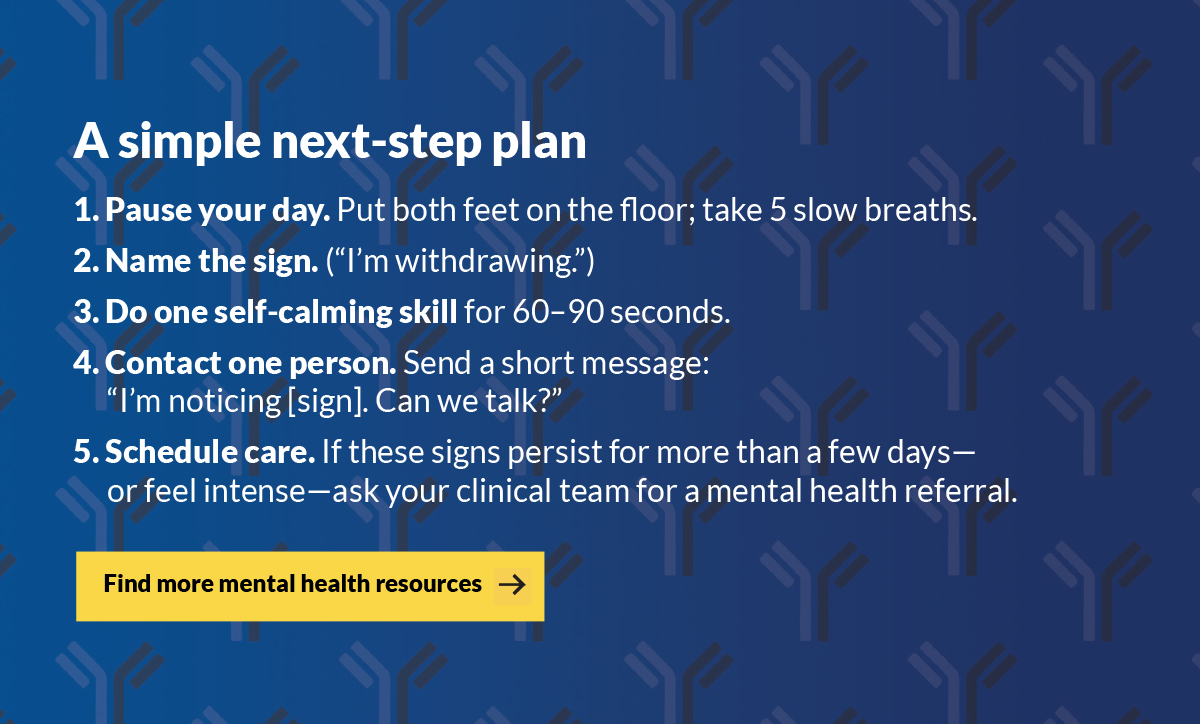
Knowing when to ask for help is a strength. The five signs of emotional suffering are a simple checklist you can use for yourself and the people you love. Here’s what each one can look like in everyday life, and what to do next.
1. Personality changes
You (or someone close to you) seem “not like yourself.” Maybe you’re more irritable, unusually quiet, or joking all the time to cover discomfort.
Try: Say out loud, “Something’s different.” Do two rounds of long‑exhale breathing, then share this observation with a trusted person or jot it in a note to discuss at your next visit.
2. Feeling agitated or irritable
Small things set you off. You feel on edge, startle easily, or can’t settle.
Try: A 60‑second self‑calming skill (box breathing, a brief step outside, or holding something cool) then reduce stimulation (dim lights, silence phone) for a few minutes.
3. Withdrawing
You cancel plans, stop answering messages, or avoid people who usually lift you up.
Try: Pick one low‑effort connection: text a friend “Having a tough day. Can we check in?” or post a brief message in your support group. Put a short walk or stretch on the calendar to re‑enter the day.
4. Poor self‑care (including risky choices)
Skipping meds or appointments, changes in sleep or eating, more alcohol or substance use, or driving too fast.
Try: Choose one health anchor for today (take meds, eat a simple meal, go to bed 30 minutes earlier). If safety is a concern, ask a trusted person to stay in touch until you feel steadier.
5. Loss of hope
Feeling stuck, numb, or like things won’t improve. Thoughts such as “What’s the point?”
Try: Say, “This is a signal, not a verdict.” Do a self‑calming skill, then reach out to a friend, a peer, or your clinician for perspective and support.
When it’s urgent
If you or someone else has thoughts of self‑harm or is in immediate danger, seek emergency help right away. In the U.S., call or text 988 (Suicide & Crisis Lifeline) or dial 911.
If you’re outside the U.S., contact local emergency services.
Where to find support
Give an Hour connects people with volunteer mental health professionals across the U.S., with personalized matching and no cost. Your clinical team can also refer you locally. Visit the IgG4ward! Resources section for more information.
VISIT GIVE AN HOUR
Movement that fits your life
Exercise does not need to be intense to be helpful. In fact, short, regular, rhythmic movement often works best when you’re tired or healing.
Many patients start with 5-15 minute walks, a few times a week. Pair walking with gentle breath and an outside focus, such as watching how light hits the trees, to calm the nervous system while you move.
Tips to get started:
Begin where you are. If you’re on treatment or recovering from procedures, set a low bar and celebrate small wins.
Try a movement menu: options like walking, light stretching, chair yoga, or tai chi. Rotate based on how you feel that day.
Use home‑based routines to remove barriers—ten minutes after coffee, a hallway lap every hour, or a gentle yoga video in your living room.
If pain or swelling limits activity, ask your clinician about physical therapy for tailored pacing.
Safety note: Because IgG4‑RD can involve many organs, ask your care team if you have any activity limits (for example, after a stent, biopsy, or during high‑dose steroids).
Keep in mind that medications remain central to treatment. Lifestyle is an ally, not a substitute.

Eating for steadiness
There is no single “IgG4‑RD diet.” Researchers are still studying the links between immune signaling and lifestyle, and we don’t yet have disease‑specific nutrition rules.
What we do know is that consistent, simple eating patterns can support energy, mood, and bone and heart health, especially if you are using steroids.
Make simple steady choices
Build a plate with vegetables, lean protein, whole grains, and healthy fats (olive oil, nuts) most days.
If you’re on steroids, prioritize calcium and vitamin D (dairy or fortified milk alternatives; leafy greens) and watch salt to help with blood pressure and fluid retention.
Choose high‑fiber foods to support digestion when medicines or stress slow things down.
Drink water regularly; limit alcohol, which can worsen sleep and mood (and should also be used in great moderation – or not at all – for patients with pancreatic disease).
If you’ve lost weight or appetite during flares, try small, frequent meals and ask about a registered dietitian.

What to avoid?
Extreme or restrictive diets usually backfire. If you’re curious about anti‑inflammatory patterns (like Mediterranean‑style eating), explore them gently and track how you feel.
Substances: Make choices that protect organs
Smoking: stopping protects blood vessels, lungs, and bones. Ask about medicines and programs that double or triple quit rates.
Alcohol: if you drink, keep it light and discuss limits, especially if liver or pancreas have been damaged by IgG4-RD.
Supplements: “immune boosters” are tempting but can be risky alongside your medicines. Always review supplements with your clinician; bring labels to visits.

Medications and monitoring: The lifestyle of follow‑through
Daily health also means taking medicines as prescribed, using a steroid taper exactly as directed, and keeping follow‑up imaging and labs. Create routines that make this easy:
Align doses with anchor habits (breakfast, brushing teeth).
Use pill organizers and reminders.
Track symptoms and side effects in a simple log to share at visits.
Get the IgG4ME! app to keep track of symptoms and treatment progress
Keep your IgG4-RD story organized in one place. Track your history, labs, and care team so you can share what matters when it matters most.
GET THE APPMaking wellness sustainable
The best routines are the ones you actually do. People tell us that sustainability comes from ease and access, such as gardening in the backyard for decompression, or doing yoga at home instead of driving to a studio.
Treat energy like a gas tank: refill before you’re on empty. Celebrate small wins. And diversify your support so if one option is off the table one week, you have others.
Putting it together: a simple weekly plan
You don’t need to change everything at once. Choose one or two focus areas and build from there.
Example week:
Sleep: in bed by 10:30 pm; devices off at 9:45.
Movement: 20‑minute walks Mon/Wed/Fri; light resistance bands Tue/Sat.
Food: add one extra vegetable at lunch and dinner; pack nuts or yogurt for protein.
Prevention: schedule flu shot; set dental cleaning.
Stress: 5‑minute breathing practice after lunch daily.

When to call your team
Some signals that you should reach out to your care team for help include:
New or worsening organ‑specific symptoms (eye pain, jaundice, new swelling, severe abdominal or chest pain).
Signs of relapse after a period of control.
Mood symptoms that are persistent or worsening—especially loss of hope, withdrawal, or thoughts of self‑harm.
The five signs we discussed earlier are an easy early warning system.
Remember: medical therapy is the core of IgG4‑RD care; lifestyle helps you feel better and stay engaged in treatment. Many patients need periods of glucocorticoids or B cell therapies; ask your care team.
Summary
Lifestyle in IgG4‑RD is about small, sustainable habits that protect your energy and steady your nervous system while treatment works.
Use grounding and breath to regulate emotions, watch for the five signs, move in ways that fit your day, and eat for steadiness, not perfection. Most of all, treat self‑preservation like an essential part of your care plan.
References
1. Stone JH, Zen Y, Deshpande V. IgG4‑Related Disease. N Engl J Med. 2012;366:539–551. URL: https://www.nejm.org/doi/full/10.1056/NEJMra1104650
2. Peyronel F, Della‑Torre E, Maritati F, et al. IgG4‑related disease and other fibro‑inflammatory conditions. Nat Rev Rheumatol. 2025;21:275–290. URL: https://doi.org/10.1038/s41584-025-01240-x
3. Lang D, Zwerina J, Pieringer H. IgG4‑related disease: current challenges and future prospects. Ther Clin Risk Manag. 2016;12:189–199. URL: https://doi.org/10.2147/TCRM.S99985
 Save this lesson so you can resume it later
 Copy Link
 Share On X
 Share On Facebook
 Share On LinkedIn
 Share in Whatsapp
IgG4-RD Community App
Join the IgG4ward! community on the Mighty Networks app, a purpose-built digital platform dedicated to making it easy for organizations to build strong communities.
JOIN THE COMMUNITY