
Bookmark this lesson
Login or create an account to save and access your bookmarks
Bookmark this lesson
Login or create an account to save and access your bookmarks
Not yet registered?
What you can access by simply creating a account:
Register today to get the most out of the education academy. Save your progress, bookmarks lessons, track your progress plus more...

Save your progress in this lesson so you can pick it up where you left off.

Add lessons to your bookmarks so you can quickly return to them in the future.

Track your progress throughout the course to see what you have achieved.
Understanding the disease
What IgG4-related disease is, why it can look like many other conditions, and how it affects the body.
 8 lessons
 Total: TBC
 9 minutes
What is IgG4-RD?
IgG4-related disease (IgG4-RD) is an immune-mediated condition—a condition driven by the patient’s own immune system—that can involve nearly any organ in the body. It causes inflammation and symptoms that can mimic other illnesses, which can delay a clear diagnosis and timely, effective treatment.
Understanding a rare systemic disease that mimics many others
IgG4-RD is usually an indolent (slow-moving) disease. These characteristics often lead to long diagnostic delays and extended periods of evaluation before effective treatment is administered.
Although the slow-moving nature of the disease may sound like a good thing, that is, in fact, one reason the disease escapes detection for prolonged periods, causing damage to organs while patients don’t even know they are sick.
Current research suggests an overactive immune response—often involving B cells and T cells—plays a key role. It isn’t an infection or a cancer, though it can sometimes look like them on scans. With prompt recognition and treatment, most patients respond well to steroids or targeted immune-suppressing therapies that reduce inflammation and prevent further tissue damage.
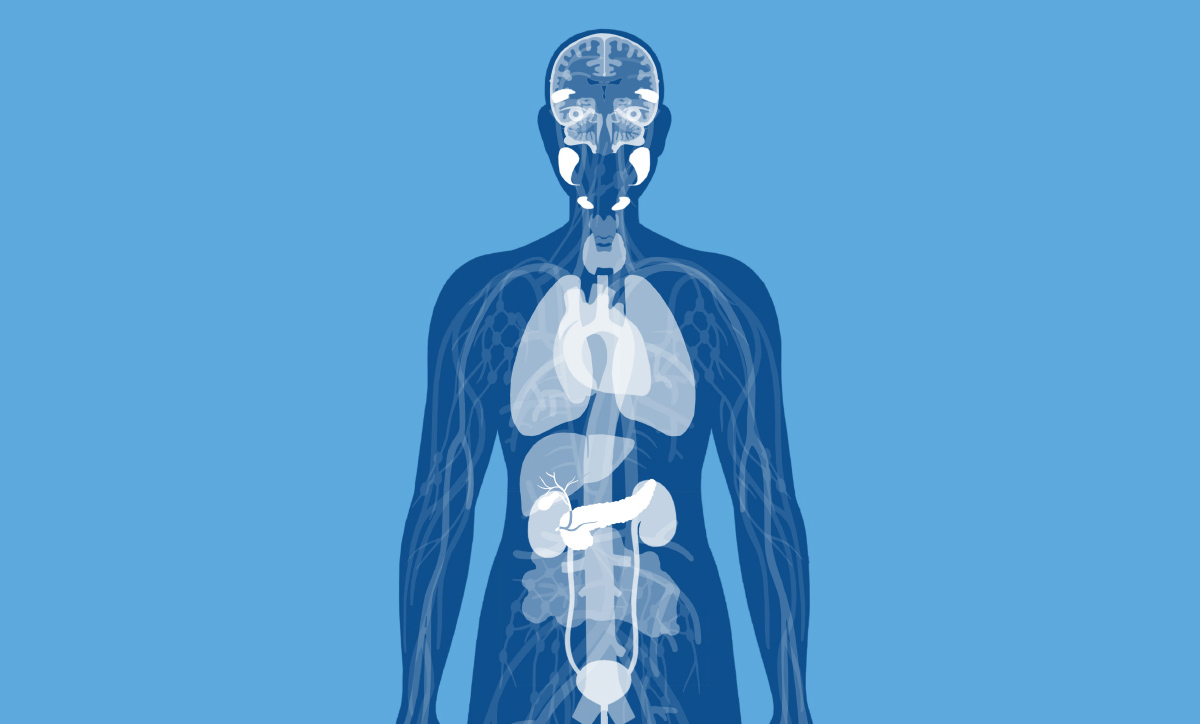
May cause autoimmune pancreatitis or sclerosing cholangitis (inflammation/scarring of bile ducts). Involvement of these organs leads jaundice (yellowing of skin/eyes), abdominal pain, weight loss, or abnormal liver tests.
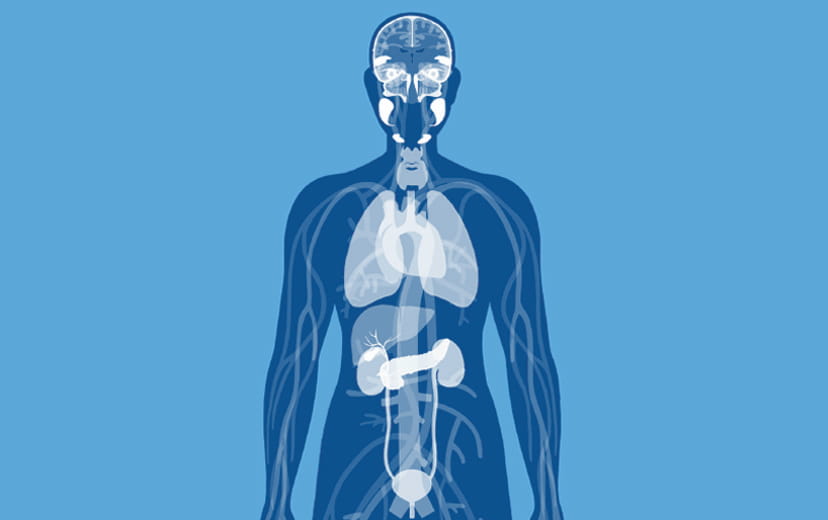
No two patients are the same
No two people with IgG4-related disease (IgG4-RD) share the same story. This condition can touch nearly any organ, and its symptoms often resemble more common illnesses. For many patients, the path to an IgG4-RD diagnosis may start with confusion, worry, and a string of inconclusive doctor visits.
In this first lesson, we’ll explore real patient experiences that reveal how this rare disease hides in plain sight—and how knowledge brings clarity and hope.
Patient stories
IgG4-related disease often looks like something else—especially cancer—because it can form “mass-like” inflammation in organs. Dr. Stone explains that many physicians still haven’t heard of IgG4-RD, and “the biggest challenge is simply getting to the diagnosis.” Listen to some of their stories now.
William Joy – salivary/lacrimal glands
Decades of symptoms and confusion before a diagnosis that fit
“I had already seen about 40, maybe 50 doctors, and nobody could figure out what was going on,” recalls William.
After years of swelling in his jaw and repeated treatments, William was even told at one point that he had cancer. Then that story was reversed and William was told simply that his diagnosis was “unknown.” Decades after his first symptoms, some new ideas about testing, coupled with review of past biopsies through a new perspective, finally revealed IgG4-related disease. And, William observed soberly, “I got my life back.”
“The doctor told me… ‘I’m afraid you have cancer’… [then] ‘we made a mistake… it’s not cancer.’”
Cecilia Wainoga – pancreas/bile ducts
When symptoms looked like pancreatic cancer, but weren’t
“They said it’s a mass… it is tumor,” said Cecilia.
Cecilia’s jaundice, rapid weight loss, and sudden abdominal pain led doctors to suspect pancreatic cancer. Multiple scans and biopsies later, the diagnosis changed: inflammation, not malignancy. IgG4-RD was silently affecting her pancreas and bile ducts. Only after that long stretch of fear and uncertainty did she learn it wasn’t cancer, and that IgG4-related disease was the real cause.
“Relief and disbelief hit at the same time,” she recalls. “It wasn’t cancer, but it was something I’d never imagined.”
Fred Zucconi – pancreas/bile ducts
Scheduled for a Whipple, he learned it wasn’t cancer after all
“They treated me for cancer before realizing it was my immune system,” he explains.
Fred’s journey began with jaundice and fatigue. His doctors placed a stent to drain bile, thinking it was a blockage caused by a malignancy. Next, he consented to a major surgery known as a “Whipple procedure” because the prevailing diagnosis was pancreatic cancer. After multiple diagnostic procedures and intense uncertainty, he learned that his IgG4 level was “through the roof” and finally heard the words “no cancer. “ The diagnosis, instead, was IgG4-related disease.
“The physician came to see me and he says, ‘no cancer,’” explained Fred.
John Durcan – retroperitoneal fibrosis
A mysterious mass, a stent, and months of not knowing what it was
“The mood changed… I think he said, 'We don’t know what it is. … it’s, we’re not going to use the C word',” said John.
John’s story began with a sudden, stabbing flank pain that struck him on his morning walk. It felt exactly like a kidney stone, but imaging in the emergency room showed an abdominal mass near his aorta and a blockage of his ureter affecting his kidney. For a stretch, the hardest part was the uncertainty: doctors told him they didn’t know what the mass was, and even after scans and a needle biopsy, he still didn’t have a clear name for the problem. Eventually, specialists recognized the pattern as IgG4-related retroperitoneal fibrosis and moved him toward the right treatment plan.
“It was a relief to learn what caused it—and that there was treatment,” he said.
When many unrelated symptoms point to one disease
Each of these patients faced different symptoms, yet their stories share a common thread: inflammation in places it shouldn’t be. IgG4-related disease is a systemic condition that can mimic cancer, infections, or autoimmune disorders. Recognizing its patterns—chronic inflammation, tissue thickening, and elevated IgG4 antibodies—helps doctors diagnose it sooner and begin treatment before lasting damage occurs.
Raising awareness of this rare, easily overlooked condition helps patients and clinicians reach earlier, more accurate diagnoses and start the treatments that work.
IgG4-RD often goes undetected for years
One reason IgG4-RD can be so hard to spot is that it typically moves quietly at first. IgG4-RD has several characteristic disease features that can make it hard to spot:
It is slow moving. A person diagnosed with IgG4-RD has typically had inflammation in one or more organs for months or even years.
It remains subclinical (quiet) for long periods of time. This means the disease is quietly active inside the body, possibly causing damage or inflammation, but without showing clear signs that would make someone immediately realize there is a problem.
It frequently involves multiple organs. For example, in the recent MITIGATE trial of Inebilizumab in IgG4-RD, the inclusion criteria required that patients have a history of at least two organs affected.
How many organs can be affected?
Based on patients in the MITIGATE trial:
The number of organs affected over the course of the disease ranged from 2 to 13
41% had histories of 2-3 organs involved
24% had 6 or more organs affected
This is why many IgG4-RD specialists think in “whole-body” terms. Even if only one organ is causing symptoms today, involvement may also be present in another other organ or organs, proceeding silently and undetected to sow future trouble.
Let’s take a closer look at the history of the disease.
References
1. Stone JH, Zen Y, Deshpande V. IgG4-related disease. New England Journal of Medicine. 2012;366(6):539–551. doi:10.1056/NEJMra1104650. URL: https://www.nejm.org/doi/abs/10.1056/NEJMra1104650
2. Wallace ZS, Naden RP, Chari S, et al. The 2019 American College of Rheumatology/European League Against Rheumatism Classification Criteria for IgG4-Related Disease. Arthritis & Rheumatology. 2020. doi:10.1002/art.41120. URL: https://acrjournals.onlinelibrary.wiley.com/doi/10.1002/art.41120
3. Stone JH, et al. Inebilizumab for Treatment of IgG4-Related Disease (MITIGATE). New England Journal of Medicine. 2025. (PubMed record) URL: https://pubmed.ncbi.nlm.nih.gov/39541094/
4. ClinicalTrials.gov. NCT04540497 — MITIGATE: A Study of Inebilizumab in IgG4-Related Disease. URL: https://clinicaltrials.gov/study/NCT04540497
5. IgG4ward Foundation. IgG4ward! Good Question Series: Organs Affected by IgG4-RD. (Includes MITIGATE organ-count figures: 2–13 organs; 41% with 2–3; 24% with ≥6.) URL: https://igg4ward.org/igg4ward-educational-resources/igg4ward-good-question-series-organs-affected-by-igg4-rd/
 Save this lesson so you can resume it later
 Copy Link
 Share On X
 Share On Facebook
 Share On LinkedIn
 Share in Whatsapp
Patient guides for doctor appointments
Educating new doctors and healthcare professionals on your IgG4-RD journey can feel like a full-time job. Download, print, or have your doctor scan the QR code of our patient guides to make every appointment more productive.
View guides